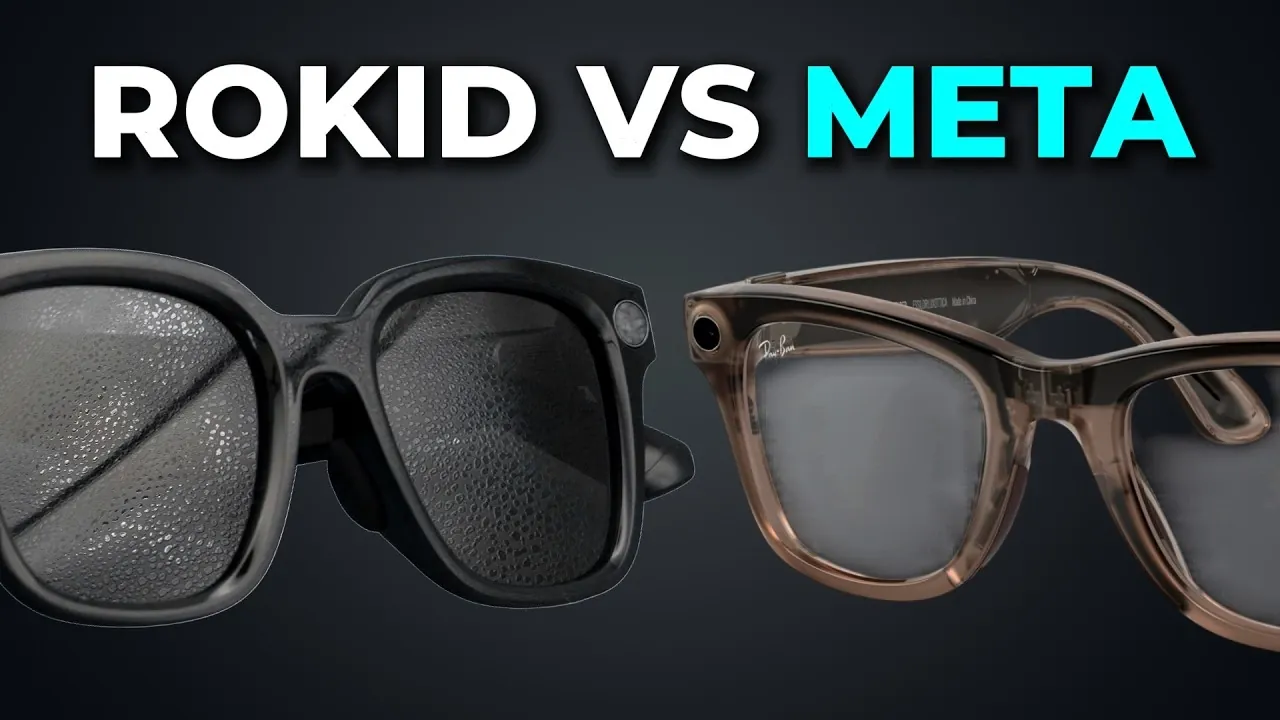
Smart glasses are merging technology with everyday wear, offering a range of features for different needs. In this overview, Steven Sullivan examines the Rokid AI Glasses Style and the Ray-Ban Meta, two models that stand out for distinct reasons. The Rokid AI Glasses Style focuses on functionality with a lightweight build, 12-hour battery life and support for prescription lenses, making it suitable for extended use. Meanwhile, the Ray-Ban Meta emphasizes design, featuring a curved frame and integration with Meta’s ecosystem for users who value style and connectivity.
Discover how these glasses compare in areas such as video recording formats, AI-driven features and real-time language translation. Learn which device aligns better with specific priorities, from Rokid’s productivity-oriented design to Ray-Ban’s focus on aesthetics and app integration. This overview provides a clear breakdown to guide your decision-making process.
Design and Build
TL;DR Key Takeaways :
- Rokid AI Glasses Style offers a practical design with prescription lens support, while Ray-Ban Meta emphasizes iconic, fashionable aesthetics.
- Rokid excels in battery life (12 hours) and lightweight comfort (38.5g), whereas Ray-Ban Meta provides shorter battery life (up to 8 hours) and is heavier (49g).
- Rokid supports versatile horizontal video recording at 2.5K resolution, while Ray-Ban focuses on polished vertical videos for social media.
- Rokid integrates robust AI tools like ChatGPT and Gemini AI, along with advanced translation for 89 languages, surpassing Ray-Ban’s more limited AI and translation capabilities.
- Rokid is priced affordably at $299, offering excellent value, while Ray-Ban Meta starts at $379, appealing to those seeking premium design and ecosystem integration.
Balancing Style and Functionality
The design of smart glasses is more than just an aesthetic choice, it directly impacts comfort, usability and personal expression.
- Ray-Ban Meta: Staying true to Ray-Ban’s iconic design, these glasses feature a curved frame that exudes timeless style. With multiple frame options, they cater to users who prioritize a fashionable appearance.
- Rokid AI Glasses Style: Rokid takes a more utilitarian approach, focusing on practicality with a straighter frame design. While less stylish, it supports prescription lenses, making it a functional choice for everyday use.
If your priority is a sleek, fashionable look, Ray-Ban Meta is the clear choice. However, Rokid’s straightforward design appeals to those who value practicality over aesthetics.
Battery Life and Weight: Comfort for Extended Wear
Battery life and weight are critical factors for wearable devices, especially for users who rely on them throughout the day.
- Rokid AI Glasses Style: With an impressive 12-hour battery life, Rokid outlasts its competitor. Weighing just 38.5 grams without lenses, it is also lighter, making sure comfort during prolonged use.
- Ray-Ban Meta: The first-generation model offers 4 hours of battery life, while the second generation improves to 8 hours. However, at 49 grams, it is heavier, which may affect long-term comfort.
For users seeking lightweight wear and extended battery performance, Rokid emerges as the more practical option.
Uncover more insights about AI glasses in previous articles we have written.
- Google vs Meta Smart Glasses: Which AI Frames Are Better
- Samsung Galaxy AI Smart Glasses Release Date Revealed
- Nothing AI Smart Glasses : Design, Features & Pricing Strategy
- Apple AI Wearables: AR Glasses, AI AirPods & AI Pin
- Samsung AI Glasses Launching Summer 2026: Specs and Details
- Apple Smart Glasses Leak: Visual Intelligence & Gemini Siri
- Samsung’s AI Galaxy Glasses Set for 2026 Launch
- Rokid AI Glasses vs Ray-Ban Meta: Which Smart Glasses Should You Buy?
- AI Smart Glasses Coming in Weeks: Maverick AI Pro & More
- Rokid Glasses vs Rokid AI Glasses Style : Display vs Comfort
Camera and Video Recording: Flexibility vs Polished Visuals
Both models offer advanced video recording capabilities, but their focus differs based on user needs.
- Rokid AI Glasses Style: Rokid supports horizontal video recording at 2.5K resolution, providing a wider field of view and realistic color reproduction. This makes it ideal for content creators who need flexibility in their recordings.
- Ray-Ban Meta: Ray-Ban emphasizes vertical video formats, delivering slightly sharper visuals with a cinematic quality. This makes it a better choice for users focused on creating polished content for social media platforms.
Your decision here depends on your intended use, opt for Rokid if you need versatility or Ray-Ban for refined, social media-ready visuals.
AI Features: Comprehensive Tools vs Speed
Artificial intelligence is a defining feature of smart glasses and both models integrate AI in unique ways.
- Rokid AI Glasses Style: Rokid incorporates ChatGPT and Gemini AI, offering features like detailed responses, transcription and AI-powered navigation. Its broader functionality makes it a versatile tool for productivity and creative tasks.
- Ray-Ban Meta: Powered by Meta AI, Ray-Ban delivers faster response times but occasionally struggles with voice distortion. While effective, its AI capabilities are less comprehensive than Rokid’s.
If you require robust AI tools for multitasking and productivity, Rokid’s extensive feature set gives it a significant edge.
Real-Time Language Translation: Expanding Communication
Language translation is a standout feature for both models, but Rokid offers broader capabilities.
- Rokid AI Glasses Style: Using Microsoft’s real-time translation technology, Rokid supports 89 languages online and 6 offline. This makes it highly effective for users in multilingual environments.
- Ray-Ban Meta: Ray-Ban supports 14 languages online and 5 offline, which is sufficient for basic needs but less comprehensive compared to Rokid’s offering.
For frequent travelers or those navigating diverse linguistic settings, Rokid’s advanced translation capabilities are unmatched.
Accessories and Ecosystem Integration: Versatility vs Connectivity
The ecosystem and available accessories can significantly enhance the overall user experience.
- Ray-Ban Meta: Ray-Ban benefits from Meta’s established ecosystem, integrating seamlessly with apps like Spotify and Audible. It also offers a wider range of accessories, appealing to users who value app compatibility and connectivity.
- Rokid AI Glasses Style: Rokid focuses on practicality, offering unique accessories such as attachable chargers and a dedicated charging case. While its app integration is limited, these accessories enhance usability and convenience.
If app integration and a broader ecosystem are important to you, Ray-Ban is the better choice. For practical enhancements, Rokid delivers a more tailored experience.
Price Comparison: Value vs Premium Appeal
Price is often a decisive factor when choosing between two products and these smart glasses cater to different budgets.
- Rokid AI Glasses Style: Priced at $299, Rokid offers an affordable option without compromising on advanced features, making it accessible to a wider audience.
- Ray-Ban Meta: Starting at $379 for the second generation, Ray-Ban reflects its premium design and ecosystem advantages, appealing to those willing to invest in a high-end experience.
For budget-conscious buyers, Rokid provides excellent value. However, Ray-Ban’s higher price may be justified for users seeking a premium design and ecosystem integration.
Making the Right Choice
The decision between Rokid AI Glasses Style and Ray-Ban Meta ultimately depends on your priorities and lifestyle:
- Choose Rokid if you value affordability, extended battery life, versatile video recording, robust AI features and advanced translation capabilities. It’s an excellent choice for content creators and users seeking practical, feature-rich smart glasses.
- Choose Ray-Ban if you prioritize iconic design, app integration, sharper visuals and a well-established ecosystem. It’s ideal for those who want a stylish, premium experience with seamless connectivity.
By evaluating your specific needs and preferences, you can confidently select the smart glasses that best align with your daily activities and goals.
Media Credit: Steven Sullivan
Disclosure: Some of our articles include affiliate links. If you buy something through one of these links, Geeky Gadgets may earn an affiliate commission. Learn about our Disclosure Policy.
