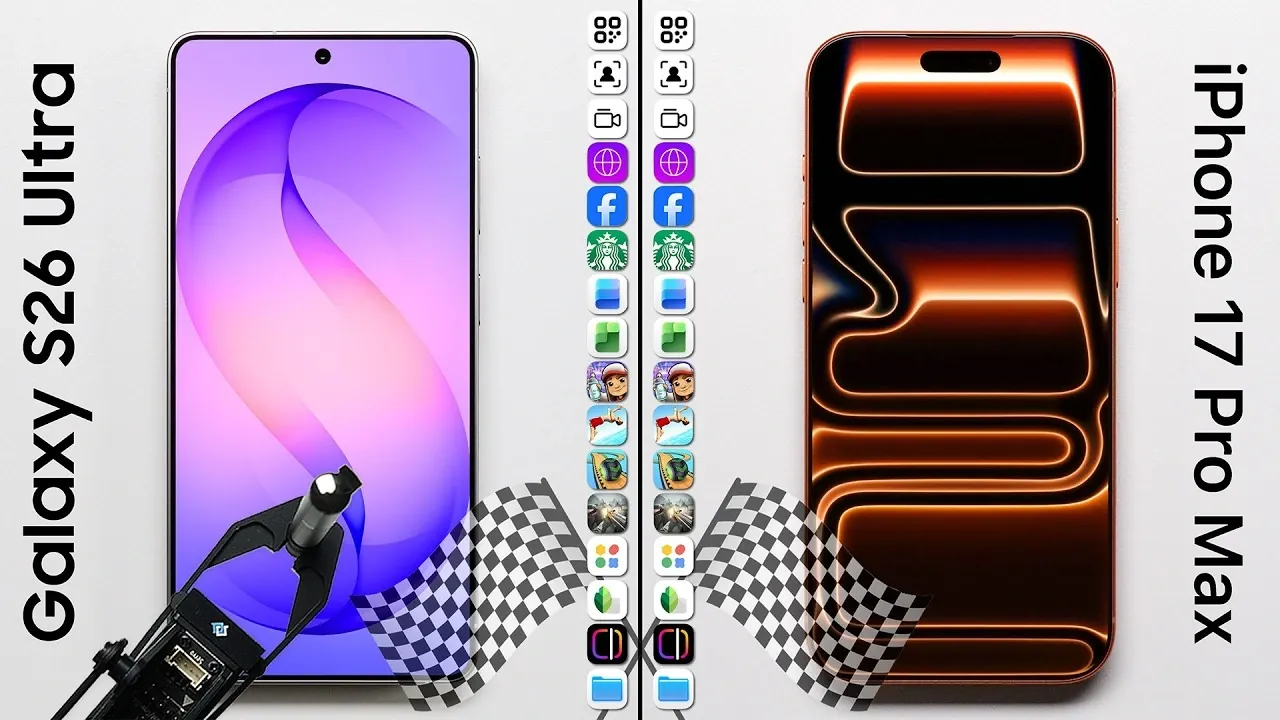
The Galaxy S26 Ultra and iPhone 17 Pro Max stand as the latest titans in the smartphone industry, each equipped with advanced technology designed to push the boundaries of mobile performance. But when it comes to real-world usage, which device truly takes the crown? A comprehensive speed test evaluated these flagship models across a range of tasks, including app performance, multitasking, AI processing, and thermal management. The results revealed a close competition, with the Galaxy S26 Ultra narrowly securing the lead. However, this victory comes with certain trade-offs, making the decision between the two devices more nuanced than it initially appears. The video below from Phone Buff gives us more details.

Galaxy S26 Ultra: A Powerhouse of Innovation
The Galaxy S26 Ultra represents a bold leap forward in smartphone technology. Its standout feature is its record-breaking 4.74 GHz clock speed, which ensures exceptional responsiveness across all tasks. Graphics rendering has seen a significant 24% improvement over its predecessor, thanks to increased memory bandwidth, making it an ideal choice for gamers and multitaskers alike. Additionally, a 15% larger vapor chamber enhances thermal management, allowing the device to sustain peak performance during extended periods of use.
In performance tests, the Galaxy S26 Ultra excelled in tasks demanding raw computational power. It handled AI model processing, 4K video exports and high-intensity gaming with remarkable efficiency. For instance, locally hosted website testing and on-device AI computations highlighted its ability to process complex operations seamlessly. However, during the second round of app retention tests, some applications required reloading, indicating a slight inconsistency in multitasking performance. Despite this, the Galaxy S26 Ultra remains a formidable device for users seeking innovative speed and power.
iPhone 17 Pro Max: Precision and Reliability
The iPhone 17 Pro Max takes a different approach, focusing on refinement and sustained performance. Powered by the Apple A19 Pro chip and 12 GB of RAM, it delivers a 40% improvement in sustained performance compared to its predecessor. Its aluminum unibody design not only enhances durability but also contributes to superior heat dissipation, making sure stable thermal performance even under heavy workloads.
During testing, the iPhone 17 Pro Max demonstrated consistent results across a variety of tasks, including QR code scanning, burst photography and web browsing. Its standout feature was app retention; in the second round of testing, it maintained previously opened applications without requiring reloads, offering a smoother multitasking experience. While it lagged slightly behind the Galaxy S26 Ultra in raw speed, its reliability and thermal stability make it an excellent choice for users who prioritize consistency and efficiency over sheer power.
How the Tests Were Conducted
To ensure a fair and accurate comparison, both devices underwent identical tests under controlled conditions. These tests included:
- QR code scanning
- Burst photography
- 4K video recording
- Gaming
- Photo editing
- File unzipping
Processing power and responsiveness were evaluated using locally hosted websites and on-device AI models. Thermal management was assessed by monitoring device temperatures during prolonged workloads to identify any signs of overheating or performance throttling. This rigorous testing methodology ensured that the results accurately reflected the capabilities of each device.
Key Performance Takeaways
Both the Galaxy S26 Ultra and iPhone 17 Pro Max showcased unique strengths during the tests, making them suitable for different types of users:
- Galaxy S26 Ultra: Excelled in tasks requiring raw processing power, such as AI model testing, video exports and gaming. Its faster load times and smoother frame rates make it a top choice for performance enthusiasts.
- iPhone 17 Pro Max: Shone in app retention and multitasking, maintaining previously opened applications without reloading. This reliability is particularly beneficial for users who frequently switch between tasks or run multiple apps simultaneously.
Both devices demonstrated effective thermal management, with no significant overheating observed during the tests. This highlights the advancements in cooling technology implemented by both manufacturers, making sure stable performance even under demanding conditions.
Final Results: Speed vs. Stability
The Galaxy S26 Ultra completed the speed test in 4 minutes and 46 seconds, narrowly outperforming the iPhone 17 Pro Max, which finished 15 seconds later at 5 minutes and 1 second. While the Galaxy S26 Ultra claimed victory in terms of overall speed, the iPhone 17 Pro Max’s reliability and multitasking efficiency make it a compelling option for users who prioritize stability and consistency over raw performance.
Which Smartphone is Right for You?
Choosing between the Galaxy S26 Ultra and iPhone 17 Pro Max ultimately depends on your individual needs and priorities:
- If you value innovative performance, faster processing speeds and superior gaming capabilities, the Galaxy S26 Ultra is the clear winner.
- If multitasking reliability, app retention and sustained performance are more important to you, the iPhone 17 Pro Max offers a highly dependable alternative.
Both devices represent the pinnacle of smartphone innovation in 2026, making sure that no matter which one you choose, you’ll enjoy a premium experience tailored to your specific requirements. Whether you prioritize speed or stability, these flagship models deliver top-tier performance that sets a new standard for the industry.
Take a look at other insightful guides from our broad collection that might capture your interest in Galaxy S26 Ultra.
- Samsung Galaxy S26 Ultra: Pros, Cons and Key Features
- Samsung Galaxy S26 Ultra: Features, Design and Pricing
- Samsung Galaxy S26 Ultra Camera Samples: What’s New
- Samsung Galaxy S26 Ultra: Performance Details Revealed
- Samsung Galaxy S26 Ultra Camera and Design Innovations
Source & Image Credit: PhoneBuff
Disclosure: Some of our articles include affiliate links. If you buy something through one of these links, Geeky Gadgets may earn an affiliate commission. Learn about our Disclosure Policy.
