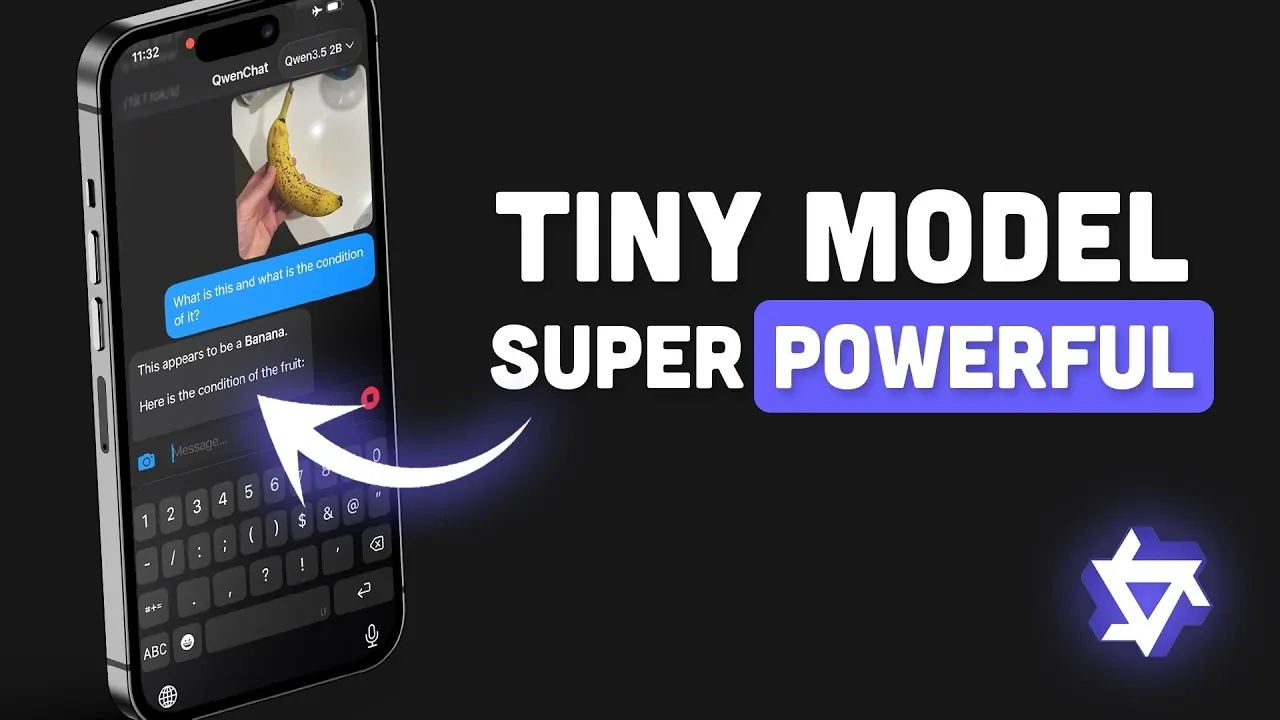
Alibaba’s Qwen 3.5 small models are compact AI systems designed to operate efficiently on edge devices, including older laptops and smartphones. According to Better Stack, these models feature parameter sizes of 0.8 billion and 2 billion, paired with a 262,000-token context window. This allows them to process extensive datasets, such as lengthy documents or complex codebases, while maintaining coherence. Additionally, their offline functionality supports users in environments with limited or no internet access, making them practical for resource-constrained scenarios.
You’ll learn how these models perform on tasks like text summarization, object recognition and coding, as well as their results on benchmarks such as MMLU and OCR. The analysis also examines their compatibility with older hardware and identifies areas where they face challenges, such as advanced reasoning or handling nuanced vision tasks. This breakdown provides a detailed look at their strengths and limitations for edge-compatible AI applications.
Multimodal Capabilities in a Compact Design
TL;DR Key Takeaways :
- Qwen 3.5 AI models deliver advanced multimodal capabilities (text, vision and coding) in a compact design with parameter sizes of 0.8B and 2B, optimized for offline use on edge devices like older laptops and smartphones.
- The models feature a 262,000-token context window, allowing efficient processing of large datasets, such as lengthy documents or complex codebases, while maintaining coherent and relevant outputs.
- Despite their small size, Qwen 3.5 models achieve competitive benchmark results, rivaling larger models in language understanding and vision tasks, making them highly efficient for moderate computational needs.
- Qwen 3.5 is compatible with a wide range of devices, including older hardware, providing widespread access to access to advanced AI technologies for personal productivity, education and more.
- While excelling in many areas, the models face challenges with complex reasoning, technical issues (e.g., hallucinations, infinite loops), and nuanced tasks, highlighting trade-offs in compact AI design and the need for further refinement.
Qwen 3.5’s standout feature is its ability to handle multiple modalities, text, vision and coding, within a compact framework. Unlike traditional large-scale models that require significant computational resources, Qwen 3.5’s 0.8B and 2B parameter models are optimized for offline use, making them ideal for environments with limited or no internet access.
The models’ 262,000-token context window is a critical advantage, allowing them to process extensive datasets, such as lengthy documents or intricate codebases, in a single session. This capability is particularly useful for tasks like summarizing detailed overviews, analyzing large datasets, or debugging complex code. By maintaining a broad context, the models ensure that outputs remain coherent and relevant, even when dealing with substantial input sizes.
Performance Benchmarks: Compact Models Delivering Big Results
Despite their small size, Qwen 3.5 models deliver competitive results across various benchmarks, demonstrating their efficiency and capability:
- Language Understanding: The 2B model achieved a score of 66.5 on the MMLU (Massive Multitask Language Understanding) benchmark, while the 0.8B model scored 42.3. These results rival larger models like Llama 2 (7B), highlighting the effectiveness of Qwen 3.5’s design in handling complex language tasks.
- Vision Tasks: On OCR (Optical Character Recognition) benchmarks, the 2B model scored 85.4 and the 0.8B model achieved 79.1. These scores reflect their ability to recognize text and objects with reasonable accuracy, although performance varied depending on task complexity.
These benchmarks underscore the models’ ability to compete with larger counterparts, particularly in tasks requiring moderate computational power. Their efficiency and compactness make them a practical choice for users seeking advanced AI capabilities without the need for high-end hardware.

Discover other guides from our vast content that could be of interest on Qwen.
- Interactive Solar System Test, Sonnet 4.5 vs Qwen 3.5 35B
- Qwen 3.5 vs Claude Opus 4.5 vs Gemini 3 Pro: Benchmarks Compared
- Qwen3-TTS vs ElevenLabs : Voice Cloning & Real-Time Streaming
- Qwen 3 TTS Voice Cloning Guide 2026 : Free Tools & Setup Tips
- Qwen 3 vs GPT-4.1: How Alibaba’s AI is Changing the Game
- ChatGPT 5 vs Claude vs Qwen : Best AI Models for App Dev in 2025?
- Qwen TTS Voice Cloning in 3 Seconds: Setup, Limits, and Best Uses
- Kimi K2.5 for Teams: Parallel Agents Cut Time and Token Costs
- Qwen 3 AI Models : Features, Benefits & Why They Matter in 2025
- What is Alibaba Qwen and its 6 LLM AI models?
Optimized for Edge Devices
One of the most compelling aspects of Qwen 3.5 is its compatibility with edge devices. Testing demonstrated that both the 0.8B and 2B models ran efficiently on devices such as an M2 MacBook Pro and an iPhone 14 Pro, delivering fast response times for tasks like text summarization, object recognition and basic coding.
Even older devices, including legacy laptops and smartphones with limited processing power, were able to handle the models effectively. This adaptability significantly broadens access to advanced AI technologies, allowing users with older or less powerful hardware to benefit from innovative capabilities. By providing widespread access to access to AI, Qwen 3.5 offers practical solutions for a wide range of applications, from personal productivity to educational tools.
Coding and Vision: Strengths and Areas for Improvement
Qwen 3.5’s coding capabilities were evaluated on a variety of programming tasks. The 0.8B model produced functional but limited outputs, often encountering logical errors or design constraints. In contrast, the 2B model demonstrated greater accuracy and versatility, generating more reliable code snippets. However, challenges such as infinite loops and slower task completion occasionally arose, indicating areas where further refinement is needed.
In vision-related tasks, the models excelled at recognizing common objects and extracting text from images. For example, they successfully identified everyday items and read text from photos with high accuracy. However, their performance was less consistent in more nuanced scenarios, such as distinguishing between visually similar objects or interpreting multilingual text. These limitations highlight the trade-offs inherent in compact AI design, particularly when balancing size with functionality.
Challenges and Limitations
While Qwen 3.5 models excel in many areas, they are not without challenges. Key limitations include:
- Complex Reasoning: The models struggled with tasks requiring advanced reasoning, abstract thinking, or specialized domain knowledge.
- Technical Issues: Problems such as hallucinations, logical inconsistencies and infinite loops were observed, particularly with the 2B model during more demanding tasks.
- Design Trade-offs: The compact design, while efficient, limits the models’ ability to handle highly complex or resource-intensive scenarios, making them less suitable for certain advanced applications.
These challenges underscore the inherent trade-offs in designing compact AI systems. While the models perform admirably in many areas, their limitations highlight the need for continued innovation to address these shortcomings and expand their applicability.
Future Potential and Development
The future of Qwen 3.5 and its successors remains uncertain. Overviews of organizational restructuring within Alibaba’s Qwen team suggest that this release may mark the final major development from the group for the foreseeable future. Despite this uncertainty, Qwen 3.5 represents a significant achievement in compact AI design, showcasing the potential of small models to deliver high performance across a range of applications.
For now, Qwen 3.5 stands as a valuable tool for users seeking advanced AI capabilities in a compact, efficient package. Its ability to operate offline on edge devices, combined with its multimodal functionality, makes it a practical choice for diverse use cases. However, addressing its current limitations will require ongoing research and refinement, particularly in areas like complex reasoning and technical reliability.
As the field of artificial intelligence continues to evolve, Qwen 3.5 serves as both a milestone and a reminder of the challenges that remain in creating versatile, reliable and compact AI systems. Its development highlights the potential for innovation in compact AI, paving the way for future advancements that could further provide widespread access to access to innovative technology.
Media Credit: Better Stack
Disclosure: Some of our articles include affiliate links. If you buy something through one of these links, Geeky Gadgets may earn an affiliate commission. Learn about our Disclosure Policy.
