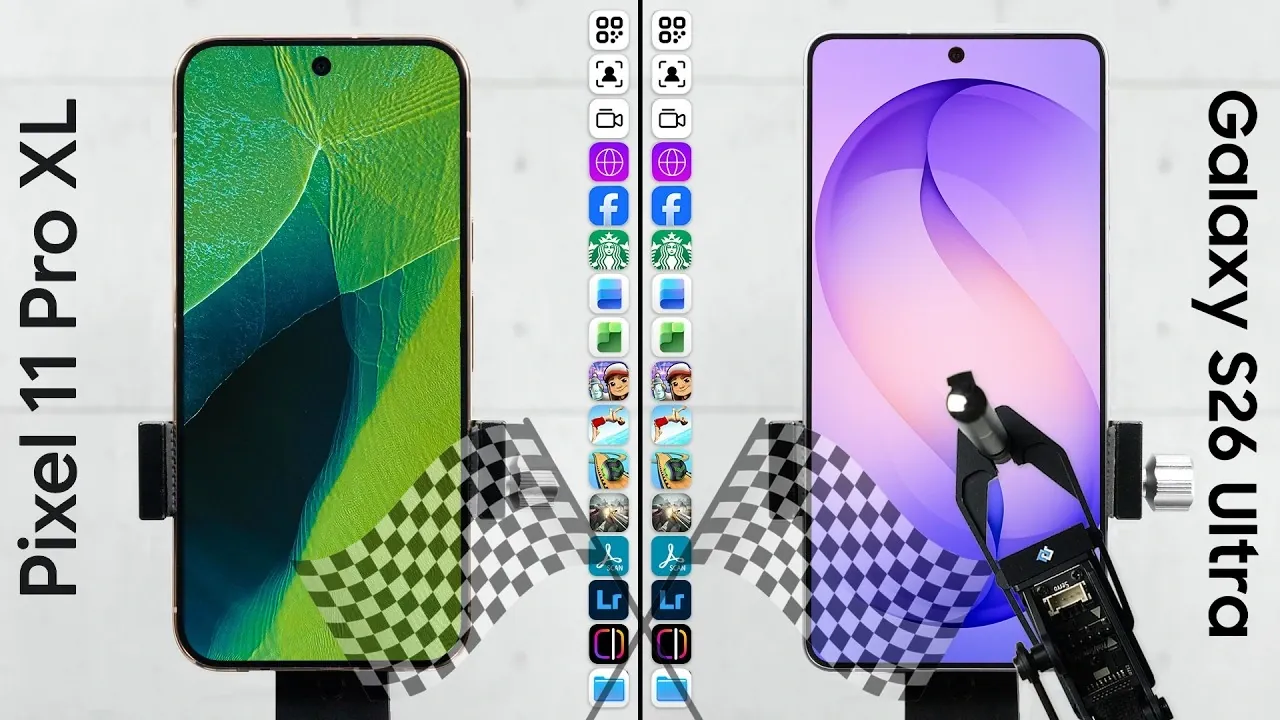
In a direct comparison of flagship smartphones, the Google Pixel 11 Pro XL, powered by the new Tensor G6 chip, faced off against Samsung’s Galaxy S26 Ultra. Despite Google’s claims of enhanced performance, the Pixel struggled to match the Galaxy’s capabilities in key areas such as multitasking, gaming and thermal efficiency. The video below from Phone Buff provides a detailed look at how these devices perform in real-world scenarios, highlighting their strengths and weaknesses.

Tensor G6 Chip: Promises vs Reality
The Google Pixel 11 Pro XL launched with the Tensor G6 chip, which was marketed as a significant upgrade over its predecessor. Google claimed a 25% improvement in web browsing speed and a 15% reduction in app launch times. However, the Pixel’s RAM was reduced from 16GB to 12GB, bringing it in line with the Galaxy S26 Ultra. While this adjustment was intended to optimize resource usage, it raised questions about its impact on multitasking and overall performance.
In early tests, the Tensor G6 demonstrated potential, particularly in tasks like QR code recognition, where it outperformed the Galaxy. However, this initial success did not translate across other performance metrics. The Pixel struggled to maintain consistency, especially in demanding tasks, leaving room for improvement in its execution of flagship-level performance.
Task Performance: Galaxy S26 Ultra Takes the Lead
The Galaxy S26 Ultra consistently outperformed the Pixel 11 Pro XL across a range of tasks, showcasing its superior processing power and optimization. Here’s a breakdown of how the two devices compared in key performance areas:
- Web Browsing: While the Tensor G6 delivered noticeable improvements over the previous Pixel model, the Galaxy S26 Ultra provided faster page loading times and smoother navigation, demonstrating its processing edge.
- App Launches: The Pixel showed moderate gains in app launch speeds, but the Galaxy’s quicker transitions and more responsive interface gave it a clear advantage.
- Portrait Processing: Samsung’s device excelled in rendering high-quality portrait images, completing the task more efficiently and maintaining a lead in camera-related performance.
- Gaming Performance: The Galaxy offered a more stable gaming experience, with higher frame rates and superior heat management. In contrast, the Pixel struggled with thermal buildup during extended gaming sessions, impacting its performance.
- File Handling: File transfers and processing tasks were completed faster on the Galaxy, highlighting its ability to handle intensive workloads with ease.
Multitasking: A Key Differentiator
Multitasking emerged as a critical area where the Galaxy S26 Ultra outshone the Pixel 11 Pro XL. Samsung’s flagship device demonstrated excellent RAM management, allowing users to keep multiple apps open simultaneously without requiring reloads. This capability proved especially valuable during heavy usage, where seamless transitions between apps are essential.
In contrast, the Pixel 11 Pro XL’s reduced RAM capacity and less efficient memory optimization became apparent. The device frequently closed background apps, forcing users to reload them, which disrupted the overall user experience. This limitation underscored the challenges posed by the Pixel’s hardware adjustments and software optimization.
Thermal Efficiency: Sustaining Performance
Thermal efficiency played a pivotal role in determining long-term performance. The Galaxy S26 Ultra maintained cooler temperatures during intensive tasks, making sure consistent performance without throttling. This capability allowed the device to sustain peak performance over extended periods, making it a reliable choice for demanding users.
On the other hand, the Pixel 11 Pro XL exhibited noticeable heat buildup during prolonged usage. This thermal inefficiency not only affected the device’s ability to maintain peak performance but also raised concerns about its durability under heavy workloads. The Pixel’s thermal management fell short of expectations, further widening the performance gap between the two devices.
Galaxy S26 Ultra: The Benchmark for Flagship Performance
The Galaxy S26 Ultra emerged as the definitive winner in this speed test, outperforming the Google Pixel 11 Pro XL in nearly every category. Its faster task completion, superior multitasking capabilities and better thermal efficiency solidified its position as the benchmark for premium smartphones. Samsung’s flagship device demonstrated a level of reliability and performance that sets it apart in the competitive market.
While the Pixel 11 Pro XL showcased some improvements with the Tensor G6 chip, it failed to deliver the flagship-level performance necessary to compete with the Galaxy S26 Ultra. For users prioritizing speed, efficiency and consistent performance, the Galaxy S26 Ultra remains the top choice, reaffirming Samsung’s dominance in the high-end smartphone segment.
Find more information on Pixel 11 Pro by browsing our extensive range of articles, guides and tutorials.
- Google Pixel 11 Pro XL Leak Reveals a Major Design Change to the Camera Bar
- Google Pixel 11 Pro Teaser Unveils the Pixel Glow Camera Bar
- 55% Charge in 5 Minutes: New Google Pixel 11 Pro XL Leak
- Google Pixel 11 Pro vs Google Pixel 10 Pro: Expected Updates
- Why the Google Pixel 11 Could Be the Ultimate Smartphone Comeback
- Sneak Peek at the Unconfirmed Google Pixel 11 Pro Smartphone
Source & Image Credit: PhoneBuff
Disclosure: Some of our articles include affiliate links. If you buy something through one of these links, Geeky Gadgets may earn an affiliate commission. Learn about our Disclosure Policy.
