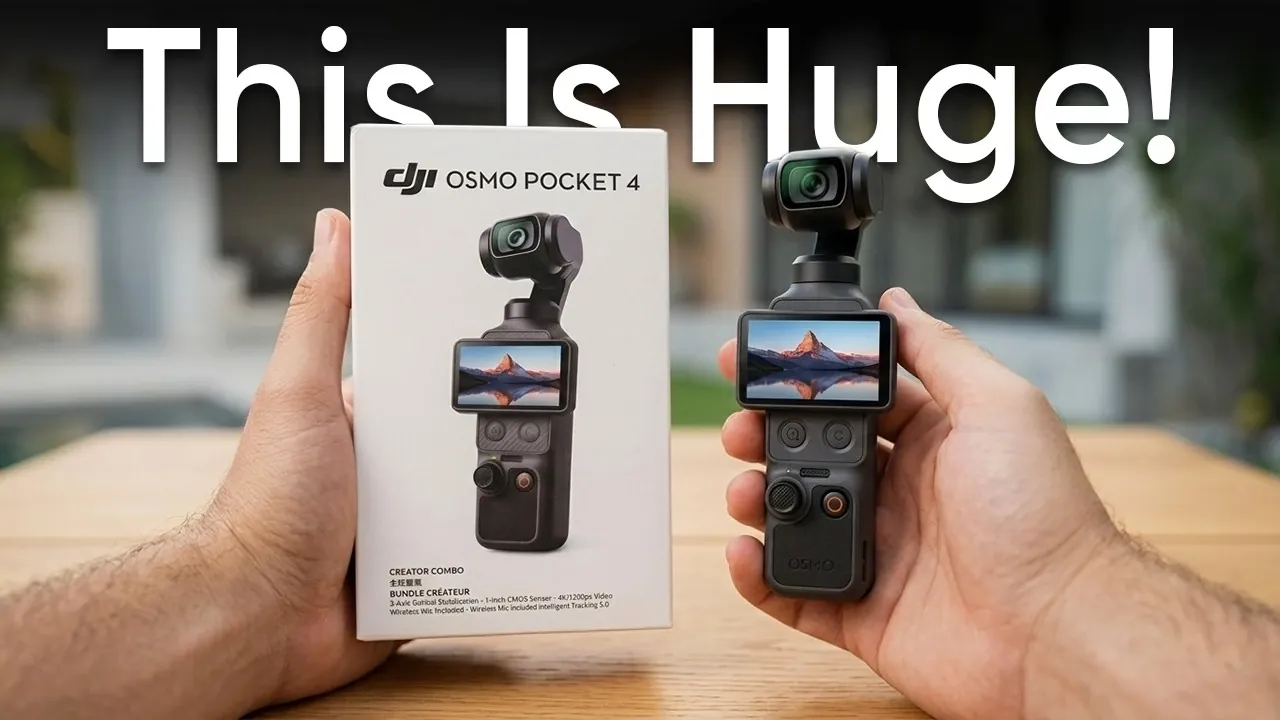
The DJI Osmo Pocket 4, set for release on April 16, 2026, introduces significant updates to DJI’s compact camera lineup. According to TechAvid, one of the most notable features is the rumored 1-inch sensor, which could enhance low-light performance and support versatile framing options for various shooting formats. However, these advancements may present challenges, such as heat management and increased processing demands during high-frame-rate recording.
Explore how the Pocket 4’s 4K 240fps slow-motion mode could expand creative opportunities, while also examining the trade-offs of its small form factor. Gain insight into how DJI might address thermal efficiency and storage bandwidth to maintain performance in demanding scenarios. This deep dive will provide a clear understanding of what to expect from DJI’s latest compact camera.
Advancements in Sensor Technology & Framing Flexibility
TL;DR Key Takeaways :
- The DJI Osmo Pocket 4 is set to launch globally on April 16, 2026, featuring a compact design with significant advancements in sensor technology, slow-motion recording and reframing flexibility.
- A rumored 1-inch sensor upgrade promises superior image quality, especially in low-light conditions and allows seamless reframing across various formats without resolution loss, catering to mobile-first content creators.
- Enhanced slow-motion capabilities include potential 4K at 240fps and 1080p at 480fps, offering ultra-smooth footage but posing challenges in heat management and processing power.
- The compact design balances portability and performance, making it ideal for creators on the move, though trade-offs like heat dissipation and storage bandwidth limitations may affect extended use.
- The Pocket 4 aims to redefine portable video recording, blending innovative technology with convenience, but users should consider potential limitations in real-world performance.
At the heart of the DJI Osmo Pocket 4 lies its rumored 1-inch sensor, a substantial upgrade over its predecessor. This larger sensor is expected to deliver superior image quality, particularly in low-light conditions, while offering greater creative versatility. Unlike the traditional 16:9 aspect ratio, the Pocket 4 may use the full sensor area, allowing seamless reframing across horizontal, vertical, or unconventional formats without compromising resolution.
This feature is especially valuable for content creators who need to adapt their footage for various platforms, ranging from social media to professional video projects. The ability to crop vertical content directly from the full sensor resolution could eliminate the need for extensive external editing, catering to the growing demand for mobile-first, high-quality video production. For creators, this means more time spent capturing moments and less time spent on post-production adjustments.
Slow-Motion Recording: Raising the Bar
The DJI Osmo Pocket 4 is expected to set a new benchmark in slow-motion recording. While its predecessor supported 4K at 120fps and 1080p at 240fps, leaks suggest the Pocket 4 could introduce an unprecedented 4K 240fps mode, allowing ultra-smooth, highly detailed footage. Additionally, 1080p recording may surpass 240fps, potentially reaching 480fps, offering even more creative possibilities for capturing fast-paced or dynamic scenes.
These advancements, however, come with technical challenges. High frame rates demand significant processing power and storage bandwidth, which could limit the camera’s ability to sustain such performance over extended periods. Furthermore, the compact design of the Pocket 4 raises concerns about heat management. Recording at high frame rates generates substantial thermal output, which could impact the device’s ability to maintain consistent performance during prolonged use. These challenges highlight the delicate balance between innovation and practicality in compact camera design.

Gain further expertise in action cameras by checking out these recommendations.
- SJCAM C400 Review: The 3-in-1 4K Action Camera Built for Creators
- GoPro Hero12 action camera with HyperSmooth 6.0 stabilization
- Snap Wearable 4K Action Camera
- GoPro HERO 6 Action Camera External Power Kit (video)
- Xtra Atto Is a Tiny 4K Wearable Action Camera With Big Features
- DIY 3D Printed Raspberry Pi Action Camera (video)
- Panasonic HX-A1 Action Camera (video)
Overcoming Technical Challenges
While the DJI Osmo Pocket 4 promises innovative features, its small form factor introduces inherent constraints. Heat management remains a critical concern, as higher frame rates and extended recording sessions generate significant thermal output. To address this, DJI may need to incorporate advanced cooling systems, which could add complexity or slightly affect the device’s portability.
Processing power and storage bandwidth are equally important considerations. High-resolution, high-frame-rate footage requires rapid data processing and storage, which may lead to compromises such as cropped or line-skipped readouts. While these techniques help manage hardware limitations, they could affect image quality in certain scenarios, particularly in demanding shooting conditions. Despite these challenges, DJI’s track record suggests that the company is likely to implement innovative solutions to optimize performance without sacrificing portability.
Portability Meets Performance
The defining characteristic of the Osmo Pocket series has always been its compact design, and the Pocket 4 continues this tradition. Despite its small size, the device integrates advanced technologies that rival larger, more cumbersome cameras. This balance between portability and performance underscores DJI’s commitment to innovation, but it also highlights the challenges of incorporating high-end features into a pocket-sized device.
For creators on the move, the Pocket 4’s lightweight design and advanced capabilities make it an attractive option. Whether you’re capturing cinematic footage or creating content for social media, the Pocket 4 offers a versatile solution that fits in the palm of your hand. However, its compact nature means that trade-offs in areas such as heat dissipation and processing efficiency are inevitable. These limitations, while manageable, are worth considering for users planning to push the device to its limits.
The Future of Portable Video Recording
The DJI Osmo Pocket 4 represents a significant leap forward in the realm of portable video recording. With anticipated improvements in sensor technology, slow-motion capabilities, and reframing flexibility, it has the potential to become a go-to tool for both professional filmmakers and casual content creators. However, potential limitations in heat management, processing power and storage bandwidth could temper expectations, particularly for users seeking to maximize the device’s capabilities.
As the April 16 launch approaches, all eyes will be on DJI to see how it addresses these challenges while delivering on its promise of “The world in my pocket.” Whether you’re a seasoned filmmaker or an aspiring creator, the Pocket 4’s blend of portability and performance could redefine what’s possible in a compact camera, offering a unique combination of convenience and innovative technology.
Media Credit: TechAvid
Disclosure: Some of our articles include affiliate links. If you buy something through one of these links, Geeky Gadgets may earn an affiliate commission. Learn about our Disclosure Policy.
