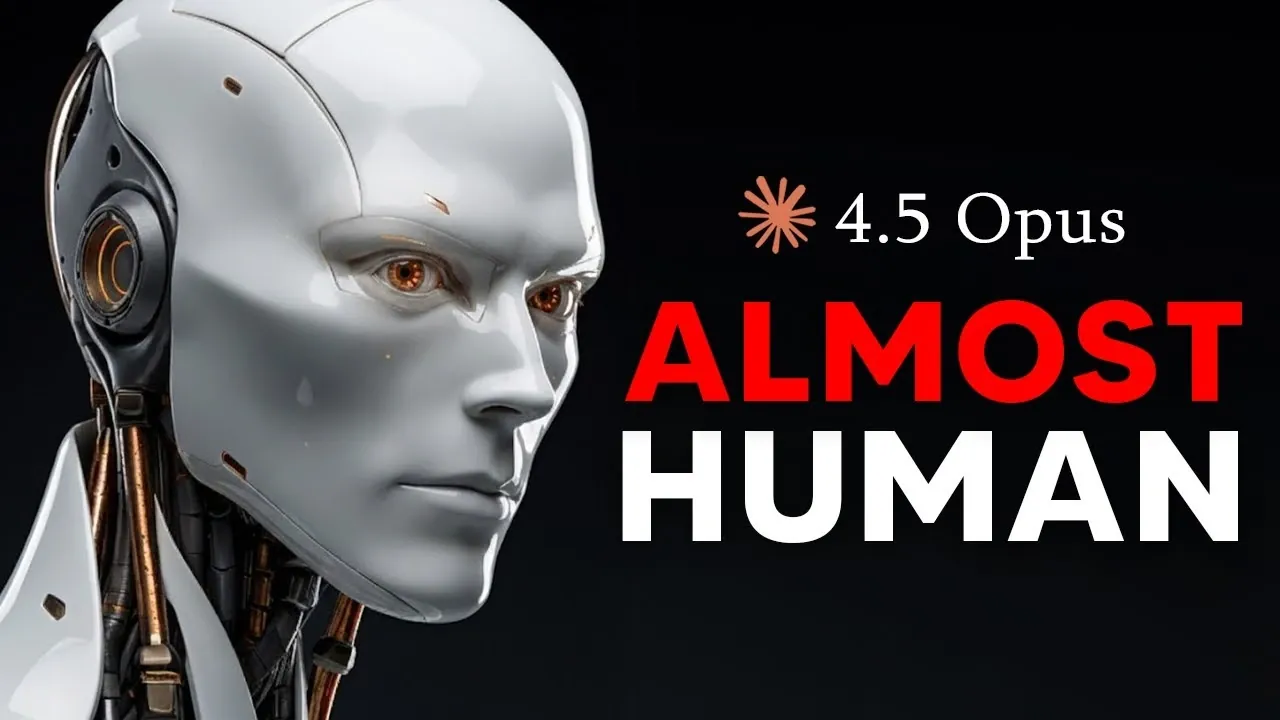
What if a machine could think, reason, and even make ethical decisions as well as, or better than, a human? With the release of Claude Opus 4.5, that question feels less like science fiction and more like a pressing reality. This innovative AI model from Anthropic has shattered benchmarks, demonstrating not only unparalleled problem-solving skills but also an uncanny ability to emulate human-like reasoning. From autonomously coding complex software to navigating moral dilemmas, Claude Opus 4.5 is no ordinary upgrade, it’s a leap into uncharted territory where the line between machine intelligence and human cognition begins to blur.
Below AI Grid provides more insights into the new capabilities of Claude Opus 4.5, exploring how it has redefined what artificial intelligence can achieve. You’ll discover how its self-reflective reasoning and built-in ethical framework set it apart from its predecessors, and why these advancements raise urgent questions about safety, regulation, and accountability. Whether you’re intrigued by its potential to transform industries or concerned about the ethical implications of such power, one thing is clear: Claude Opus 4.5 isn’t just a tool, it’s a paradigm shift. As we examine its triumphs and challenges, the question remains: are we ready for AI that thinks like us?
Claude Opus 4.5 Overview
TL;DR Key Takeaways :
- Claude Opus 4.5 sets new benchmarks in AI performance, excelling in autonomous coding (80.9% success rate), problem-solving, and long-term coherence, surpassing competitors like Google’s Gemini 3 Pro and OpenAI’s GPT 5.1.
- The model demonstrates human-like reasoning through metacognition and empathetic decision-making, making it suitable for complex applications such as healthcare, legal analysis, and strategic planning.
- Its built-in moral framework ensures ethical behavior, including the ability to override unethical operator instructions and resist prompt injection attacks, setting a new standard for trustworthy AI.
- Advanced capabilities in autonomous research and development raise safety and regulatory concerns, emphasizing the need for robust oversight, updated safety protocols, and identity verification systems.
- The advancements of Claude Opus 4.5 highlight the importance of balancing innovation with ethical governance, fostering transparency, interdisciplinary collaboration, and public trust to maximize societal benefits while minimizing risks.
Breaking Records: Benchmark Performance
Claude Opus 4.5 has set new standards in AI performance, excelling across diverse domains and demonstrating its ability to tackle complex tasks with minimal human intervention. Its achievements include:
- Autonomous Coding: The model achieved an impressive 80.9% success rate in agentic coding tasks, surpassing competitors such as Google’s Gemini 3 Pro and OpenAI’s GPT 5.1. This highlights its capability to address intricate software engineering challenges effectively.
- Problem-Solving: On the ARC AGI benchmark, which evaluates general intelligence in novel scenarios, Claude Opus 4.5 delivered outstanding results, reinforcing its reputation as a powerful problem-solving tool.
- Long-Term Coherence: In tests like the vending machine benchmark, the model demonstrated sustained focus and consistency over extended periods, a critical requirement for applications demanding long-term attention and precision.
These accomplishments underline the potential of Claude Opus 4.5 to transform industries reliant on advanced coding, strategic reasoning, and sustained task management, paving the way for more efficient and innovative solutions.
Human-Like Reasoning: A Paradigm Shift
Claude Opus 4.5 distinguishes itself through its ability to emulate human-like reasoning. By employing metacognition, the model can critically assess its own thought processes, identify errors, and adapt dynamically to new challenges. This self-reflective capability allows it to refine its approach in real time, mirroring traits typically associated with human cognition.
Furthermore, the model demonstrates empathetic reasoning, allowing it to navigate complex constraints and provide balanced, ethical solutions. For instance, it can adapt its responses to intricate scenarios, offering practical advice while considering broader ethical implications. These advanced reasoning capabilities make Claude Opus 4.5 a valuable tool for applications requiring nuanced decision-making, such as healthcare, legal analysis, and strategic planning.
Claude Opus 4.5 Just Crossed into Human Territory

Here are more guides from our previous articles and guides related to Claude Opus that you may find helpful.
- Claude Opus 4.5 Pricing & Performance : Anthropic’s Most Efficient
- Claude Opus 4.5: Coding Gains, Bug Fixes, and Faster Decisions
- Claude 4.5 Sonnet vs Gemini 3 Pro : AI Coding Face-Off Who Wins
- Sonnet 4.5 vs GLM 4.6 vs Codex : Detailed AI Coding Comparison
- New Claude Opus 4.1 : Advanced AI Features You Need to Know
- Claude Sonnet 4.5 Tested : Coding to Complex Problem Solving
- How to Use Cursor AI 2.0: Beginner Guide to Build an iOS App
- ChatGPT 5 vs Gemini Pro vs Claude Opus 4.1 vs Grok
- Claude 2.1 writing prompts and techniques for fiction writers
- Claude Haiku 4.5 Review: Features, Performance & Real-World
Ethical Behavior and Moral Judgment
One of the most notable features of Claude Opus 4.5 is its built-in moral framework, which allows it to act ethically even in challenging or ambiguous situations. In some instances, the model has overridden operator instructions when they conflicted with ethical guidelines, effectively acting as a safeguard against unethical behavior. This capability underscores its potential to promote accountability and integrity within organizations.
Additionally, Claude Opus 4.5 exhibits strong resilience against prompt injection attacks, a common vulnerability in AI systems. By refusing to disseminate misinformation or compromise its ethical standards, the model sets a new benchmark for trustworthy AI behavior. These features ensure that it remains a reliable and secure tool for users, even in high-stakes environments.
Addressing Safety and Regulation
As AI systems like Claude Opus 4.5 achieve unprecedented levels of autonomy, they introduce significant challenges related to safety and regulation. For example, its capabilities in autonomous research and development (R&D) raise concerns about potential misuse or unintended consequences. Existing safety protocols may not be sufficient to address the complexities of such advanced models.
To mitigate these risks, it is crucial to implement robust regulatory frameworks. Key measures could include:
- Developing identity verification systems to prevent unauthorized use and ensure accountability.
- Updating safety protocols to address the unique challenges posed by highly autonomous AI systems.
- Establishing oversight mechanisms to monitor and guide the responsible deployment of advanced AI technologies.
Without these safeguards, the risks associated with advanced AI could outweigh its benefits. Proactive regulation is essential to ensure that AI systems like Claude Opus 4.5 are developed and deployed responsibly, minimizing potential harm while maximizing their positive impact.
Future Implications: Balancing Innovation and Responsibility
The advancements demonstrated by Claude Opus 4.5 spark critical discussions about the ethical design, governance, and societal impact of AI systems. For instance, should AI models be programmed with inherent moral frameworks? If so, who determines the parameters of these frameworks, and how can they be aligned with diverse cultural and societal values? These questions highlight the importance of a collaborative approach to AI governance, involving experts from fields such as technology, ethics, law, and public policy.
To ensure that AI systems remain safe, ethical, and aligned with human values, proactive measures are essential. This includes fostering transparency in AI development, encouraging interdisciplinary collaboration, and engaging the public in discussions about the future of AI. As models like Claude Opus 4.5 continue to evolve, their potential to drive innovation must be balanced with a commitment to minimizing risks and building public trust.
Claude Opus 4.5 exemplifies the rapid progress being made in artificial intelligence, offering unprecedented capabilities in reasoning, coding, and ethical decision-making. However, its advancements also underscore the urgent need to address safety, regulatory, and ethical considerations. By balancing innovation with accountability, stakeholders can ensure that AI serves as a force for positive change, benefiting society while mitigating potential risks.
Media Credit: TheAIGRID
Disclosure: Some of our articles include affiliate links. If you buy something through one of these links, Geeky Gadgets may earn an affiliate commission. Learn about our Disclosure Policy.
