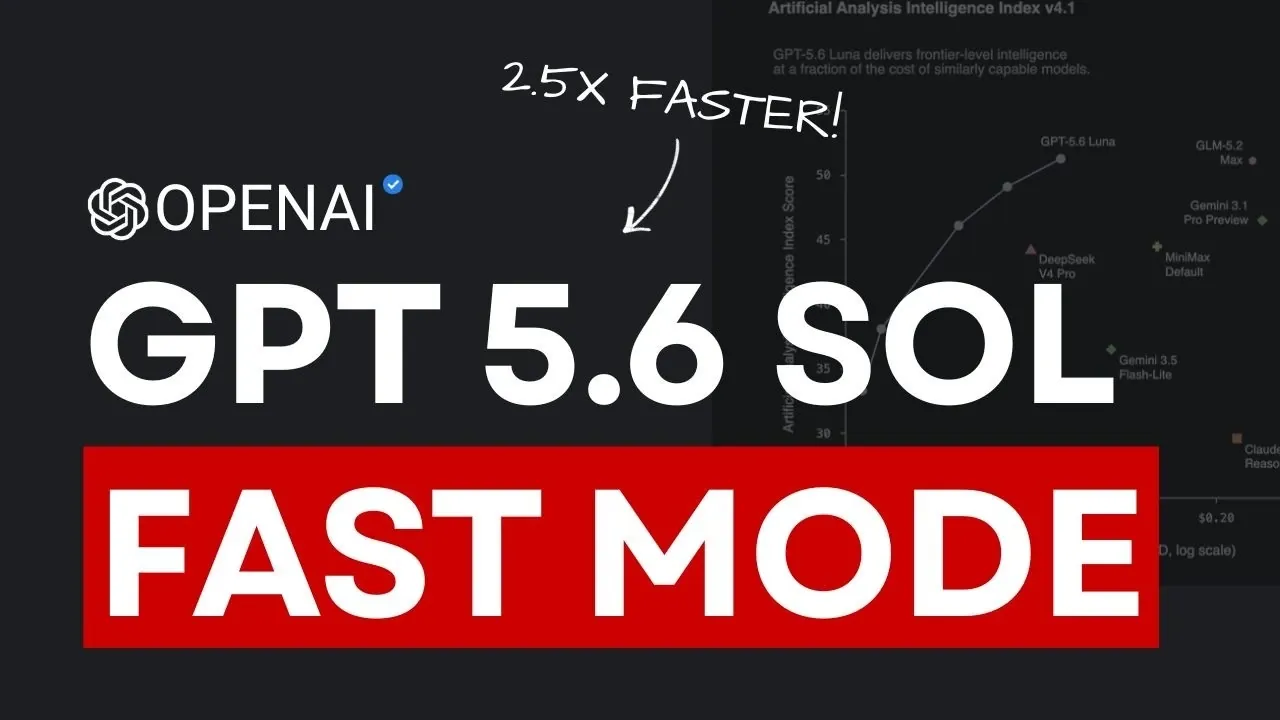
OpenAI’s recent moves are reshaping the AI landscape, with significant price cuts and performance upgrades to its GPT 5.6 models. Notably, the GPT 5.6 Luna model has seen an 80% price reduction, made possible by advancements in the GPT 5.6 Sol infrastructure, which enhances efficiency without sacrificing quality. Meanwhile, the introduction of GPT 5.6 Sol Fast Mode offers results 2.5 times faster than standard processing, catering to industries like finance and healthcare that rely on real-time decision-making. Universe of AI explores how these updates reflect OpenAI’s strategy to balance affordability, speed and precision in an increasingly competitive market.
Dive into this explainer to understand how these developments intersect with the upcoming release of GLM 5.5 from Z.ai, a large language model boasting 1.6 trillion parameters and optimized for coding long-horizon agents. You’ll also gain insight into GLM 5.5’s compatibility with Huawei’s domestic chips and the challenges its scale presents for smaller users. Additionally, learn how OpenAI’s experimental Zinc and Magnesium models are pushing boundaries in AI-driven game development, signaling new possibilities for interactive and complex environments.
GLM 5.5: Redefining Large Language Models
TL;DR Key Takeaways :
- OpenAI has significantly reduced prices for its GPT 5.6 models, with the Luna model seeing an 80% price cut, making advanced AI more accessible and competitive against open source initiatives.
- The upcoming Z.ai GLM 5.5 model, featuring 1.6 trillion parameters, is set to challenge industry standards with its advanced capabilities, particularly in coding long-horizon agents, but requires substantial computational resources.
- OpenAI’s GPT 5.6 Sol Fast Mode delivers results 2.5 times faster than standard processing, catering to industries requiring real-time decision-making, such as finance and healthcare.
- OpenAI is exploring AI-driven game development with experimental Zinc and Magnesium models, aiming to create playable, AI-generated games and innovate in the gaming industry.
- The competition between proprietary frontier labs like OpenAI and open source AI initiatives is driving rapid advancements, making sure diverse and impactful technological progress in the AI ecosystem.
The upcoming release of GLM 5.5, scheduled for early August, represents a major milestone in the development of large language models (LLMs). With an impressive 1.6 trillion parameters, more than double the size of its predecessor, GLM 5.2, this model is designed to push the boundaries of AI capabilities. It is positioned as a direct competitor to China’s Kimmy K3 and is specifically optimized for coding long-horizon agents, making it a powerful tool for solving complex AI challenges.
One of the most notable features of Z.ai’s GLM 5.5 is its compatibility with Huawei’s domestic chips, reflecting a strategic emphasis on hardware optimization. This alignment with local hardware solutions highlights its potential to strengthen China’s AI ecosystem. However, the model’s massive size introduces challenges for smaller-scale users, as its deployment requires substantial computational resources. Despite these limitations, GLM 5.5 is expected to dominate the open-weight model space, solidifying its role as a key player in the global AI landscape.
OpenAI’s Aggressive Price Reductions
OpenAI has taken decisive steps to make its GPT 5.6 models more accessible by implementing significant price cuts. The GPT 5.6 Luna model now features an 80% price reduction, while the GPT 5.6 Terra model has seen a 20% decrease in cost. These reductions are made possible by advancements in the GPT 5.6 Sol infrastructure, which enhances processing efficiency without compromising performance.
The Luna model, in particular, delivers high-quality performance at a fraction of the cost of competing models, making it an attractive option for developers and businesses seeking cost-effective AI solutions. This pricing strategy not only reflects OpenAI’s commitment to affordability but also serves as a calculated response to the growing competition from open source AI initiatives. By lowering barriers to entry, OpenAI is positioning itself as a leader in the widespread access of advanced AI technologies.

Here are additional guides from our expansive article library that you may find useful on GPT 5.6.
- GPT-5.6 Pro Leaks Expose a Massive Jump in AI Reasoning Power
- What to Expect from OpenAI’s GPT-5.6 Release in June 2026
- What the Leaked ChatGPT 5.6 Model Reveals About OpenAI’s Next Move
- ChatGPT 5.6 vs Claude Mythos 5 : Leaks Reveal Two Very Different Futures for AI
- What ChatGPT 5.6’S Delay Means for the Future of Open Source AI
- OpenAI Introduces ChatGPT 5.6 Sol, Terra and Luna Models
- OpenAI’s Stealth Tests Reveal ChatGPT 5.6 Pro’s True Power
- OpenAI’s GPT-5.6 Release is Triggering an AI Price War
- ChatGPT 5.6 vs Claude Fable 5: Which AI Actually Comes Out on Top?
- Leaked Gemini 3.5 Pro Details Reveal Why Google is Falling Behind AI Rivals
GPT 5.6 Sol Fast Mode: Speed Without Compromise
The introduction of GPT 5.6 Sol Fast Mode marks a significant leap forward in processing speed. This new API mode is capable of delivering results 2.5 times faster than standard processing, making it particularly valuable for applications that require rapid decision-making. While Fast Mode comes at twice the cost of the standard mode, it maintains the same level of intelligence and accuracy, making sure that users do not have to compromise on quality.
Fast Mode is especially beneficial for industries that rely on real-time data analysis and decision-making, such as financial markets, healthcare diagnostics and customer support. By combining speed with precision, this feature sets a new benchmark for high-performance AI applications, allowing businesses to operate more efficiently in time-sensitive environments.
AI in Game Development: Zinc and Magnesium Models
OpenAI is expanding its reach into the gaming industry with the experimental Zinc and Magnesium models. These models are being tested on platforms like Design Arena, with the goal of creating playable, AI-generated games, including Minecraft-like clones. Although early results have been mixed, the potential for AI-driven game design remains substantial.
The application of AI in game development represents a promising frontier, offering the possibility of generating complex, interactive environments and streamlining the game creation process. OpenAI’s efforts in this area aim to establish a foothold in a competitive market, where the ability to innovate could redefine the gaming experience for developers and players alike.
Frontier Labs vs Open source Models
The competition between proprietary frontier labs, such as OpenAI and open source AI initiatives is becoming increasingly intense. OpenAI’s focus on efficiency and affordability is a direct response to the growing influence of open source models like China’s Kimmy K3. By making advanced AI technologies more accessible, OpenAI seeks to maintain its leadership position in the rapidly evolving AI ecosystem.
Conversely, open source models continue to drive innovation and collaboration, challenging proprietary systems and fostering advancements across the industry. This dynamic interplay between frontier labs and open source initiatives is accelerating the pace of AI development, making sure that the technology evolves in diverse and impactful ways.
Additional Innovations from OpenAI
OpenAI has introduced several updates to its existing tools, further enhancing their functionality and accessibility. The ChatGPT app and Codec CLI, now powered by GPT 5.6 Luna, have undergone significant improvements. These updates have reduced operational costs by a factor of 10, making them more accessible to developers and end-users alike.
The ChatGPT app now features a new auto-review capability, which streamlines content evaluation and improves user experience. These enhancements reflect OpenAI’s ongoing commitment to delivering practical, user-friendly solutions that cater to a wide range of needs. By continuously refining its offerings, OpenAI is making sure that its technologies remain relevant and valuable in an increasingly competitive market.
The Road Ahead
The rapid advancements in AI, exemplified by OpenAI’s cost-efficient models and the new GLM 5.5, highlight the fantastic potential of this technology. As competition intensifies between proprietary frontier labs and open source initiatives, the future of AI promises to be both dynamic and accessible. These innovations are reshaping industries and redefining the role of AI in everyday life, offering new opportunities for developers, businesses and enthusiasts alike.
Media Credit: Universe of AI
Disclosure: Some of our articles include affiliate links. If you buy something through one of these links, Geeky Gadgets may earn an affiliate commission. Learn about our Disclosure Policy.
