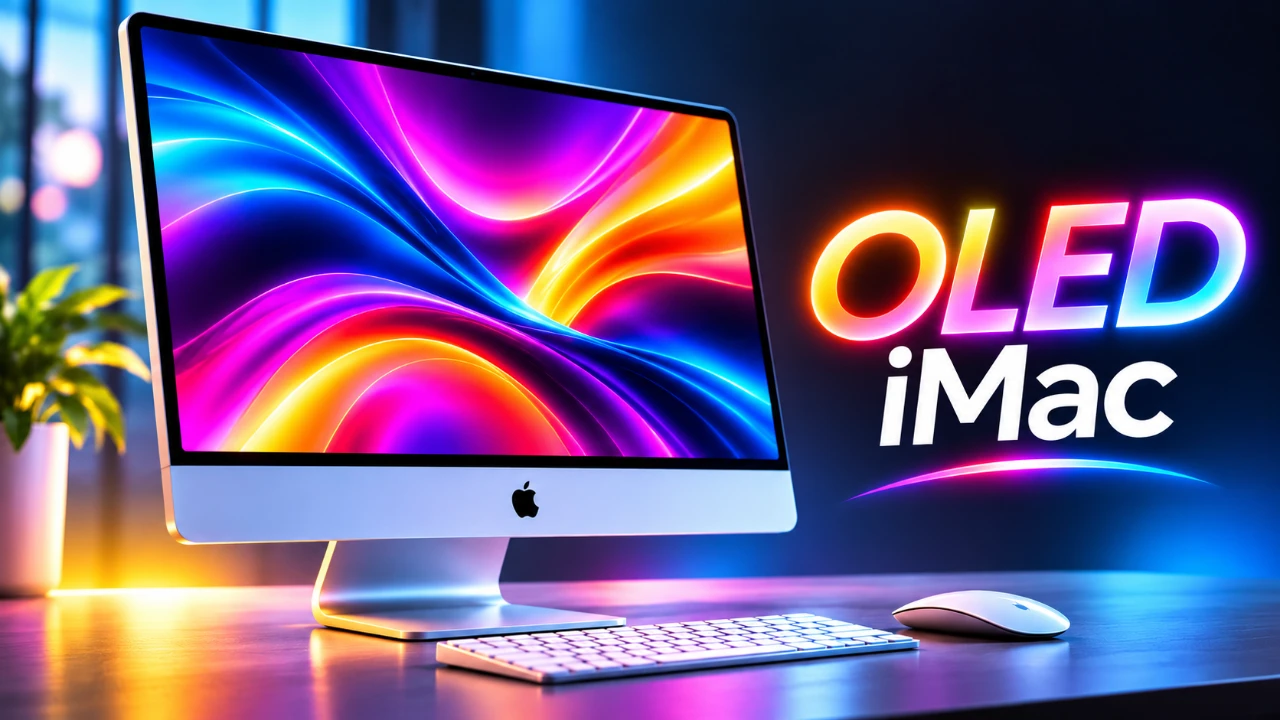
Getting deeper blacks on an Apple all-in-one could come at a higher price: an OLED iMac is estimated to start at $1,699 before US tax. SaranByte reports that Apple has discussed delaying development with Samsung Display, although that does not necessarily mean the project will be abandoned. Earlier reports pointed to a launch around 2029 or 2030, while Apple has also reportedly sought LCD panels for an iMac expected around 2029. Find out why the screen upgrade could be expensive and what the reported supplier work means for your next desktop.
TL;DR Key Takeaways :
- Development schedule: The Elec reports Apple has discussed delaying OLED iMac development with Samsung Display while assessing demand.
- Release timing: Earlier reports suggested an OLED iMac could arrive around 2029 or 2030.
- Starting price: OLED could push the estimated starting price from $1,499 toward $1,699 before US tax.
- OLED demand: A report says Apple reduced its OLED iPad Pro shipment projection from up to 10 million to approximately 6.7 million.
- Display development: Samsung Display has reportedly been developing a 24-inch OLED iMac panel at approximately 220 pixels per inch.
Apple is reportedly reconsidering when, or whether, to release an OLED iMac. The cost of OLED panels and uncertainty about demand could make the upgrade difficult to justify.
Apple’s iMac combines a display, speakers, and computer in one desktop machine. You can use it after connecting its power cable, without choosing a separate monitor, a simplicity that appeals to students and other buyers. The current design dates from 2021 and uses an LCD screen, following a previous chassis that lasted around a decade.
Once a defining Apple product recognized by ordinary consumers, the iMac was a more distinct choice from a MacBook. Its role has diminished alongside a more compelling Mac mini, more capable MacBooks and the premium Studio Display.
Apple is Reportedly Reconsidering the Schedule
According to The Elec, Apple has discussed changes to its OLED iMac development schedule with Samsung Display. The reported talks focus on delaying development while Apple assesses demand; they do not necessarily mean Apple will abandon the project. The iMac’s sales volume could make Apple cautious about investing in expensive technology if customers are not prepared to buy it.
Earlier reports suggested an OLED iMac could arrive around 2029 or 2030, after Apple first approached display suppliers about developing panels in 2025. Apple has also reportedly asked LCD suppliers, including BOE, to develop panels for another iMac expected around 2029, raising the possibility that the desktop will still use LCD near the end of the decade. The current design and LCD could remain until 2030 if sales do not justify a more ambitious update.
The Elec suggests that a leadership change could be influencing Apple’s thinking as the company reportedly weighs OLED’s benefits against its cost. John Ternus became Apple’s CEO in September, although financial and supply-chain considerations could also shape the decision. Ternus may favor greater selectivity about which product categories receive expensive upgrades.

OLED Costs Could Push the Price Higher
The base iMac starts at $1,499, before any OLED upgrade, after a starting-price increase partly attributed to a memory shortage. Rising memory and component costs add to the pricing pressure, while OLED panels themselves carry a premium.
Customers may not be willing to pay that premium, and could save considerably by pairing a Mac mini with a separate display instead. An OLED screen could push the estimated starting price toward $1,699 before US tax and before further increases from memory or other components, which could be difficult for a family desktop. OLED MacBook Pros reportedly cost $400 more than their mini LED counterparts.
Apple introduced tandem OLED on the M4 iPad Pro, bringing better contrast and deeper blacks, but demand appears to have fallen short of expectations. A report says Apple initially projected shipments of up to 10 million OLED iPad Pro units before reducing that figure to approximately 6.7 million.
Samsung Display and LG Display are forecast to ship around 4.9 million OLED iPad Pro panels in 2026, down from approximately 6 million in 2025. That expected decline of around 18 percent, together with display and memory costs, could be influencing Apple’s thinking about the iMac.
Suppliers Have Worked on OLED Panels
Samsung Display has reportedly been developing a 24-inch OLED panel for the iMac at approximately 220 pixels per inch. Apple’s original requirements apparently called for 600 nits of brightness and around 218 pixels per inch.
Samsung is working on a five-layer light-emitting design intended to improve brightness and display longevity, with samples originally expected to reach Apple in the second half of 2026. LG Display had also been developing a competing five-layer panel for the iMac, but that work reportedly stopped.
We would treat this as an unconfirmed report of talks, not a decision. In our view, nobody should postpone a needed computer purchase over a rumoured screen that may or may not arrive.
An OLED screen could make the iMac more expensive, and Apple is reportedly reconsidering the development schedule as it weighs the cost against demand. For now, a Mac mini paired with a separate display offers an alternative to waiting for an OLED desktop. If you want an Apple all-in-one with an OLED screen, the OLED iMac is worth watching as Apple considers whether the upgrade makes commercial sense.
Here are additional guides from our expansive article library that you may find useful on the Apple iMac.
- Apple is Bringing the M6 Chip to the New iMac
- Apple Announces New iMac with Faster M6 Chip and AI Features
- Apple’s M6 iMac Is Here: First Impressions of the Ultimate All-in-One
- Apple’s iMac M5: Deep Dive into the Latest Leaks!
- The M5 iMac is Coming: Is it Worth the Wait?
Source: SaranByte
Disclosure: Some of our articles include affiliate links. If you buy something through one of these links, Geeky Gadgets may earn an affiliate commission. Learn about our Disclosure Policy.
