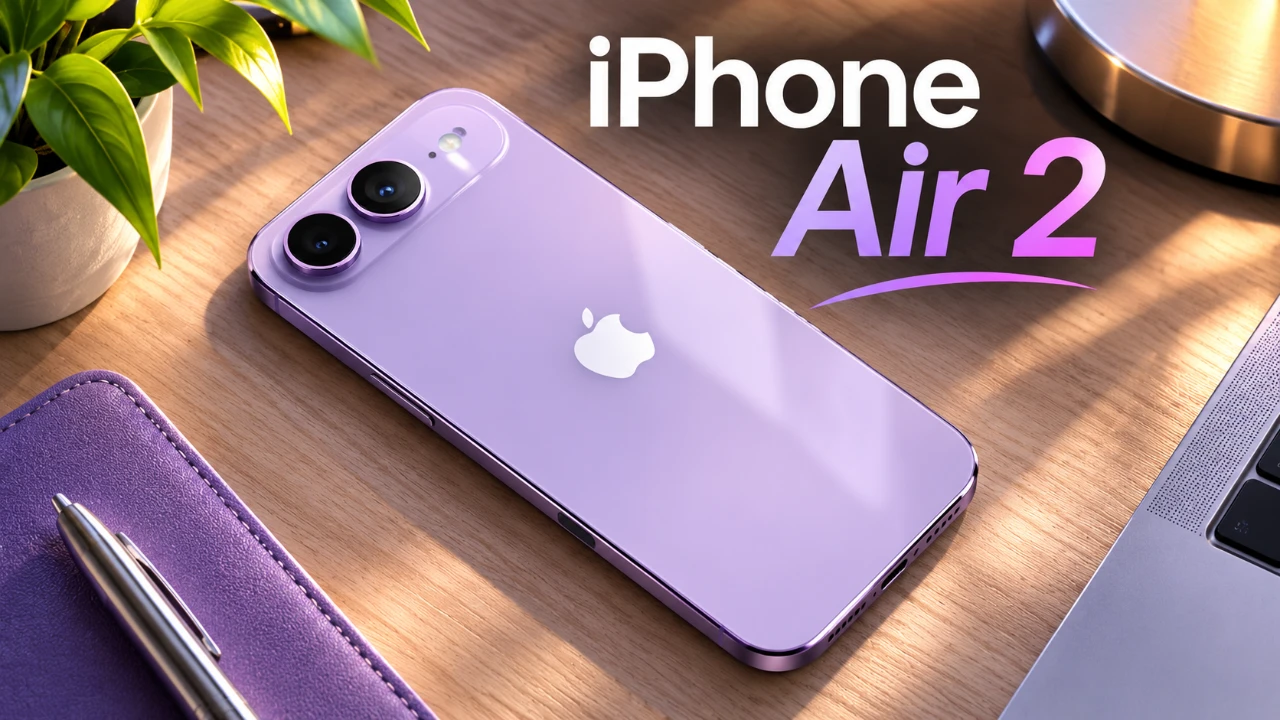
Apple is shifting to a split iPhone release strategy, separating its fall flagship models from its spring mainstream lineup. The iPhone Air 2, slated for a spring 2027 debut alongside the standard iPhone 18 and iPhone 18e, exemplifies this transition. By pairing a reused 6.5-inch OLED display panel with targeted upgrades to its camera system, silicon, and battery life, Apple aims to fix the original model’s biggest compromises while keeping component costs in check.
TL;DR Key Takeaways :
- March 2027 Spring Debut: Display production schedules point to a March 2027 launch alongside the iPhone 18 and iPhone 18e, following the fall 2026 arrival of the iPhone 18 Pro and iPhone Duo.
- Carried-Over 6.5-Inch OLED: Retains the existing 6.5-inch 120Hz LTPO OLED screen with 3,000-nit peak HDR brightness, supplied exclusively by Samsung Display.
- Second Rear Camera & 2nm Silicon: Addresses early complaints by adding a dedicated 48MP ultra-wide lens alongside a 2nm A20-series chip and Apple’s power-saving C2 modem.
- Battery & Cost Focus: Uses component reuse to manage margins while making internal room for a slightly larger battery cell.
What’s New: Staggered iPhone Launches
For the first time, Apple is dividing its primary iPhone releases into two distinct seasonal waves to give each tier dedicated spotlight. Following the September 2026 debut of the high-end iPhone 18 Pro, Pro Max, and foldable iPhone Duo, the standard iPhone 18, iPhone 18e, and iPhone Air 2 are scheduled to arrive in spring 2027.
This staggered release strategy serves multiple purposes:
- It allows Apple to address distinct buyer segments without cheaper or ultra-thin models getting overshadowed by Pro and foldable flagships.
- It eases manufacturing and supply chain bottlenecks by spreading OLED and chipset demand across two halves of the year.
- It keeps iPhone hardware in the news cycle year-round, sustaining consumer interest and upgrade momentum into spring.
By adopting this split calendar, Apple is actively reshaping how it manages product lifecycles across an expanding lineup.
Production Timeline and Display Details
According to supply-chain reports, Samsung Display is scheduled to begin panel production for the iPhone Air 2 in late December 2026 or early January 2027, aligning with a projected commercial release in March 2027.
Rather than commissioning a brand-new screen, the iPhone Air 2 carries over the 6.5-inch LTPO OLED panel architecture from its predecessor. Key display specifications include:
- An adaptive 120Hz ProMotion refresh rate, ensuring smooth scrolling and fluid system animations.
- A sharp 2,736 × 1,260 resolution for crisp text and media playback.
- A peak HDR brightness of 3,000 nits, delivering strong outdoor legibility and high-contrast visuals.
While Samsung Display remains the sole panel supplier for the Air 2, reusing an established screen spec keeps display yields predictable while shifting R&D spending toward internal hardware fixes.
Key Upgrades in the iPhone Air 2
Despite keeping the same screen size and resolution, the iPhone Air 2 targets the exact pain points that held back the first-generation ultra-thin model. Rumored upgrades include:
- Next-Generation 2nm Silicon & C2 Modem: Stepping up to a 2nm A20-series processor alongside Apple’s power-efficient C2 cellular modem to boost speed and trim wireless battery drain.
- Second Rear Ultra-Wide Camera: Adding a dedicated 48MP ultra-wide lens beside the 48MP main sensor, solving the single-camera limitation that frustrated photographers on the original Air.
- Slightly Larger Battery Capacity: Reworking internal component stacking to fit a higher-capacity battery cell inside the razor-thin chassis, directly addressing endurance complaints.
These enhancements reflect a pragmatic response to real-world buyer feedback—focusing on battery endurance, camera versatility, and efficiency rather than cosmetic changes.

Apple’s Cost-Conscious Market Strategy
The iPhone Air 2 underscores a more disciplined approach to Apple’s ultra-thin tier. Because the original iPhone Air saw softer-than-expected sales due to its single camera and modest battery life, Apple is carefully managing component costs and production volumes on the second generation. By carrying over the 6.5-inch OLED panel while concentrating upgrades on the rear camera array and internal silicon, Apple reduces supply-chain risk while delivering a noticeably more complete handset.
Who Will the iPhone Air 2 Appeal To?
The iPhone Air 2 is tailored for buyers who loved the featherweight, ultra-slim ergonomics of the first Air but held off because of its single rear camera and tight battery margins. With a second ultra-wide lens, a 2nm processor, and improved battery capacity on the way for March 2027, it shapes up as a far more balanced everyday phone—even if skipping a display overhaul means it won’t satisfy spec-chasers looking for cutting-edge screen tech.
Gain further expertise in iPhone Air 2 by checking out these recommendations.
- iPhone Air 2 Leaks: Apple Reportedly Solves the Biggest Battery Flaw
- Why the iPhone Air 2 Might Actually Be Worth Buying This Time
- iPhone Air 2 Leak: Apple Finally Fixes the Camera and Battery
- iPhone Air 2 Leaks Reveal a Second Camera, 2nm Chip and Spring 2027 Release
- Leaked: Apple iPhone Air 2 Gets 3 Big Upgrades For 2027
Source & Image Credit: Demon’s Tech
Disclosure: Some of our articles include affiliate links. If you buy something through one of these links, Geeky Gadgets may earn an affiliate commission. Learn about our Disclosure Policy.
