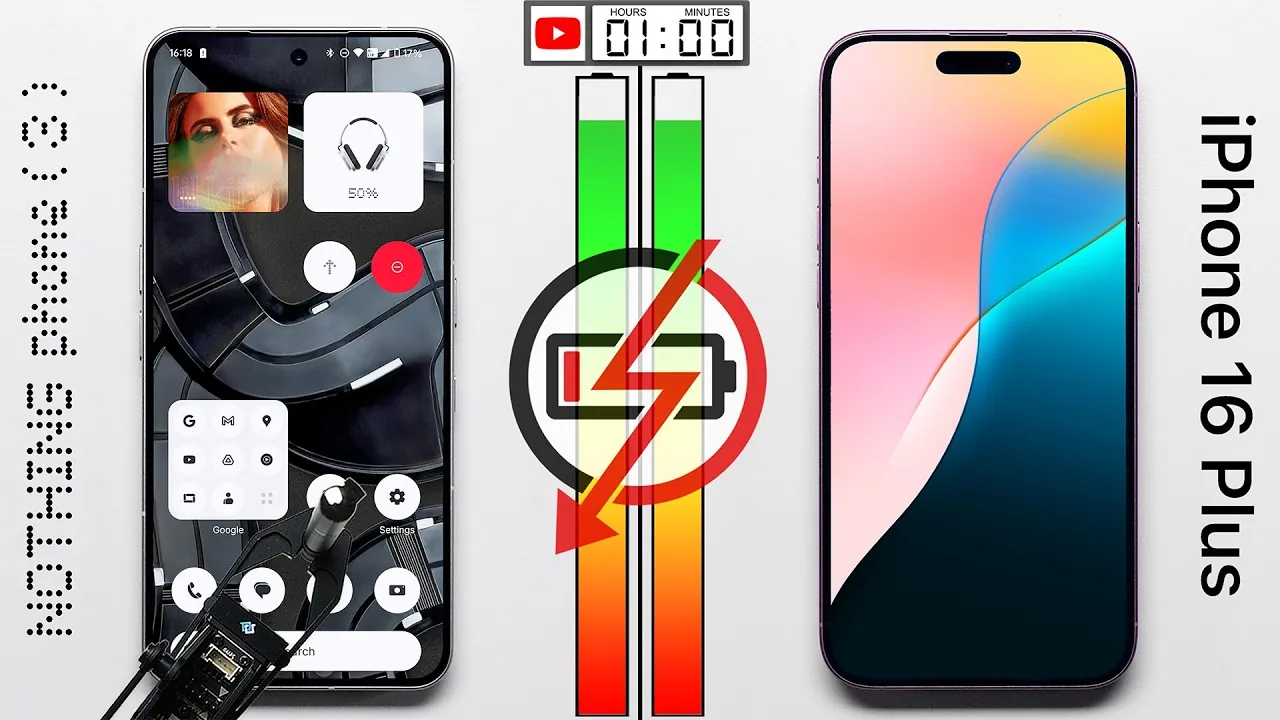
The Nothing Phone 3 presents a blend of strengths and weaknesses in the realm of battery efficiency and overall performance. While it shines in areas like charging speed and specific use cases, it struggles to compete with flagship devices such as the iPhone 16 Plus in terms of efficiency. The video below fromPhoneBuff provides more insights into its battery capacity, hardware efficiency, display technology, and performance, offering a detailed perspective on its position in the competitive smartphone market.

Battery Capacity: Two Variants, Different Capacities
The Nothing Phone 3 is available in two distinct variants, each featuring a different battery capacity:
- The Indian variant is equipped with a 5,500 mAh battery, offering slightly more endurance.
- The global version, on the other hand, comes with a 5,150 mAh battery, which is slightly smaller but still respectable.
These capacities are sufficient for most modern smartphone users, but they fall short of delivering exceptional endurance. This limitation is primarily due to the phone’s reliance on less efficient hardware, which prevents it from fully using its battery potential. While the battery size is competitive, it does not translate into standout performance in real-world usage.
Hardware Efficiency: The Impact of the Snapdragon 8S Gen 4 Chipset
At the core of the Nothing Phone 3 lies the Snapdragon 8S Gen 4 chipset, built on a 4nm process. This processor delivers reliable performance across a variety of tasks, but it is less efficient compared to the 3nm chipsets found in flagship devices like Apple’s A18. The smaller transistor size in 3nm designs allows for superior power management and energy efficiency, giving competitors a significant edge in both battery life and intensive task performance.
The 4nm chipset in the Nothing Phone 3 performs adequately for everyday tasks, but it struggles to match the efficiency of newer technologies. This disparity becomes particularly evident during power-hungry activities, where the device consumes more energy than its flagship counterparts. While the Snapdragon 8S Gen 4 is a capable processor, its limitations in efficiency hinder the phone’s ability to compete at the highest level.
Display Technology: Efficiency Trade-Offs
The Nothing Phone 3 features an LTPS display with a 60 Hz refresh rate, a setup that prioritizes power conservation over innovative technology. While this approach helps reduce energy consumption compared to higher refresh rate panels, it lacks the adaptive efficiency of LTPO displays. LTPO technology enables dynamic refresh rate adjustments based on usage, significantly lowering power consumption during less demanding tasks such as reading or idle periods.
The absence of LTPO technology in the Nothing Phone 3 results in higher energy consumption during prolonged use. Although the 60 Hz refresh rate is sufficient for basic tasks, it feels outdated compared to the adaptive displays found in many modern smartphones. This missed opportunity to incorporate more efficient display technology contributes to the phone’s average battery performance.
Performance: Reliable but Uneven
The Nothing Phone 3 delivers solid performance in everyday tasks such as browsing, messaging, and email. In these scenarios, it often matches or slightly trails the iPhone 16 Plus. However, its strengths become more apparent in specific use cases:
- Gaming: The Snapdragon 8S Gen 4 chipset excels in handling graphics-intensive tasks, making the phone a strong choice for gamers.
- Audio Streaming: The device is highly efficient during Spotify playback, offering extended listening times without significant battery drain.
- Standby Mode: The phone performs well when idle, conserving power effectively and extending battery life during periods of inactivity.
Despite these strengths, the Nothing Phone 3 struggles with intensive multitasking and power-hungry applications like Snapchat and app cycling. In these scenarios, the iPhone 16 Plus outperforms it, thanks to its more efficient hardware and advanced power management capabilities. While the Nothing Phone 3 is reliable for most tasks, its performance is uneven when pushed to its limits.
Charging Speed: A Standout Feature
One of the most impressive aspects of the Nothing Phone 3 is its 65W fast charging capability. This feature allows the device to achieve a significant battery boost in a short amount of time, far surpassing the 27W charging speed of the iPhone 16 Plus. For users who prioritize quick top-ups, this is a major advantage that enhances the phone’s overall usability.
However, while the fast charging speed is a clear strength, it does not fully compensate for the phone’s efficiency shortcomings. The ability to charge quickly is valuable, but it does not address the underlying issues of higher energy consumption during regular use. As a result, the Nothing Phone 3 remains a device with notable strengths but also significant limitations.
Strengths and Areas for Improvement
The Nothing Phone 3 offers several key strengths that make it a compelling option for certain users:
- 65W fast charging technology, allowing rapid battery replenishment.
- Strong gaming performance, powered by the Snapdragon 8S Gen 4 chipset.
- Efficient standby battery life, conserving power during idle periods.
However, the device also has notable areas for improvement:
- Less efficient 4nm chipset, which lags behind the 3nm designs of flagship competitors.
- Outdated LTPS display technology, lacking the adaptive efficiency of LTPO panels.
- Inconsistent performance during intensive multitasking and demanding applications.
A Balanced Contender with Room for Growth
The Nothing Phone 3 strikes a balance between performance and battery life, making it a viable choice for users who value fast charging and gaming capabilities. However, it falls short of setting new standards in efficiency, particularly when compared to flagship devices like the iPhone 16 Plus. To remain competitive, future iterations of the Nothing Phone would benefit from adopting more advanced hardware and adaptive display technologies. While the Nothing Phone 3 is a capable device, it is clear that there is significant room for improvement as it seeks to challenge the top-tier competition.
Take a look at other insightful guides from our broad collection that might capture your interest in Battery Efficiency.
- iPhone 17 Air: Innovations in Battery Life and Energy Efficiency
- iOS 18.4 Battery Drain Fix: Best Settings to Save Power
- iOS 19 Battery Intelligence: Smarter, Longer-Lasting Power
- Samsung Galaxy Battery Test: Best and Worst Models Compared
- Google Pixel Watch 4: Battery Boosts and Design Tweaks
Source & Image Credit: PhoneBuff
Disclosure: Some of our articles include affiliate links. If you buy something through one of these links, Geeky Gadgets may earn an affiliate commission. Learn about our Disclosure Policy.
