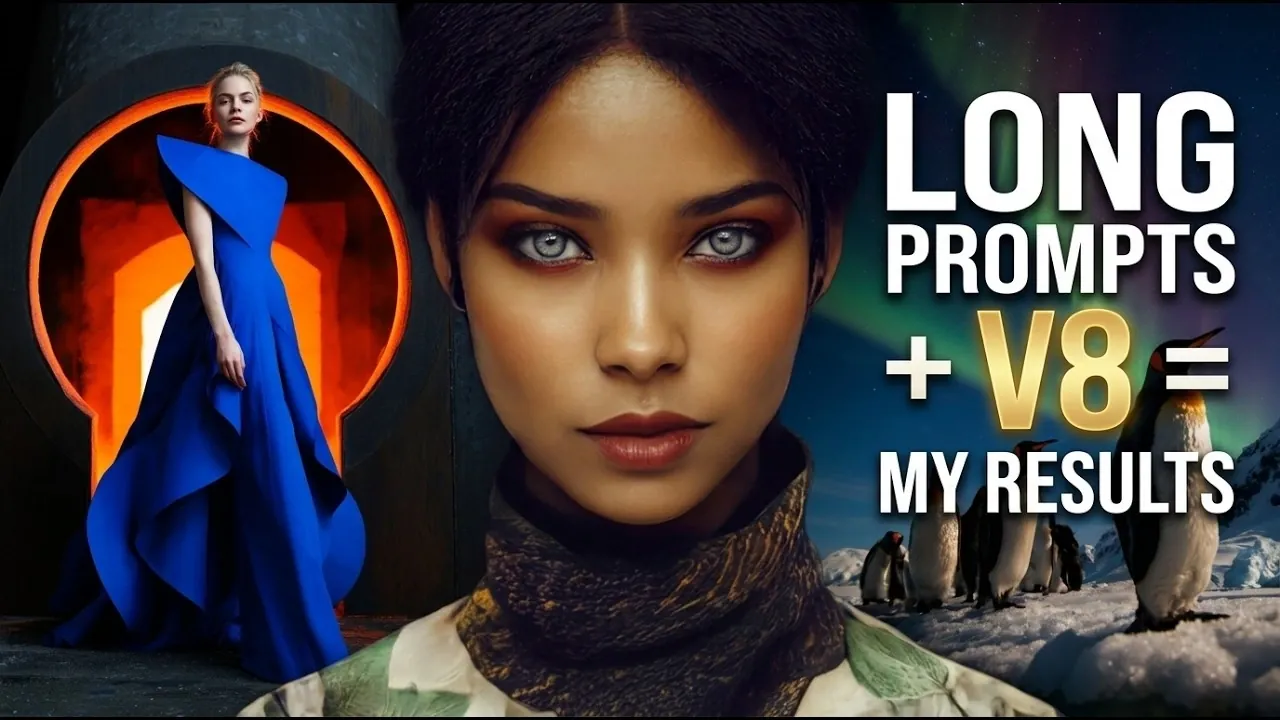
Achieving standout results with Midjourney 8 often relies on crafting prompts that are both precise and visually descriptive. Thaeyne highlights the value of using specific details, such as lighting, texture and style, to guide the model effectively. For instance, a prompt like “sunlit forest with soft shadows” provides clear visual direction, resulting in more refined and cohesive outputs. This method not only improves the quality of generated images but also helps users align their creative goals with the AI’s capabilities.
Discover how to refine your prompts for better clarity, experiment with aspect ratios to enhance composition and navigate Midjourney 8’s strengths in photorealistic rendering alongside its challenges with abstract styles. Gain insight into using style-specific terms, such as “1940s poster style” or “charcoal sketch,” to achieve distinct artistic outcomes. This overview provides practical strategies to elevate your approach to AI-generated imagery.
The Importance of Crafting Effective Midjourney 8 Prompts
TL;DR Key Takeaways :
- Detailed and descriptive prompts are essential for achieving high-quality outputs with Midjourney 8, as vague prompts often result in generic images.
- Using specific, style-oriented language (e.g., “charcoal sketch” or “1940s poster style”) helps guide the AI to produce distinct artistic styles and textures.
- Aspect ratios significantly impact image composition, with 9:16 being ideal for vertical subjects and 16:9 better suited for wide, expansive scenes.
- Midjourney 8 excels in photorealistic imagery but requires precise prompts to explore non-photorealistic styles and broader creative possibilities.
- Experimentation with style descriptions, lighting and textures is key to maximizing the model’s potential and achieving diverse, visually compelling results.
The quality of your prompts is the cornerstone of success with Midjourney 8. Short and vague prompts often lead to generic or uninspired results, while detailed and descriptive prompts provide the AI with the clarity it needs to generate intricate and visually compelling images. For example, a prompt like “sunlit forest with soft shadows” conveys specific visual elements such as lighting and texture, guiding the model toward a more refined output. Similarly, “vintage oil painting with muted tones” directs the AI to focus on a distinct artistic style.
When comparing outputs generated by different AI models, the role of prompt structure becomes even more apparent. Gemini AI, for instance, excels at creating concise, style-focused prompts that yield creative and visually diverse results. In contrast, Claude AI often generates longer, narrative-driven prompts, which can dilute the visual focus and lead to less dynamic images. By prioritizing concise and visually descriptive language, you can achieve more precise and engaging outputs with Midjourney 8.
Styling and Visual Descriptions: Precision in Language
The language used in your prompts significantly influences the final output. Specific, style-oriented terms such as “charcoal sketch,” “1940s poster style,” or “watercolor painting” act as clear instructions for the model, allowing it to replicate distinct artistic styles or textures. These terms serve as a roadmap, guiding the AI to align its output with your creative vision.
In contrast, abstract or emotional descriptions like “melancholy atmosphere” or “dreamlike scene” often result in generic or less focused outputs. Midjourney 8 performs best when provided with concrete visual instructions rather than interpretive or vague language. By emphasizing tangible elements such as lighting, texture and art style, you can consistently produce high-quality images that meet your expectations.

Check out more relevant guides from our extensive collection on Midjourney that you might find useful.
- Midjourney 8 Incoming : Faster Performance and a Full Model Rewrite
- 60 Stunning Examples of Midjourney AI Video Creations
- Midjourney Style Creator Guide 2026: Mood Boards, Bookmarks & Tips
- New Midjourney 6 Consistent Characters feature now available
- Technology News
- OpenAI Image Generator vs Competitors : What Makes It Stand Out?
- Midjourney 8 vs 7: Why AI Creators Are Switching Back
- 200 Midjourney photo realistic word prompts for extra creativity
- 30 Midjourney cartoon and comic style prompts
- Midjourney 8 vs 7 Comparison: 2K, HD Mode, UI Changes
Aspect Ratios and Their Impact on Composition
Aspect ratios play a pivotal role in shaping the composition and aesthetic appeal of your images. The 9:16 portrait ratio, for example, is particularly effective for vertical subjects such as portraits, architectural designs, or detailed scenes. This format offers a balanced and visually engaging composition, making it a popular choice for projects requiring vertical emphasis.
On the other hand, the 16:9 landscape ratio can present challenges when working with intricate or vertically oriented subjects. While it is well-suited for wide, expansive scenes, it may struggle to maintain the same level of detail and focus as the portrait ratio. Experimenting with different aspect ratios allows you to identify the best format for your specific needs, enhancing the overall impact and coherence of your images.
Using the Strengths and Addressing the Challenges of AI Models
Each AI model comes with its own set of strengths and limitations. Gemini AI, for instance, excels in creativity and adherence to visual instructions, making it ideal for generating imaginative and diverse prompts. Claude AI, while less visually focused, performs well in areas such as fashion and nature, where poetic and descriptive language can enhance the output.
Midjourney 8 is particularly strong in producing photorealistic images, a capability that sets it apart from many other models. However, this strength can also become a limitation when attempting to achieve non-photorealistic styles. To overcome this, it is essential to craft prompts that are rich in visual detail and specificity. Without explicit guidance, the model may default to realism, which can restrict its versatility. By focusing on precise and descriptive language, you can push the boundaries of what Midjourney 8 can achieve, exploring a broader range of creative possibilities.
Maximizing Potential Through Experimentation
To fully harness the capabilities of Midjourney 8, it is crucial to experiment with style descriptions that emphasize texture, lighting and artistic techniques. This approach allows you to move beyond the model’s default photorealism and explore a wider array of creative outputs. Avoid relying too heavily on personalization or style codes, as these can limit the model’s adaptability and flexibility.
Success with Midjourney 8 ultimately depends on your ability to craft prompts that are visually clear and specific. By refining your techniques, experimenting with different approaches and using the unique strengths of the model, you can consistently achieve exceptional results and unlock the full creative potential of this powerful AI tool.
Media Credit: Thaeyne
Disclosure: Some of our articles include affiliate links. If you buy something through one of these links, Geeky Gadgets may earn an affiliate commission. Learn about our Disclosure Policy.
