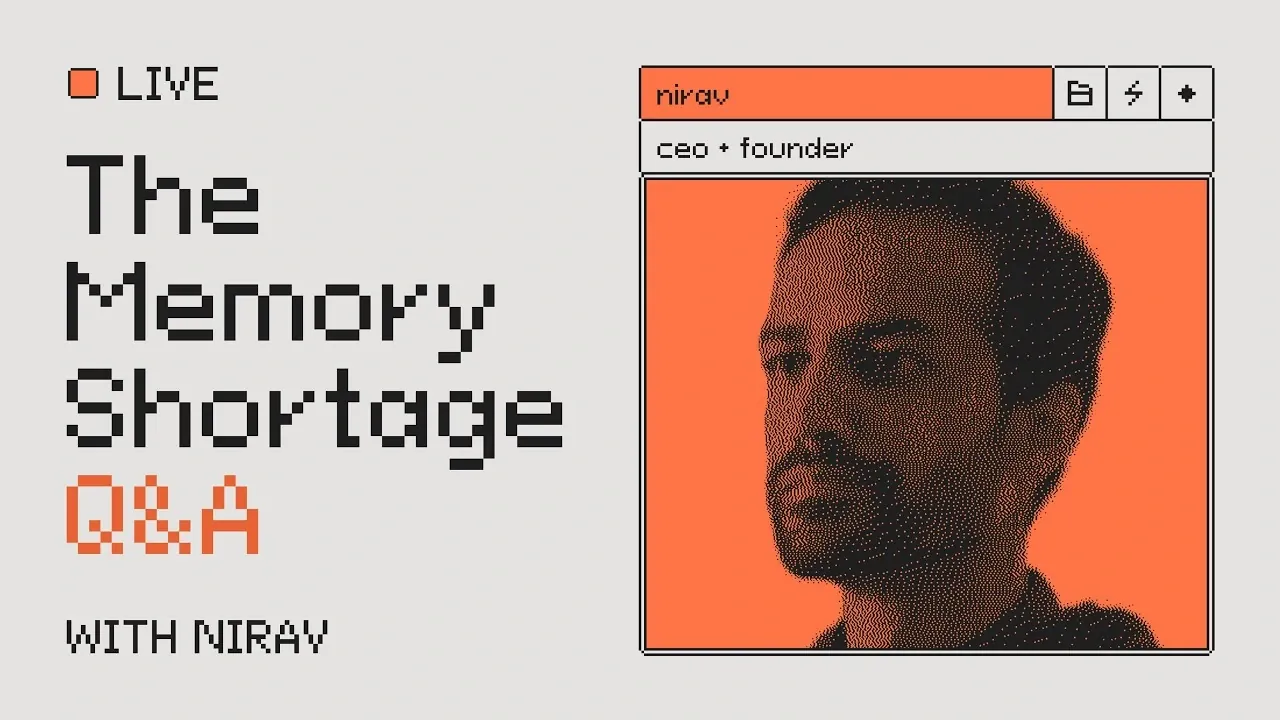
The global memory shortage is impacting industries ranging from consumer electronics to AI-driven applications. Framework explains that this challenge stems from a combination of production delays, rising demand for high-performance memory, and ongoing supply chain disruptions. For instance, the construction of new fabrication facilities, which can take several years, has not kept pace with the rapid growth of AI data centers that rely heavily on memory resources. These factors have contributed to higher prices and limited availability, highlighting the intricate nature of the memory supply chain.
This explainer provide more insights into the key causes of the shortage and its implications for both consumers and manufacturers. It explores production hurdles faced by major suppliers, the demands AI applications place on memory infrastructure, and how companies like Framework are addressing these issues with modular designs and flexible strategies. Additionally, you will learn practical approaches to navigating rising costs and selecting memory solutions in a constrained market.
Global Memory Shortage Impact
TL;DR Key Takeaways :
- The global memory shortage is driven by production constraints, surging AI-driven demand, and post-pandemic supply chain adjustments, creating significant supply-demand imbalances.
- Consumers face rising prices and delays for memory-dependent products like laptops and smartphones, as manufacturers struggle to meet demand.
- Framework addresses the crisis with innovative solutions, including a DIY approach that allows users to source their own memory components and partnerships for semi-customized modules.
- The shortage is expected to persist until 2027-2028 as new fabrication facilities come online, with AI data centers continuing to dominate memory demand.
- Framework supports customers through initiatives like memory giveaways, cost-absorbing strategies, and promoting repairability and upgradability to mitigate the shortage’s impact.
What’s Driving the Memory Shortage?
The memory shortage is the result of several interconnected factors that have converged to create a perfect storm of supply and demand imbalances:
- Production Constraints: Leading manufacturers such as Micron, Samsung, and SK Hynix face challenges in scaling production to meet growing demand. Building new fabrication facilities is a time-intensive process, often taking years to complete and requiring substantial financial investment. This limits the industry’s ability to respond quickly to surges in demand.
- AI-Driven Demand: The rapid growth of AI data centers has created unprecedented demand for memory, particularly high-margin products like High Bandwidth Memory (HBM). These facilities prioritize machine learning workloads, which consume vast amounts of memory, diverting supply away from other sectors such as consumer electronics.
- Post-Pandemic Adjustments: During the pandemic, a surge in demand for consumer electronics led to inventory surpluses. As supply chains recalibrate to post-pandemic conditions, these surpluses have transitioned into shortages, exacerbating the current crisis.
These factors collectively highlight the complexity of the memory shortage, underscoring the challenges faced by manufacturers and consumers alike.
How the Shortage Impacts You
For consumers, the most immediate and noticeable impact of the memory shortage is the rise in prices. Supply chain disruptions and production bottlenecks have caused sharp cost fluctuations, which manufacturers often pass down to end-users. This means higher prices for devices like laptops, smartphones, and other electronics that rely on memory components.
Companies like Framework, however, are taking proactive steps to minimize the impact on their customers. By absorbing some of the increased costs and employing strategies like weighted average inventory pricing, Framework works to stabilize expenses and maintain affordability. These efforts reflect a commitment to making sure that consumers can continue to access high-quality products despite market challenges.
Live Q&A with the Founder and CEO Nirav: The Memory Shortage

Take a look at other insightful guides from our broad collection that might capture your interest in memory.
- Memory Shortage Crisis Explained & When Will Memory Prices Drop?
- Steam Machine Isn’t Late, Pricing is the Real Risk
- Early 2026 Slips for Valve’s Steam Hardware Lineup
- Why the Smartest Al Teams Are Panic-Buying Compute
- Valve Responds to Steam Machine 2026 Delay
- Samsung Galaxy S26 Ultra: Release Date, Price, and Upgrades
- Valve Targets mid-2026 Steam Machine Release Date Launch
- Apple’s M5 Pro MacBook Pro Is Coming Sooner Than You Think
Framework’s DIY Philosophy: A Practical Solution
Framework’s innovative approach to product design offers a unique way to navigate the memory shortage. By embracing a DIY (Do-It-Yourself) philosophy, the company enables you to bring your own memory and storage components. This flexibility reduces reliance on pre-installed parts, allowing you to select options that align with your budget and availability.
To further support its customers, Framework has partnered with companies like Adata to provide semi-customized memory modules. These collaborations help ensure a steady supply of components while maintaining the company’s commitment to modularity and upgradability. This approach not only allows you to adapt your device to changing market conditions but also extends its lifespan, reducing electronic waste and promoting sustainability.
Industry Dynamics and the Road Ahead
The memory industry’s slow capacity expansion means the current shortage is unlikely to resolve in the near future. Experts predict that supply will begin to catch up with demand by 2027 or 2028, as new fabrication facilities gradually come online. Until then, AI data centers will continue to drive demand for premium memory products, potentially limiting availability for other sectors.
Despite these challenges, companies like Framework remain focused on innovation and adaptability. By investing in research and development, Framework ensures that memory shortages will not hinder the release of new models or product updates. This forward-thinking approach positions the company to navigate the evolving market landscape effectively.
Ripple Effects on Related Technologies
The memory shortage is also creating ripple effects across related technologies, such as NAND and SSDs. Limited NAND production has led to higher SSD prices, prompting some consumers to consider more affordable alternatives like DRAM-less SSDs. However, the broader silicon shortage is less severe, as components like microcontrollers benefit from a more diverse supply base. These dynamics highlight the interconnected nature of the technology supply chain and the cascading effects of memory shortages on other components.
Framework’s Initiatives to Support Customers
To help you navigate the challenges posed by the memory shortage, Framework has introduced several initiatives aimed at easing the financial burden on its customers. For instance, the company encourages sourcing memory independently when more affordable options are available, giving you greater flexibility in managing costs. Additionally, Framework has launched a memory giveaway program to provide direct support to its community, reflecting its commitment to customer empowerment and accessibility.
These efforts demonstrate Framework’s dedication to supporting its users during challenging times, making sure that you can continue to enjoy reliable, high-performance devices without compromising on quality or affordability.
What Lies Ahead?
The global memory shortage is expected to persist for several years, driven by structural production constraints and the surging demand from AI applications. However, companies like Framework are proving that resilience and innovation can help mitigate the impact. By prioritizing repairability, upgradability, and customer empowerment, Framework offers practical solutions that enable you to adapt to these challenges.
Staying informed and using available tools and options will be essential as the memory shortage continues to shape the technology landscape. With the right strategies, you can navigate this period of uncertainty while maintaining access to the devices and technologies that power your daily life.
Media Credit: Framework
Disclosure: Some of our articles include affiliate links. If you buy something through one of these links, Geeky Gadgets may earn an affiliate commission. Learn about our Disclosure Policy.
