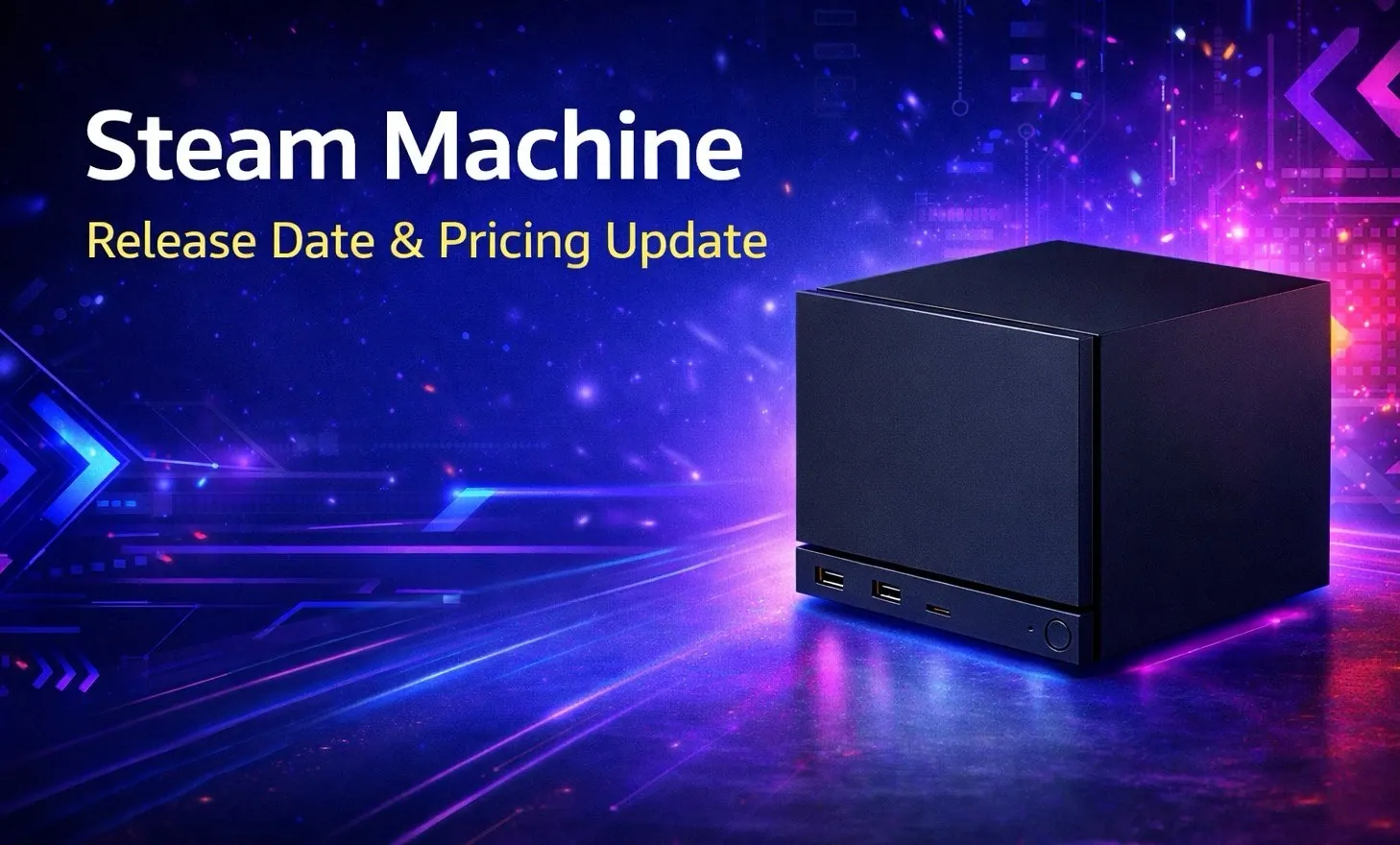
Valve has set a tentative release window for mid-2026 but has not yet confirmed an exact launch date. The delay stems largely from ongoing global shortages of essential components, including memory and storage, which have disrupted production schedules and driven up manufacturing costs. These challenges have also made it difficult for Valve to finalize a pricing strategy that balances affordability with performance.
Unlike traditional console manufacturers, which often sell hardware at a loss to build a user base, Valve has indicated it will prioritize sustainable pricing. This approach reflects the company’s focus on delivering a high-performance product without compromising long-term financial viability. By avoiding loss-leader pricing, Valve aims to position the Steam Machine as a premium yet accessible option in the gaming hardware market.
Steam Machine Update
TL;DR Key Takeaways :
- Valve has announced a tentative release window for the Steam Machine in mid-2026, with delays caused by global supply chain disruptions and rising component costs.
- The Steam Machine aims to combine the performance of a gaming PC with the convenience of a console, targeting gamers who value high performance in a living-room-friendly setup.
- Pricing is expected to range between $700 and $850, reflecting the cost of high-performance components, with Valve prioritizing sustainable pricing over loss-leader strategies.
- The device will support 4K gaming at 60 FPS, advanced technologies like FidelityFX Super Resolution (FSR), ray tracing, and HDMI Variable Refresh Rate (VRR) for a seamless gaming experience.
- Customizable and upgradeable hardware, including SSD and RAM, along with integration into the Steam ecosystem, positions the Steam Machine as a flexible, long-term investment for gaming enthusiasts.
Release Timeline and Challenges
The Steam Machine represents Valve’s vision of combining the performance of a gaming PC with the accessibility of a console. This hybrid approach seeks to attract gamers who value both high performance and the convenience of a living-room-friendly setup. While challenges remain, Valve’s determination to bring this product to market underscores its confidence in the device’s potential.
The company’s commitment to overcoming these challenges highlights its dedication to delivering a polished product. Valve’s strategy involves not only addressing supply chain issues but also making sure that the Steam Machine meets the expectations of its target audience.
What to Expect on Pricing
The pricing of the Steam Machine remains a subject of speculation, with industry analysts estimating a retail range of $700 to $850, depending on the configuration. This price range reflects the rising costs of high-performance components, such as SSDs and RAM, which are integral to the device’s upgradeable design. Valve’s decision to avoid aggressive pricing tactics further reinforces its focus on delivering a premium product.
By prioritizing sustainable pricing, Valve aims to strike a balance between performance and value. While this approach may position the Steam Machine as a higher-end product, it also ensures that the device remains competitive in the high-performance gaming market. The emphasis on quality and longevity could appeal to gamers who are willing to invest in a device that offers both flexibility and innovative technology.
Valve’s pricing strategy also aligns with its broader goal of expanding the Steam ecosystem. By offering a device that integrates seamlessly with existing Steam features, the company hopes to attract PC gamers who are looking for a more versatile gaming experience.
Steam Machine Release Window & Price Outlook for 2026

Expand your understanding of Valve Steam Machine with additional resources from our extensive library of articles.
- Steam Machine Price : Why Valve Set the Tag at $1,000 in 2026
- Steam Machine Pricing Tipped at $600 to $650 with Supply Tight
- Valve Steam Machine Returns in 2026, Specs, Price Outlook
- Early 2026 Slips for Valve’s Steam Hardware Lineup
- Valve Steam Machine Specs, Price, and RDNA3 FSR4 Analysis
- New Valve 4K Steam Machine : Early 2026 Can’t Come Soon Enough
- Valve Responds to Steam Machine 2026 Delay
- Steam Machine vs Consoles : Valve’s Path to Casual Players
- New Valve Steam Controller, Machine & Frame Arriving Early 2026
- Steam Machine Isn’t Late, Pricing is the Real Risk
Performance and Gaming Capabilities
Valve has promised that the Steam Machine will deliver a robust gaming experience, with most titles in the Steam library expected to run at 4K resolution and 60 frames per second. To achieve this level of performance, the device will use advanced technologies such as FidelityFX Super Resolution (FSR), which enhances frame rates without sacrificing visual quality. For more demanding games, you may need to adjust settings to 1080p or rely on FSR to maintain smooth gameplay.
Additional features include support for HDMI Variable Refresh Rate (VRR), making sure a seamless and tear-free gaming experience on compatible displays. The device will also support ray tracing, a technology that enhances lighting and reflections for greater realism. However, the performance impact of ray tracing may vary depending on the game and settings, requiring some optimization for the best results.
These capabilities position the Steam Machine as a powerful option for gamers who demand high-quality visuals and smooth performance. By incorporating innovative technologies, Valve aims to deliver a gaming experience that rivals high-end gaming PCs while maintaining the convenience of a console-like setup.
Hardware Customization and Flexibility
One of the standout features of the Steam Machine is its upgradeable hardware, which allows you to replace or expand components such as SSD storage and RAM. This level of customization ensures that the device can evolve alongside your gaming needs, offering a level of flexibility rarely seen in traditional gaming consoles.
Valve has also confirmed support for third-party faceplates, allowing you to personalize the device’s appearance to match your preferences. This focus on customization extends to the software as well, with the Steam Machine integrating seamlessly with the Steam Controller and Steam Overlay. These features ensure compatibility with the broader Steam ecosystem, providing a cohesive and user-friendly experience.
The ability to upgrade and customize the Steam Machine sets it apart from its competitors, making it an attractive option for gamers who value both performance and adaptability. By offering a device that can grow with its users, Valve is positioning the Steam Machine as a long-term investment for gaming enthusiasts.
Target Audience and Market Positioning
The Steam Machine is designed to appeal to a specific audience: PC gamers who want to bring their gaming experience into the living room. Rather than competing directly with traditional gaming consoles like the PlayStation or Xbox, Valve is targeting a niche market that values both performance and flexibility. By using the extensive Steam ecosystem, the device offers access to thousands of games, community features, and regular updates.
Valve’s strategy focuses on expanding its ecosystem rather than engaging in direct competition with console manufacturers. This approach allows the company to carve out a unique position in the gaming market, catering to enthusiasts who are looking for a hybrid solution that combines the best aspects of PC and console gaming.
The Steam Machine’s success will depend on how well Valve can balance performance, pricing, and consumer expectations. If executed effectively, the device could redefine how gamers experience high-performance gaming in a more casual, living-room-friendly setting. Valve’s commitment to innovation and quality suggests that the Steam Machine has the potential to make a significant impact in the gaming industry.
Media Credit: Matty Slop
Disclosure: Some of our articles include affiliate links. If you buy something through one of these links, Geeky Gadgets may earn an affiliate commission. Learn about our Disclosure Policy.
