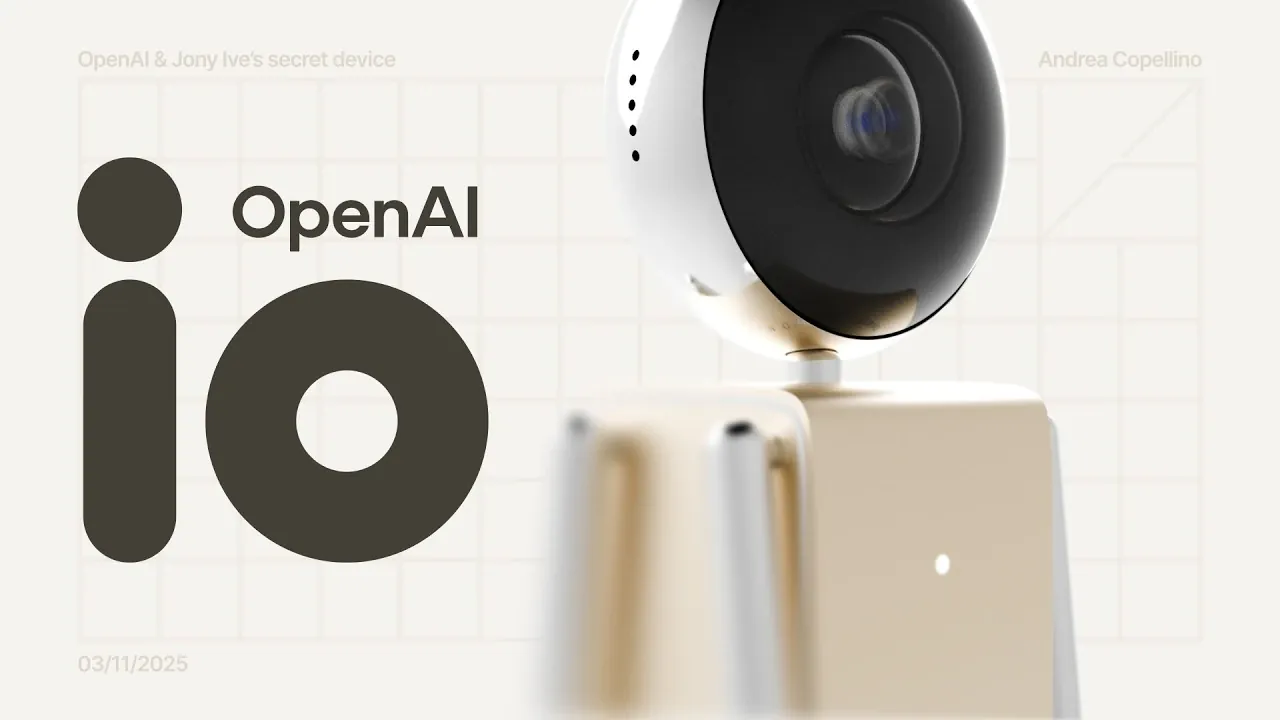
What if the way you interact with technology could feel as natural as a conversation with a friend? OpenAI and legendary designer Jony Ive are quietly working on a device that could make this vision a reality. Slated for release no earlier than 2026, this collaboration isn’t just about creating another gadget, it’s about fundamentally rethinking how humans and artificial intelligence connect. Imagine a device that doesn’t just respond to your commands but intuitively understands your context, adapts to your needs, and integrates seamlessly into your life. Bold in ambition and minimalist in design, this project promises to challenge everything we know about AI interaction, blending innovative technology with Ive’s signature focus on simplicity and elegance.
Below Andrea Copellino provides more insights into the new features and design philosophy behind this mysterious device, which seeks to address the inefficiencies of current AI systems. From its innovative use of context-aware technologies to its emphasis on natural, human-like interaction, the device is poised to redefine productivity and creativity. But how will it overcome challenges like privacy concerns and power management? And what does its screenless, voice-first design mean for the future of AI hardware? As we explore the vision behind this collaboration, you’ll discover how OpenAI and Jony Ive aim to shape the next era of human-computer interaction, one that feels less like using a tool and more like working with a trusted partner.
Transforming AI Hardware
TL;DR Key Takeaways :
- OpenAI and Jony Ive’s firm are collaborating on a innovative AI hardware device, set for release no earlier than 2026, focusing on seamless, intuitive, and context-aware interactions.
- The device will feature advanced memory systems, real-time context awareness, and voice/video interaction capabilities, moving beyond traditional text-based AI interfaces.
- Its minimalist, screenless design emphasizes simplicity and functionality, potentially resembling a smart speaker with a 360-degree camera for natural, immersive AI engagement.
- Key challenges include power management, privacy concerns, and reliance on stable internet connectivity, with solutions like local data processing and user-controlled permissions being prioritized.
- Positioned as a mass-market product, the device aims to complement existing technologies, enhance productivity and creativity, and pave the way for future AI-powered spatial computing innovations.
Breaking Barriers in AI Interaction
Traditional AI systems often depend on manual input to provide context, which can limit their efficiency and usability. This new device seeks to overcome these limitations by incorporating advanced memory systems and context-aware technologies. It is designed to understand your environment and interactions in real time, allowing it to anticipate your needs, streamline workflows, and deliver precise assistance without requiring constant prompts.
One of the most notable features is its emphasis on voice and video interaction. Equipped with a 360-degree camera and sophisticated audio processing, the device will allow you to communicate naturally with AI. Whether through spoken commands or visual cues, this approach moves beyond the text-based interfaces of today, offering a more immersive and human-like experience. By allowing AI to interpret your surroundings and respond in real time, this device could redefine how you engage with technology in your daily life.
Innovative Design and Functionality
The device is expected to deviate from traditional wearables or in-ear gadgets, instead taking the form of a stationary or portable unit. Early concepts suggest a screenless smart speaker equipped with a 360-degree camera, emphasizing simplicity and functionality. This minimalist design prioritizes utility, making sure the device remains easy to use while maintaining an elegant aesthetic. The focus on a screenless design highlights the intention to create a more natural and less intrusive interaction model.
Internet connectivity will play a crucial role in unlocking the device’s full potential. Features such as real-time updates, cloud-based processing, and integration with other AI tools will depend on a stable connection. However, this reliance on connectivity introduces challenges, particularly in areas with limited internet access or high data costs. Addressing these issues will be essential to ensure the device’s usability across diverse environments.
OpenAI & Jony Ive’s Secret Device

Gain further expertise in OpenAI by checking out these recommendations.
- The Complete ChatGPT Artificial Intelligence OpenAI Training
- OpenAI o3 and o3-mini Introduced
- OpenAI Reveals How To Use GPT-4o More Effectively
- New OpenAI Swarm Framework Designed to Simplify Multi-Agent AI
- OpenAI DevDay 2025: Key Announcements and What They Mean
- How OpenAI’s Agent Builder Simplifies AI Development for All
- What Is OpenAI’s Index-Free RAG System and How Does It Work
- How to Build AI Agents Without Coding Using OpenAI’s AgentKit
- OpenAI DevDay 2025: Keynote Announcements and Innovations
- New ChatGPT Memory feature now available to use
Boosting Productivity and Creativity
At its core, this device is envisioned as a collaborative tool designed to enhance productivity and creativity. Whether you are brainstorming ideas, conducting research, or tackling complex problems, the AI will act as a partner, adapting to your needs and preferences. By understanding your context, it can:
- Provide tailored suggestions to improve efficiency and outcomes.
- Automate repetitive tasks, freeing up time for more critical activities.
- Support learning by offering insights and resources for skill development.
Rather than replacing existing technologies like smartphones or laptops, the device is designed to complement them. It aims to fill gaps in functionality, offering a more intuitive and efficient way to interact with AI. This approach ensures that the device integrates seamlessly into your existing workflow, enhancing rather than disrupting your daily routines.
Overcoming Challenges
Developing a device with such advanced capabilities presents several challenges. One significant hurdle is power management. The continuous operation of cameras, microphones, and internet connectivity demands a high level of energy efficiency. Making sure that the device remains practical and reliable will require innovative solutions in battery technology and power optimization.
Privacy is another critical concern. The device’s context-aware functionality necessitates the collection and processing of large amounts of data. To address this, IO is expected to implement robust privacy measures, such as local data processing and user-controlled permissions. These features will ensure that your information remains secure and under your control, fostering trust in the technology.
Positioning for the Future
This device is being developed as a mass-market product, balancing advanced functionality with affordability. By avoiding reliance on scarce or expensive components, IO aims to make the device scalable and accessible to a wide audience. Existing OpenAI users may benefit from incentives, such as discounts or free devices tied to subscriptions, further encouraging adoption.
The product represents a significant step toward integrating AI into physical environments, aligning with the broader vision of spatial computing. By embedding AI into your surroundings, it promises to create more immersive and intuitive human-computer interactions. This approach not only enhances current technologies but also lays the groundwork for future advancements in AI-powered devices.
As the release date approaches, the collaboration between OpenAI and Jony Ive continues to generate anticipation. By addressing inefficiencies in current interaction models and prioritizing context-awareness, this device has the potential to redefine how you engage with technology. It represents a bold vision for the future, where AI becomes an indispensable tool for enhancing productivity, creativity, and everyday life.
Media Credit: Andrea Copellino
Disclosure: Some of our articles include affiliate links. If you buy something through one of these links, Geeky Gadgets may earn an affiliate commission. Learn about our Disclosure Policy.
