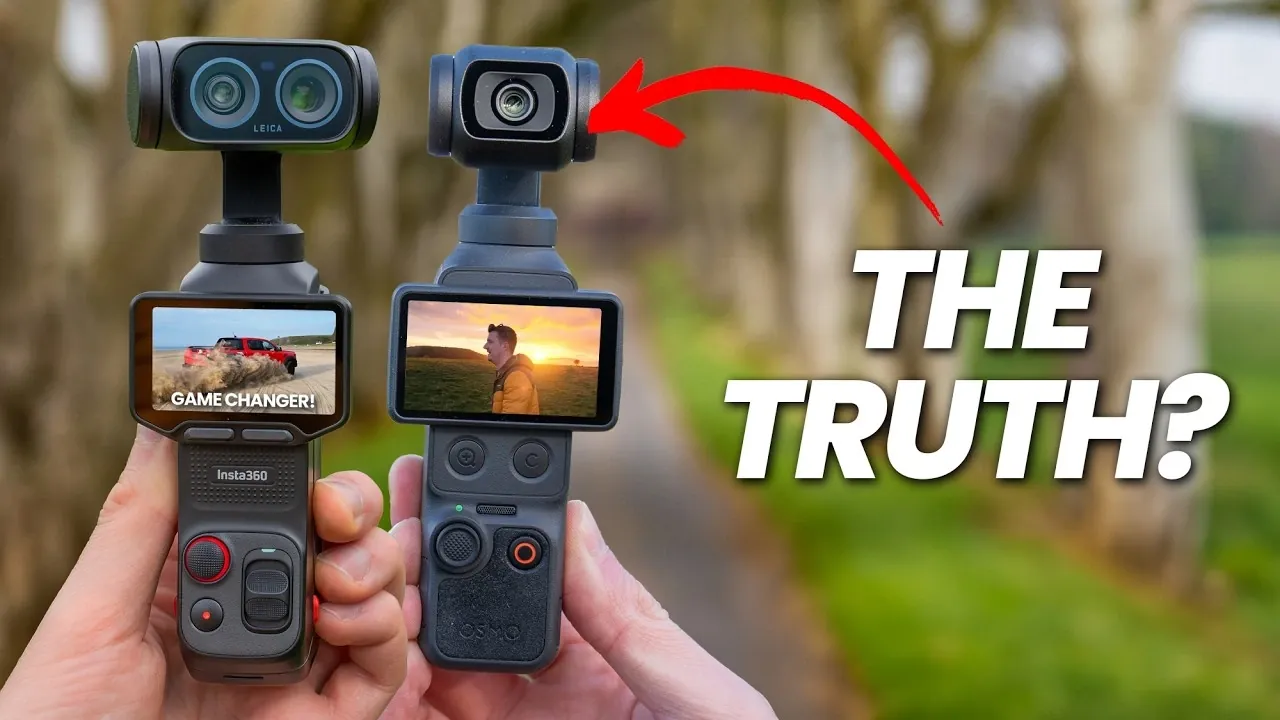
Compact cameras have become an essential choice for creators balancing portability with high-quality output and the Insta360 Luna Ultra and DJI Pocket 4 are two standout options in this category. After three weeks of testing, Drone Creative highlights how the Luna Ultra’s detachable screen doubles as a remote control with a 100-meter range, offering flexibility for solo creators. Meanwhile, the Pocket 4’s faster startup times and lightweight design cater to those prioritizing quick, spontaneous shooting. These differences in design and usability set the stage for a deeper comparison of their unique strengths.
Explore how each camera performs across critical areas like image quality, low-light performance and stabilization. You’ll gain insight into the Luna Ultra’s 8K recording capabilities and advanced noise reduction, as well as the Pocket 4’s 240 FPS slow-motion mode and extended battery life. Whether you’re focused on cinematic visuals, portability, or specialized features, this breakdown will help you identify which camera aligns best with your creative workflow.
DJI Pocket 4 vs Insta360 Luna Ultra
TL;DR Key Takeaways :
- The Insta360 Luna Ultra offers a detachable screen with remote control functionality, superior audio quality and 8K recording, making it ideal for creators prioritizing flexibility and high resolution.
- The DJI Pocket 4 is more compact, features faster startup times and excels in portability, with a longer battery life of up to 3 hours and 24 minutes.
- The Luna Ultra provides advanced low-light performance, Dolby Vision HDR recording and dual cameras for creative versatility, while the Pocket 4 focuses on natural tones, slow-motion capabilities and user-friendly controls.
- Both cameras deliver reliable stabilization and tracking, with the Luna Ultra excelling in face tracking for solo creators and the Pocket 4 offering user profiles for group-focused tracking.
- Storage and battery options differ, with the Pocket 4 offering 107GB internal memory and longer runtime, while the Luna Ultra includes a battery extension handle for extended use.
Design and Portability
For creators constantly on the move, the design and portability of a pocket camera are crucial factors. The Insta360 Luna Ultra has a slightly bulkier build, with a taller and chunkier design that may feel less compact. However, it compensates with a detachable screen that doubles as a remote control with an operational range of up to 100 meters. This feature is particularly useful for solo creators who need flexibility during shoots, allowing them to frame shots or adjust settings remotely.
In contrast, the DJI Pocket 4 is lighter and more compact, making it easier to carry in a pocket or small bag. Its faster startup times ensure you can capture spontaneous moments without delay. For protection, the Luna Ultra includes a sturdy cover, while the Pocket 4 comes with a gimbal clamp and soft pouch, offering adequate safeguards for its compact design. If portability and quick deployment are your priorities, the Pocket 4 holds a clear advantage.
Functionality and Features
Both cameras are packed with advanced features, but their strengths cater to different types of users. The Luna Ultra stands out with its detachable screen, which includes a built-in microphone and a removable wind guard. This setup ensures superior audio quality, even in windy conditions. Additionally, the Luna Ultra offers smoother zoom functionality, with lossless zoom capabilities of up to 6x, making it a versatile tool for capturing distant subjects with clarity.
On the other hand, the Pocket 4 focuses on intuitive controls and user customization. It features programmable buttons and joysticks, allowing users to adjust settings quickly and efficiently. The Pocket 4 also supports user profiles, allowing you to prioritize specific subjects in multi-person shots. While the Luna Ultra leans toward versatility and innovation, the Pocket 4 emphasizes simplicity and ease of use, making it an excellent choice for creators who prefer straightforward functionality.

Unlock more potential in Insta360 Luna Ultra by reading previous articles we have written.
- What the Insta360 Luna Ultra and Pro Launch Means for Vloggers
- DJI Osmo Pocket 4 vs Insta 360 Luna Ultra : Everything You Need to Know
- The Insta360 Luna Ultra Feature That Could Outsmart the DJI Pocket 4
- Why Insta360’s Unreleased Luna Ultra is Already Beating DJI
- Why the Insta360 Luna Ultra Could Be the Ultimate DJI Rival for Creators
- Why Pro Creators Are Skipping the Insta360 Luna Ultra for DJI
- Why Insta360’s Luna Ultra Might Make You Skip the DJI Pocket 4
- What the New Insta360 Luna Ultra Specs Reveal About Its Launch
- Why You Should Wait for the Luna Ultra Before Buying DJI
- Insta360 Luna Pro and Ultra: Full Specs, Features and Market Analysis
Image Quality
When it comes to image quality, the Luna Ultra takes the lead with its ability to record in 8K at 30 FPS, offering unparalleled resolution for detailed and immersive footage. It also features dual cameras, a wide-angle lens and a 3x telephoto lens—providing creative flexibility and lossless zoom capabilities. The resulting visuals are more saturated and contrasted, making the Luna Ultra ideal for creators who prefer vibrant and dynamic imagery.
The Pocket 4, while limited to 4K at 60 FPS, delivers brighter and warmer tones, which are well-suited for those seeking natural-looking footage. Both cameras support JPEG and RAW formats for 37MP stills, making sure detailed and high-quality photos. If resolution and creative versatility are your top priorities, the Luna Ultra is the superior choice. However, for those who value natural tones and smoother frame rates, the Pocket 4 remains a strong contender.
Low-Light Performance
Low-light performance is a critical factor for creators who frequently shoot in dim environments. The Luna Ultra excels in this area, thanks to its advanced noise reduction and accurate white balance. It supports 4K recording at 60 FPS in low-light mode, making sure smooth and clear footage even in challenging lighting conditions.
The Pocket 4, while capable, is limited to 4K at 30 FPS in similar scenarios. Although both cameras perform admirably in low-light environments, the Luna Ultra’s superior noise reduction and higher frame rate make it the better option for creators who prioritize low-light videography.
Stabilization and Tracking
Stabilization and tracking are essential for capturing smooth and dynamic footage. The Luna Ultra impresses with its face-tracking capabilities, which can quickly re-acquire subjects even if they momentarily leave the frame. This feature is particularly beneficial for vloggers and solo creators who need reliable tracking during movement-heavy shoots.
The Pocket 4, on the other hand, offers user profiles for tracking specific individuals in group settings. This makes it an excellent choice for event coverage or multi-person shoots where precise subject tracking is required. Both cameras deliver reliable stabilization and tracking, so your choice will depend on whether you prioritize solo or group-focused functionality.
Battery Life and Storage
Battery life and storage capacity are critical considerations for extended shoots. The Pocket 4 outlasts the Luna Ultra with a runtime of up to 3 hours and 24 minutes, compared to the Luna Ultra’s 2-hour battery life. However, the Luna Ultra includes a battery extension handle, which can significantly extend its runtime when needed.
In terms of storage, the Pocket 4 offers 107GB of internal memory, while the Luna Ultra provides 47GB. Both cameras support microSD cards for expandability, making sure ample space for high-resolution footage. If longer battery life and internal storage are essential to your workflow, the Pocket 4 is the better choice.
Additional Features
Each camera offers unique features that cater to specific creative needs. The Luna Ultra supports Dolby Vision HDR recording, enhancing color and contrast for cinematic-quality footage. This feature is absent in the Pocket 4, which instead focuses on slow-motion capabilities, supporting 4K recording at 240 FPS compared to the Luna Ultra’s 120 FPS. This makes the Pocket 4 a strong option for creators who frequently incorporate slow-motion effects into their projects.
Both cameras include thoughtful protective features: the Pocket 4 uses a gimbal clamp, while the Luna Ultra comes with a wind guard for its microphone. These additions enhance durability and usability, making sure the cameras are well-suited for various shooting conditions.
Making the Right Choice
Choosing between the Insta360 Luna Ultra and the DJI Pocket 4 ultimately depends on your creative priorities. The Luna Ultra’s detachable screen, dual cameras and 8K recording capabilities make it a versatile tool for creators seeking flexibility and innovation. Meanwhile, the Pocket 4’s compact design, longer battery life and superior slow-motion performance make it ideal for users who value portability and extended usage.
Both cameras excel in stabilization, tracking and image quality, making sure reliable performance for a variety of creative needs. By carefully evaluating the strengths and limitations of each device, you can select the pocket camera that best aligns with your specific requirements and creative vision.
Media Credit: The Drone Creative
Disclosure: Some of our articles include affiliate links. If you buy something through one of these links, Geeky Gadgets may earn an affiliate commission. Learn about our Disclosure Policy.
