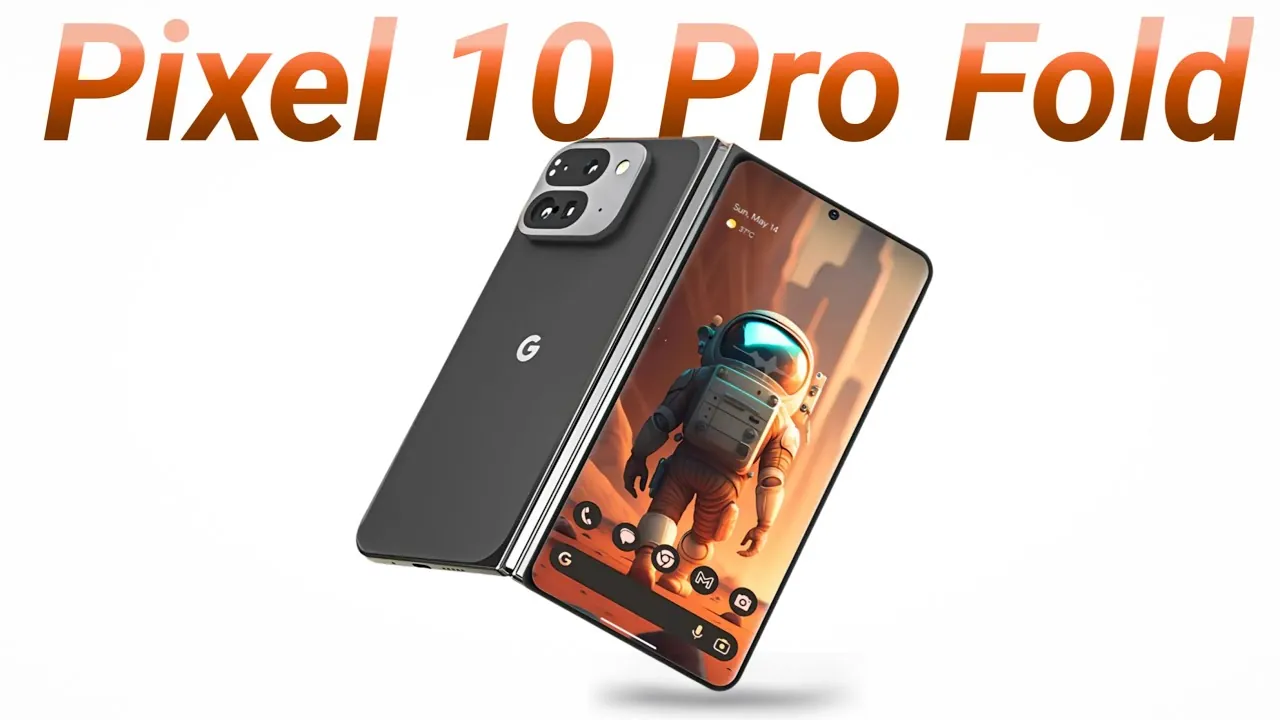
The Google Pixel 10 Pro Fold has made its debut on Geekbench, offering an early glimpse into its performance capabilities. While the device demonstrates clear advancements over its predecessor, the Pixel 9 Pro Fold, it falls short of matching the raw processing power of Samsung’s Galaxy ZFold 7. This comparison underscores Google’s ongoing strategy of prioritizing AI-driven features and software optimizations over competing solely on hardware specifications.

Performance Breakdown: Pixel 10 Pro Fold vs. Galaxy ZFold 7
The Pixel 10 Pro Fold achieves a single-core score of 2276 and a multi-core score of 6173 on Geekbench. These results reflect a notable improvement over the Pixel 9 Pro Fold but remain behind the Galaxy ZFold 7, which features a single-core score of 2826 and a multi-core score of 9053.
This performance disparity highlights the distinct priorities of these two devices:
- The Galaxy ZFold 7 focuses on speed and computational power, catering to users who demand top-tier performance for intensive tasks.
- The Pixel 10 Pro Fold emphasizes a balanced user experience, using AI and smart optimizations to improve usability and efficiency.
While the Galaxy ZFold 7 appeals to power users, the Pixel 10 Pro Fold targets those who value intelligent software features and seamless integration with Google’s ecosystem.
Under the Hood: Tensor G5 vs. Snapdragon 8 Gen 3 Elite
At the core of the Pixel 10 Pro Fold lies Google’s Tensor G5 chip, a processor designed to enhance AI capabilities and optimize smart features. This aligns with Google’s broader strategy of prioritizing machine learning and user-centric functionality over sheer processing power. The Tensor G5 chip enables features such as advanced voice recognition, real-time translation, and improved photo processing, making the device a strong contender for users who prioritize practical, everyday functionality.
In contrast, Samsung’s Galaxy ZFold 7 is powered by Qualcomm’s Snapdragon 8 Gen 3 Elite, a chipset engineered for peak performance. This processor excels in both single-core and multi-core tasks, making the Galaxy ZFold 7 a leader in raw computational power within the foldable smartphone market. The Snapdragon 8 Gen 3 Elite is particularly well-suited for demanding applications such as gaming, video editing, and multitasking, giving Samsung a clear edge in performance benchmarks.
Advancements Over the Pixel 9 Pro Fold
The Pixel 10 Pro Fold represents a significant leap forward compared to its predecessor. The integration of the Tensor G5 chip enhances multi-core processing, resulting in smoother multitasking and improved overall performance. This improvement addresses some of the limitations of the Pixel 9 Pro Fold, which struggled to compete with other foldable devices in terms of speed and efficiency.
Key advancements in the Pixel 10 Pro Fold include:
- Enhanced AI-driven features for smarter functionality.
- Improved battery efficiency, thanks to the optimized Tensor G5 chip.
- Better multitasking performance, allowing users to run multiple apps seamlessly.
Despite these improvements, the Pixel 10 Pro Fold still lags behind the Galaxy ZFold 7 in benchmark scores. However, this gap reflects Google’s deliberate focus on refining its software-driven innovations rather than competing solely on hardware performance. The Pixel 10 Pro Fold narrows the performance gap, making it a more competitive option in the foldable device market.
Target Audience and Market Positioning
The Google Pixel 10 Pro Fold is designed to cater to a distinct audience, setting itself apart from Samsung’s Galaxy ZFold 7. Rather than vying for the title of the most powerful foldable smartphone, the Pixel 10 Pro Fold emphasizes:
- AI-powered features that enhance day-to-day usability, such as advanced photo editing, real-time language translation, and predictive text suggestions.
- Seamless integration with Google’s ecosystem, including services like Google Photos, Google Assistant, and Google Workspace.
This approach positions the Pixel 10 Pro Fold as an attractive choice for users who prioritize intelligent software and a cohesive user experience. It appeals to those who value practical functionality over raw performance, making it a strong contender for professionals, students, and casual users who rely on smart features to simplify their daily tasks.
On the other hand, the Galaxy ZFold 7 targets power users who demand innovative performance in a foldable form factor. Its superior benchmark scores and high-performance chipset make it ideal for gamers, content creators, and tech enthusiasts who require maximum processing power.
By carving out a unique niche in the foldable smartphone market, Google continues to differentiate itself from competitors like Samsung. The Pixel 10 Pro Fold’s focus on AI-driven innovation and user-centric design ensures that it remains a compelling option for a wide range of consumers.
Discover other guides from our vast content that could be of interest on Google Pixel 10 Pro Fold.
- Google Pixel 10 Pro Fold: The Foldable Revolution?
- Google Pixel 10 Pro Fold Rumors: Price, Features, and More
- Google Pixel 10 Pro XL Camera and AI Features Revealed
- Google Pixel 10 Pro XL: Spec Analysis and Feature Breakdown
- Google Pixel 10 Pro: All The Latest Leaks
Source & Image Credit: Demon’s Tech
Disclosure: Some of our articles include affiliate links. If you buy something through one of these links, Geeky Gadgets may earn an affiliate commission. Learn about our Disclosure Policy.
