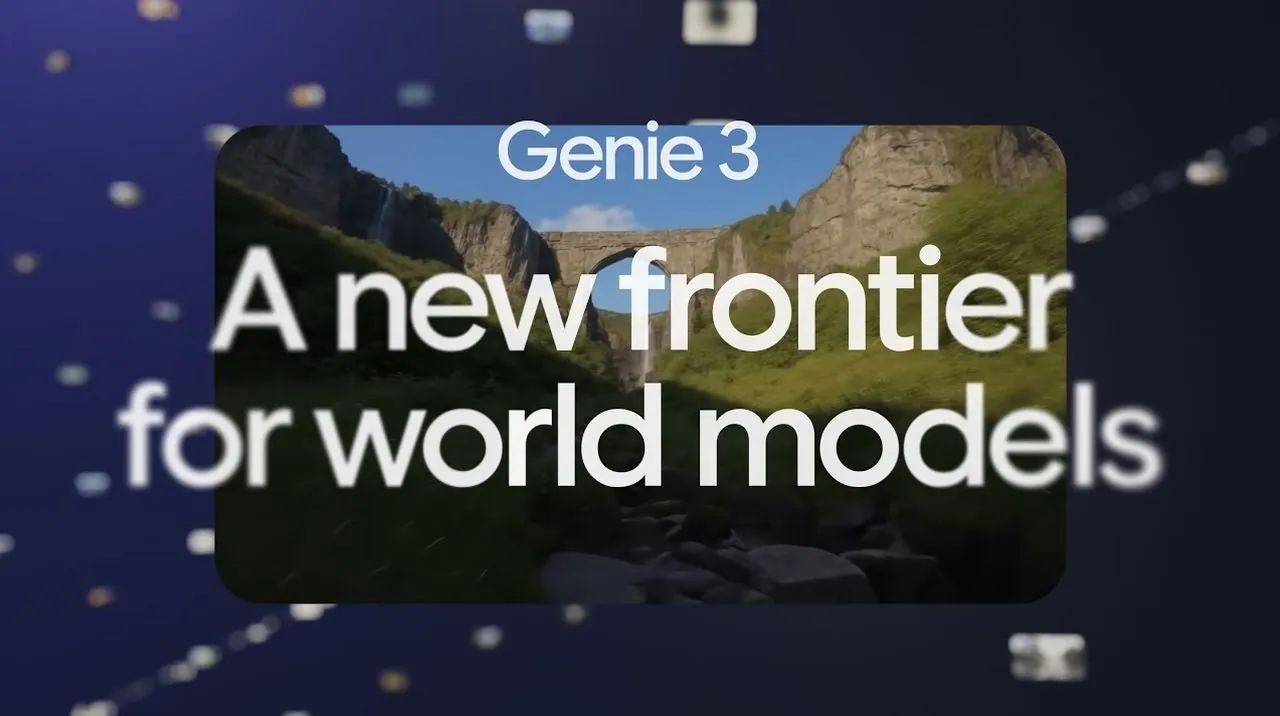
What if you could create an entire world—complete with lifelike physics, dynamic lighting, and seamless interactions—at the speed of thought? With the unveiling of Google Genie 3, this once-futuristic vision is now a tangible reality. Unlike traditional tools that rely on painstakingly pre-designed models, Genie 3 uses advanced AI to generate immersive environments in real time, adapting instantly to user input. Whether you’re designing a video game, simulating robotics tasks, or training AI systems, this new technology promises to redefine the boundaries of creativity and innovation. But as with any innovative leap, it raises intriguing questions: How far can AI go in mimicking reality? And what challenges lie ahead in perfecting such a powerful tool?
In this exploration of Google’s Genie 3, Matthew Berman uncovers the key features that set it apart, from its real-time generation capabilities to its seamless visual transitions. You’ll discover how this innovative system is transforming industries like entertainment, AI training, and robotics by bridging the gap between virtual and physical realities. But Genie 3 isn’t without its hurdles—high computational demands and occasional visual inconsistencies hint at the complexities of pushing technology to its limits. As we delve deeper, consider this: Could Genie 3 be the stepping stone to Artificial General Intelligence, or is it merely a glimpse of what’s to come?
Key Features That Set Genie 3 Apart
TL;DR Key Takeaways :
- Google’s Genie 3 is an advanced AI-powered “world model” capable of generating fully interactive and immersive environments in real time, with applications in gaming, film, robotics, and AI training.
- Key features include real-time environment generation, user-driven modifications, enhanced realism with accurate physics and lighting, and seamless transitions using auto-regressive frame generation.
- Genie 3 eliminates the need for pre-designed 3D models, offering unparalleled flexibility and scalability for creating dynamic, adaptive environments.
- Applications span diverse industries, allowing lifelike video game worlds, efficient AI training simulations, and advanced robotics development in controlled environments.
- Challenges include high computational demands and occasional visual inconsistencies, but future advancements could enhance accessibility, integrate real-time sound, and contribute to the development of Artificial General Intelligence (AGI).
Genie 3 distinguishes itself by creating dynamic, interactive environments that adapt instantly to user input. Unlike traditional systems that depend on pre-designed 3D models, Genie 3 employs advanced AI algorithms to generate environments on demand. This innovative approach delivers unparalleled flexibility and scalability in simulation.
Some of the standout features of Genie 3 include:
- Real-time generation: Produces high-quality, immersive visuals that adapt seamlessly to changes.
- User-driven modifications: Enables users to alter environments dynamically through “prompt events,” offering a new level of interactivity.
- Enhanced realism: Integrates accurate physics and advanced lighting to create lifelike experiences.
- Seamless transitions: Uses auto-regressive frame generation to ensure smooth visual continuity, even in complex scenarios.
These features empower users to interact with digital environments in unprecedented ways, whether designing a game, training AI systems, or simulating robotics tasks. The ability to create and modify environments in real time opens up new possibilities for innovation and creativity.

Applications Across Diverse Industries
The versatility of Genie 3 unlocks fantastic opportunities across multiple sectors, making it a valuable tool for professionals in various fields.
- Entertainment: Video game developers can craft dynamic, lifelike worlds that respond to player actions in real time, enhancing gameplay experiences. Filmmakers and TV producers can generate immersive, computer-generated scenes without the need for extensive post-production work, saving time and resources.
- AI Training: Genie 3 provides diverse simulated environments for training AI agents. For example, self-driving car algorithms can be tested in a wide range of traffic scenarios, improving their adaptability and performance in real-world conditions.
- Robotics: Robotics engineers can simulate tasks in controlled environments, allowing robots to learn and adapt autonomously. This accelerates the development of more efficient and capable robotic systems.
By allowing these applications, Genie 3 bridges the gap between virtual and physical realities, driving innovation and efficiency across industries.
Create Virtual Worlds at Lightning Speed with Google Genie 3

Gain further expertise in AI world creation by checking out these recommendations.
- Building open world games with AI – GameGen O by Tencent
- Runway AI: Instantly Create Interactive Game Worlds Without
- Can AI Replace Musicians? The Story of The Velvet Sundown AI
- Worlds First Fully AI Generated Game : Oasis
- 6 Essential AI Use Case Primitives Transforming Industries Today
- How AI Converts 2D Images Into Immersive 3D Worlds
- Googles Genie 2 AI Unveiled : Capable of Creating Fully Interactive
- How Runway Gen-4 AI Enhances Visual Consistency in Media
- How Manus AI Enhances Workflow, Data Analysis & Lead Generation
- Automate Your Viral Video Production with AI Tools
Technical Advancements Driving Genie 3
Building on the foundation of its predecessor, Genie 2, Genie 3 introduces several new advancements that enhance its capabilities:
- Scaled AI training: Allows the system to generate environments with greater detail and realism, improving the quality of simulations.
- Auto-regressive frame generation: Ensures smooth transitions between frames, even in highly complex scenes, maintaining visual consistency.
- No reliance on pre-built 3D models: Eliminates the need for extensive pre-design work, reducing the time and resources required for environment creation.
These innovations make Genie 3 a powerful tool for creating rich, dynamic worlds, setting a new benchmark for AI-driven simulations. Its ability to generate environments on demand significantly enhances efficiency and adaptability, making it a valuable asset for professionals across various domains.
Challenges and Future Potential
While Genie 3 showcases impressive capabilities, it also faces certain challenges that need to be addressed to maximize its potential:
- High computational demands: The system requires substantial processing power, which may limit its accessibility to users with high-performance setups.
- Visual inconsistencies: In highly complex scenes, occasional blurriness or visual artifacts may occur, indicating areas for further refinement.
Currently, Genie 3 is undergoing internal testing at Google, with no public release date announced. This testing phase provides an opportunity to optimize the system and address its limitations before it becomes widely available.
Looking ahead, the potential of Genie 3 extends far beyond its current capabilities. Future developments could include:
- Real-time sound generation: Integrating auditory elements to complement visual simulations, creating fully immersive sensory experiences.
- Advancing AGI: By training AI agents in diverse, adaptive environments, Genie 3 could play a pivotal role in the development of Artificial General Intelligence.
- Broader accessibility: As computational efficiency improves, Genie 3 may become accessible to a wider range of users and industries, providing widespread access to its benefits.
These advancements have the potential to redefine how we interact with digital environments, making Genie 3 a cornerstone of future AI-driven technologies.
Media Credit: Matthew Berman
Disclosure: Some of our articles include affiliate links. If you buy something through one of these links, Geeky Gadgets may earn an affiliate commission. Learn about our Disclosure Policy.
