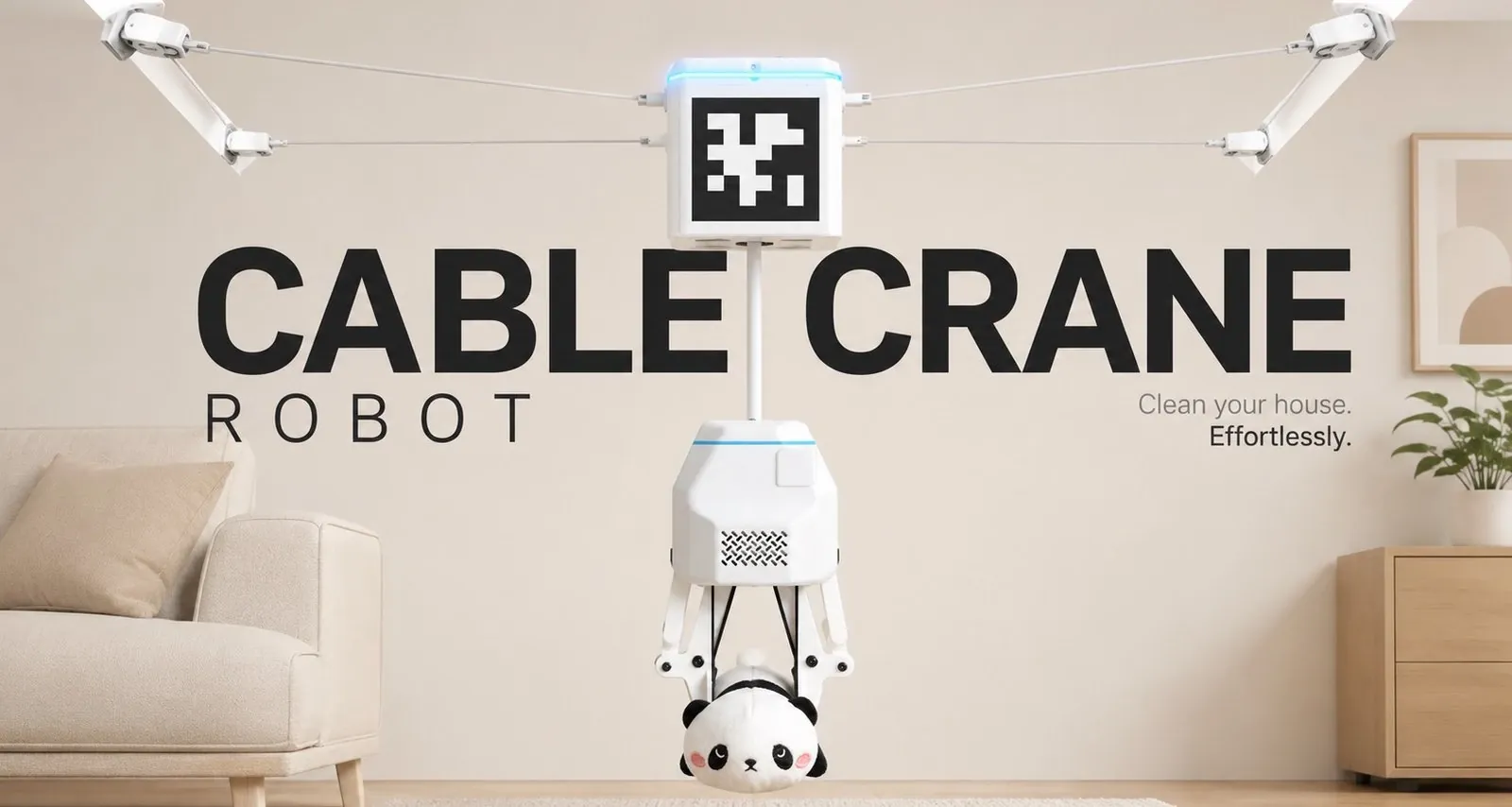
Building a household cleaning robot involves combining mechanical design with smart control systems, as demonstrated by Over Engineer. This hands-on walkthrough focuses on constructing a cable-driven parallel robot (CDPR), a system valued for its lightweight and adaptable design. The project uses fishing lines as cables and Raspberry Pis for motor control, making sure precise movements while keeping the setup compact. The robot’s gripper, built with a two-fingered mechanism and a four-bar linkage system, is capable of securely handling a range of objects, from small coins to larger items like soccer balls.
Discover how to incorporate features like overhead cameras for navigation and pressure sensors for accurate object handling. Learn how to train the robot to identify and manipulate household items using a multi-task diffusion transformer model. Additionally, gain insight into customization options, such as training the robot locally or using shared AI models, to tailor its functionality to your cleaning requirements.
Design and Components of the Cleaning Robot
TL;DR Key Takeaways :
- The cable-driven parallel robot (CDPR) is a cost-effective and lightweight solution for household cleaning, powered by four wall-mounted motors and fishing line cables for smooth operation.
- A two-fingered gripper with a four-bar linkage system, pressure sensors and self-adhesive grip tape ensures precise handling of objects of various shapes and sizes.
- Advanced training on 400 object-grasping examples, along with sensor integration (overhead cameras, laser range finder and accelerometer), enables efficient navigation and task execution.
- Customization options, including local AI model training and appliance mode for autonomous task loops, make the robot adaptable to specific household needs.
- Future potential includes integrating large language models (LLMs) and agent harness systems to enhance decision-making and expand applications beyond household cleaning.
The core of this cleaning robot lies in its cable-driven parallel robot (CDPR) architecture. This design ensures a wide operational range and the capacity to handle significant payloads, making it both versatile and efficient. The system is powered by four motors strategically mounted on walls, which reduces the robot’s weight and minimizes operational noise, making it ideal for indoor environments.
Key components of the design include:
- Cables: Fishing lines are used as cables due to their lightweight and durable properties, allowing smooth and reliable movement.
- Power Supply: Power is delivered through the support cables, eliminating the need for onboard batteries. This reduces maintenance requirements and keeps the system lightweight.
- Control System: Raspberry Pis act as the robot’s control hub, managing motor coordination and communication. This ensures precise operation even in complex environments.
This innovative design allows the CDPR to navigate efficiently and perform cleaning tasks across various household settings, making it a practical and effective tool for modern homes.
The Gripper Mechanism: A Key to Precision
The gripper mechanism is central to the robot’s functionality, allowing it to interact with objects of different shapes and sizes. The two-fingered gripper, equipped with a four-bar linkage system, ensures parallel motion and a wide opening range. This design allows the robot to securely grasp items ranging from small objects like coins to larger items such as soccer balls.
To enhance its effectiveness, the gripper includes:
- Pressure Sensor: This sensor adjusts the grip strength based on the object’s characteristics, making sure precise and secure handling.
- Self-Adhesive Grip Tape: This feature improves the robot’s ability to handle slippery or irregularly shaped items, providing a firm hold.
These features enable the robot to perform tasks such as picking up toys, laundry and trash with remarkable accuracy and efficiency, making it an indispensable tool for household cleaning.

Here are more detailed guides and articles that you may find helpful on the latest humanoid robots and hardware.
- Humanoid Robot Learns Tennis from Limited Motion Data
- Inside Boston Dynamics: How the Atlas Robot Actually Learns
- 10 Humanoid Robots Transforming the Future in 2025
- The Real Reason Google Sold Boston Dynamics to SoftBank
- 10 Humanoid Robots from China : Designed to Transform Your Home and Workplace
- The Neo Humanoid Robot – Real Breakthrough or Vaporware?
- TRON 2 Modular Humanoid Robot Officially Launches : Redefining the Core of Next-Gen Embodied Robotics
- ChatGPT 5 to power new Figure 02 humanoid robot
- Humanoid Robots Are Entering the Real World Faster Than Expected
- Tesla’s New Teslabot: The Future of Humanoid Robotics
Advanced Training and Sensor Integration
The robot’s cleaning capabilities are powered by advanced training techniques and sensor integration. It has been trained on 400 examples of object grasping, allowing it to recognize and handle a wide variety of items. A multi-task diffusion transformer model ensures smooth and efficient motion, allowing the robot to operate seamlessly in diverse environments.
Key technologies driving its functionality include:
- Overhead Cameras: These provide a comprehensive view of the surroundings, aiding in target identification and navigation.
- Sensors: Data from a laser range finder and accelerometer are integrated into the control system, allowing precise navigation and object handling.
These technologies work together to create a highly adaptable cleaning robot capable of tackling a wide range of household tasks with minimal supervision.
Customization and Versatility
One of the standout features of this robot is its ability to adapt to specific cleaning needs. Users can train the robot using local AI models or access community-published models for added flexibility. This customization ensures the robot can handle unique tasks tailored to individual household requirements.
Additional control features include:
- Telemetry Server and Authentication System: These enable secure remote or local operation, making sure safe and reliable use.
- Appliance Mode: This mode allows the robot to perform predefined task loops autonomously, making it ideal for routine cleaning without constant monitoring.
This level of customization and control makes the robot a practical and user-friendly solution for maintaining a clean and organized home.
Applications, Challenges and Future Potential
The CDPR excels at common household cleaning tasks, such as picking up toys, laundry and trash. Its advanced gripper mechanism and control system make it highly effective for these applications. However, it is important to consider its limitations:
- Handling Large or Heavy Objects: Items like books or furniture may pose challenges due to their size or weight distribution.
- Complex Environments: While adaptable, the robot may require additional training or adjustments to navigate cluttered or irregular spaces effectively.
Looking ahead, the potential for CDPR technology is immense. Integrating large language models (LLMs) could significantly enhance the robot’s decision-making capabilities. With advanced natural language processing, the robot could better understand and execute complex instructions, further expanding its functionality. Additionally, incorporating agent harness systems could open up new applications beyond household cleaning, such as industrial automation or personalized assistance in healthcare and other settings.
By combining innovative design, advanced training and customizable features, this robot represents a significant step forward in household automation. While current limitations exist, ongoing advancements in AI and robotics promise to unlock even greater potential, making this technology an invaluable tool for the future.
Media Credit: Over Engineer
Disclosure: Some of our articles include affiliate links. If you buy something through one of these links, Geeky Gadgets may earn an affiliate commission. Learn about our Disclosure Policy.
