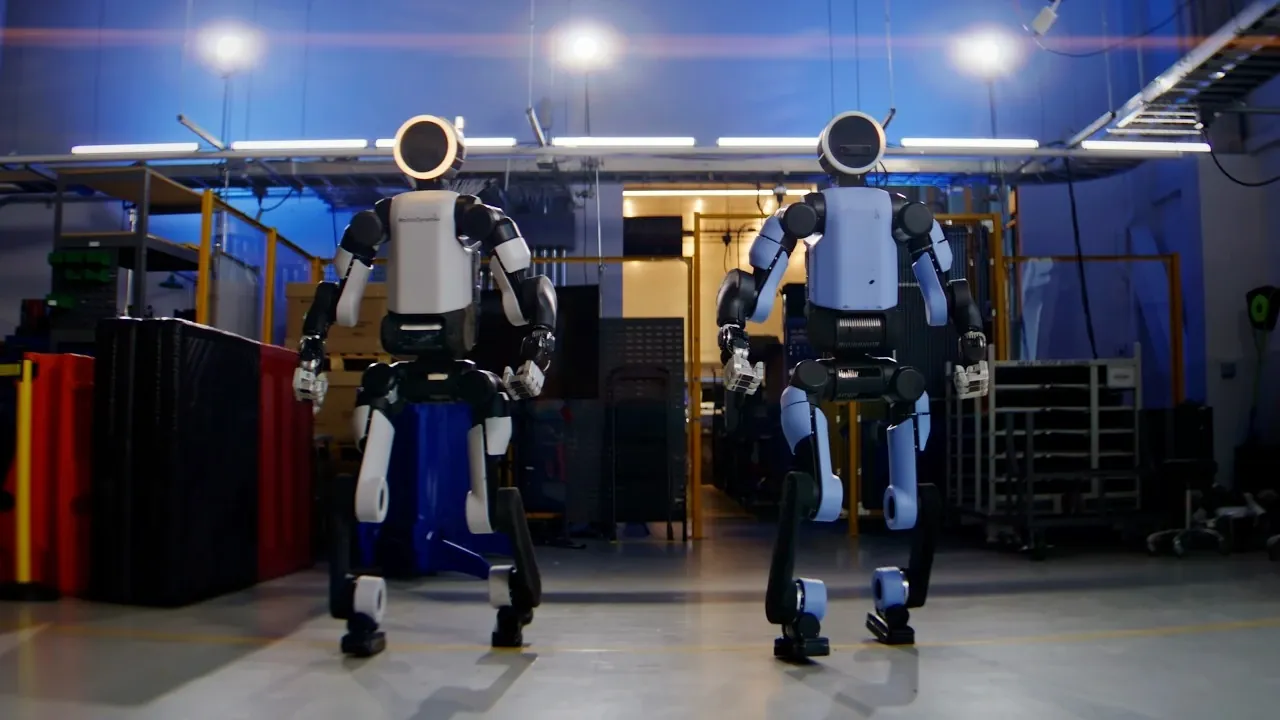
Boston Dynamics offers a detailed examination of Atlas, a humanoid robot engineered to perform intricate physical tasks. Atlas’s development relies on a combination of virtual simulations and real-world testing to refine its movements and decision-making. For example, engineers simulate new behaviors in controlled environments to assess their feasibility and safety before applying them to the physical robot. This approach highlights the importance of iterative testing in creating a system capable of handling complex challenges.
Explore how structured testing processes improve Atlas’s ability to adapt to unpredictable environments. Learn about the specific hurdles involved in designing a robot to navigate uneven terrain and perform dynamic actions. The overview also provide more insights into potential real-world uses for Atlas, such as disaster response and physically intensive industrial tasks.
TL;DR Key Takeaways :
- Atlas, developed by Boston Dynamics, is a humanoid robot designed for complex, human-like tasks with exceptional agility, strength and precision, showcasing innovative technology and practical applications.
- The robot’s design emphasizes reliability, ease of maintenance and cost-efficiency, making it adaptable for new features and robust enough for demanding tasks.
- Atlas demonstrates human-like strength and agility, capable of full-body motion, lifting heavy objects and performing tasks requiring precise coordination, making it suitable for disaster zones and industrial settings.
- Rigorous real-world testing and simulation-based development ensure Atlas’s reliability and adaptability in dynamic environments, accelerating its readiness for practical use.
- Boston Dynamics envisions Atlas transforming industries like disaster response and manufacturing by addressing repetitive, dangerous, or physically demanding tasks, bridging the gap between research and real-world applications.
Design Philosophy: Simplicity Meets Functionality
The design of Atlas reflects a deliberate balance between complexity and simplicity. While the robot incorporates highly sophisticated systems, its construction emphasizes reliability, ease of maintenance and cost-efficiency. This pragmatic approach ensures that Atlas remains adaptable, allowing engineers to introduce new features or refine existing ones without compromising its core functionality. By prioritizing robust engineering principles, Atlas is equipped to handle demanding tasks while serving as a flexible platform for ongoing development. This focus on simplicity and functionality ensures that Atlas is not only a technological marvel but also a practical tool for real-world challenges.
Capabilities: Human-Like Strength and Agility
Atlas’s physical capabilities are a testament to the advancements in robotics. Its design enables full-body motion, agility and strength, allowing it to perform tasks that require precise coordination and significant power. For example, Atlas has demonstrated its ability to lift and carry heavy objects, such as a 100-pound refrigerator, with remarkable ease. Its ability to bend, twist and balance mirrors human movements, making it a versatile tool for tasks that demand both strength and finesse. These capabilities position Atlas as a potential solution for environments where human-like dexterity and power are essential, such as disaster zones or industrial settings.
Become an expert in Boston Dynamics with the help of our in-depth articles and helpful guides.
- Boston Dynamics Unveils Atlas : New Factory Ready Humanoid Robot at CES 2026
- Boston Dynamics is selling its Spot Explorer robot for $74,500 (Video)
- Atlas humanoid robot receives an AI upgrade from Boston Dynamics
- Are Robotic Hands About to Outperform Humans? Boston Dynamics Thinks So
- 10 Humanoid Robots Transforming the Future in 2025
- Google DeepMind & Boston Dynamics Announce New Partnership to Bring AI to Humanoid Robots
- LS3 Robot Pack Mule Tested Through Rough Terrain By USMC (video)
- China’s Humanoid Robots Are Now Outpacing Boston Dynamics
Experimentation: Real-World Testing
Boston Dynamics employs rigorous testing protocols to refine Atlas’s abilities. These tests simulate real-world challenges, such as navigating uneven terrain, manipulating heavy objects, or performing tasks in dynamic environments. By exposing Atlas to these scenarios, the team gathers critical data to improve its control systems and behavior algorithms. This iterative process ensures that Atlas can adapt and perform reliably in unpredictable conditions. The emphasis on real-world testing not only validates the robot’s physical capabilities but also highlights its potential for practical applications outside the lab.
From Simulation to Reality: A Seamless Transition
A key aspect of Atlas’s development is its seamless transition from virtual simulations to real-world applications. Boston Dynamics utilizes an advanced testing pipeline that allows engineers to train and evaluate new behaviors in a simulated environment before deploying them to the physical robot. This approach minimizes risks, accelerates development and ensures that Atlas performs efficiently when faced with real-world challenges. By fine-tuning behaviors in simulation, the team can address potential issues early in the process, resulting in a more reliable and capable robot. This method underscores the importance of combining virtual and physical testing to achieve optimal performance.
Innovation Goals: Redefining Robotics
Boston Dynamics is committed to expanding the capabilities of humanoid robots like Atlas. The team continuously explores new tasks and challenges, pushing the limits of what Atlas can achieve. Their ultimate goal is to prepare Atlas for practical applications beyond the lab, such as disaster response, industrial automation and other scenarios where human-like robots could provide significant value. This relentless pursuit of innovation positions Atlas as a key player in the future of robotics, bridging the gap between research prototypes and functional tools for real-world use.
Future Vision: Practical Applications Beyond the Lab
The potential applications for Atlas extend far beyond research and development. Boston Dynamics envisions a future where humanoid robots assist in industries that require repetitive, dangerous, or physically demanding tasks. For instance, Atlas could play a critical role in emergency response, helping rescue workers navigate hazardous environments or carry out search-and-rescue missions. In manufacturing, Atlas’s strength and precision could streamline processes that are currently labor-intensive or unsafe for humans. By combining advanced technology with creative problem-solving, Boston Dynamics aims to transform Atlas from a research prototype into a practical tool that addresses real-world challenges. This vision highlights the robot’s potential to transform industries and improve efficiency and safety across various fields.
A Glimpse Into the Future of Robotics
Atlas’s journey from concept to reality demonstrates the power of innovation and engineering excellence. By focusing on reliability, cost-efficiency and advanced capabilities, Boston Dynamics has created a humanoid robot that sets a new standard for the field. As the team continues to refine and expand Atlas’s abilities, the possibilities for its real-world applications grow increasingly promising. Atlas is not just a technological achievement; it represents a bold step toward a future where humanoid robots play an integral role in solving complex challenges and enhancing human capabilities.
Media Credit: Boston Dynamics
Disclosure: Some of our articles include affiliate links. If you buy something through one of these links, Geeky Gadgets may earn an affiliate commission. Learn about our Disclosure Policy.
