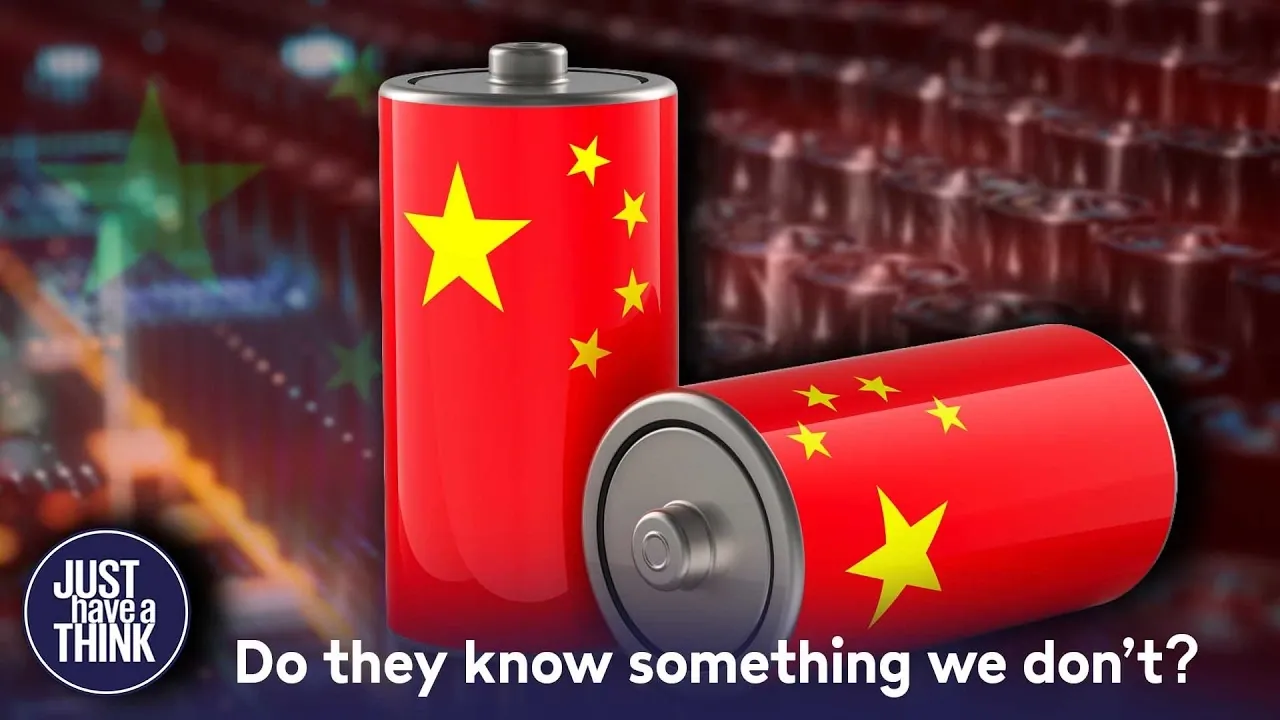
China’s rise to dominance in the global battery industry is often attributed to surface-level factors like low labor costs or government subsidies, but the reality is far more complex. As explored by Just Have a Think, the foundation of this success lies in a deeply integrated industrial ecosystem and a strategic alignment between government policies and industry goals. For instance, cities like Yichang serve as hubs for every stage of the battery lifecycle, from raw material extraction to the production of lithium iron phosphate (LFP) batteries. This coordinated approach enables China to scale production efficiently while fostering innovation, creating a competitive edge that Western nations struggle to replicate.
In this explainer, you’ll gain insight into the specific factors driving China’s battery leadership, including the role of entrepreneurial agility and the competitive dynamics within its industry. Discover how China’s iterative growth model and policy alignment enable rapid advancements in battery technology and explore the contrasting challenges faced by Western nations, such as fragmented supply chains and regulatory hurdles. By understanding these dynamics, you’ll be better equipped to grasp the broader implications for the global energy transition.
How an Integrated Ecosystem Powers China’s Battery Industry
TL;DR Key Takeaways :
- China’s battery industry dominance stems from a strategic framework combining long-term planning, an integrated industrial ecosystem, entrepreneurial agility and alignment between government policies and industry objectives.
- A highly interconnected industrial ecosystem, including resource availability and efficient supply chains, supports China’s large-scale production of cost-effective and sustainable lithium iron phosphate (LFP) batteries.
- Entrepreneurial agility and a culture of rapid adaptation enable Chinese companies to innovate quickly, refine designs and respond effectively to market demands, driving advancements in battery technology.
- Intense competition within China’s battery sector fosters continuous improvement, balancing innovation with shared industry goals, unlike the slower, fragmented approaches seen in Western nations.
- Western nations face challenges like fragmented policies and lack of integration but can focus on specialized niches such as battery recycling, grid optimization and high-performance applications to build a competitive edge in the global energy transition.
China’s battery industry thrives on a highly interconnected industrial ecosystem, which serves as the backbone of its success. Cities such as Yichang have become pivotal hubs, encompassing every stage of the battery lifecycle. This includes raw material extraction, manufacturing and the development of energy storage solutions. The availability of critical resources, such as phosphate and hydropower, has facilitated the large-scale production of lithium iron phosphate (LFP) batteries. These batteries are increasingly favored for their cost-effectiveness and sustainability, offering a viable alternative to cobalt- and nickel-based technologies.
The ecosystem extends beyond production, integrating the electrification of transportation and renewable energy systems. This creates a self-sustaining cycle of innovation, efficiency and scalability. In contrast, Western nations often face fragmented supply chains and limited coordination between industries, which undermines their ability to compete on the same scale. China’s integrated approach ensures that every component of the battery value chain works in harmony, driving both technological advancement and economic efficiency.
Entrepreneurial Agility and Iterative Growth
China’s battery sector operates with the agility and adaptability of a startup ecosystem. Companies in this space are known for their ability to rapidly refine designs, learn from failures and scale operations efficiently. This entrepreneurial culture is supported by decades of accumulated expertise and a highly skilled workforce. Unlike Western industries, where innovation can be hindered by regulatory barriers and risk aversion, Chinese firms embrace experimentation and rapid adaptation to market demands.
This iterative approach has enabled China to achieve significant advancements in battery technology and manufacturing processes. For example, the swift development and commercialization of LFP batteries demonstrate how Chinese companies respond effectively to shifting technological trends and consumer needs. This ability to adapt and innovate at speed has positioned China as a global leader in the battery industry.

Become an expert in energy with the help of our in-depth articles and helpful guides.
- The Island is Shrinking: iPhone 18 Pro Max Leaks Confirm Apple’s Cleanest Display Ever
- The Best Camera Ever: Why the iPhone 18 Pro’s Variable Aperture is the Real Star of 2026
- Ultimate Apple Watch Accessory: EnergyLink Charging Watch Band
- How the Super Soaker Inventor Built a Heat Engine Without Moving Parts
- iPhone 18 Pro: What Apple Isn’t Telling You Yet
- Best Phone Battery Life 2025: OnePlus 15, vivo X300 Pro, & iPhone 17 Pro Max
- The Battery BATTLE ROYALE – iPhone, Pixel, Galaxy, Xiaomi – Who Wins the Drain Test
- iOS 27 Leaks Reveal the End of an Era: Apple’s New Priorities Confirmed
- Apple Just Dropped iOS 26.5 RC2: Here’s Everything New
- Apple Home vs Google Home: How iOS 27 Changes the Ecosystem
Competition Fuels Innovation
Contrary to the perception of a monolithic industry, China’s battery sector is characterized by intense competition. Companies compete aggressively to lower costs, improve efficiency and introduce new innovations. This competitive environment fosters continuous improvement, making sure that Chinese batteries remain both affordable and technologically advanced.
In comparison, Western industries often prioritize protecting intellectual property and maintaining market dominance, which can stifle collaboration and slow the pace of innovation. China’s model strikes a balance between competition and shared goals, creating an environment where companies are incentivized to innovate while contributing to the broader objectives of the industry. This dynamic has proven to be a key driver of China’s success in advancing battery technology.
Policy and Industry: A Unified Vision
One of the most significant factors behind China’s battery dominance is the alignment between government policies and industrial strategies. The Chinese government sets clear, long-term objectives, such as achieving carbon neutrality by 2060, and provides the necessary support for industries to align with these goals. This unified vision enables strategic planning and sustained growth across the battery sector.
In Western nations, however, companies often view new policies as regulatory burdens rather than opportunities for innovation. Initiatives such as the European Battery Alliance and the U.S. Inflation Reduction Act aim to strengthen domestic supply chains, but they lack the cohesive vision and execution seen in China. Without a unified approach, Western efforts risk falling short of the comprehensive strategies needed to compete on a global scale.
Challenges and Opportunities for the West
While Europe and the United States have made strides in building battery factories, they face significant challenges in replicating China’s success. These include fragmented policies, a shortage of skilled labor and a lack of integrated ecosystems. Building a competitive battery industry requires more than manufacturing capacity, it demands innovation, adaptability, and a clear strategy for integrating batteries into broader energy systems.
However, the global demand for batteries presents substantial opportunities for Western nations to carve out specialized niches. Instead of attempting to replicate China’s model, Western countries should focus on areas where they can add unique value. Key opportunities include:
- Developing advanced battery recycling technologies to address sustainability and resource scarcity.
- Creating software solutions for grid optimization to enhance energy efficiency and reliability.
- Designing high-performance batteries tailored for specific applications, such as aviation or marine transportation.
By prioritizing these areas, Western nations can contribute to the global energy transition while building a competitive edge in the battery industry.
Building a Comprehensive Battery Economy
Batteries are not merely products; they are enablers of a broader energy transformation. Their true value lies in their ability to integrate renewable energy, enhance grid flexibility and reduce reliance on fossil fuels. While manufacturing is a critical component, Western nations must also focus on creating value from batteries after production.
This involves investing in energy infrastructure, developing services that optimize battery usage and integrating batteries into comprehensive energy transition strategies. By adopting this approach, the West can build a robust battery economy that complements its manufacturing efforts and positions itself as a leader in the global shift toward sustainable energy.
Strategic Pathways for the Future
China’s dominance in the battery industry is not solely the result of low costs or government subsidies. It reflects a strategic combination of an integrated industrial ecosystem, entrepreneurial culture and policy alignment. For Western nations to compete effectively, they must look beyond manufacturing and focus on building a comprehensive battery economy. By using batteries to achieve energy transition goals, investing in innovation and developing specialized capabilities, the West can position itself as a key player in the global energy landscape.
Media Credit: Just Have a Think
Disclosure: Some of our articles include affiliate links. If you buy something through one of these links, Geeky Gadgets may earn an affiliate commission. Learn about our Disclosure Policy.
