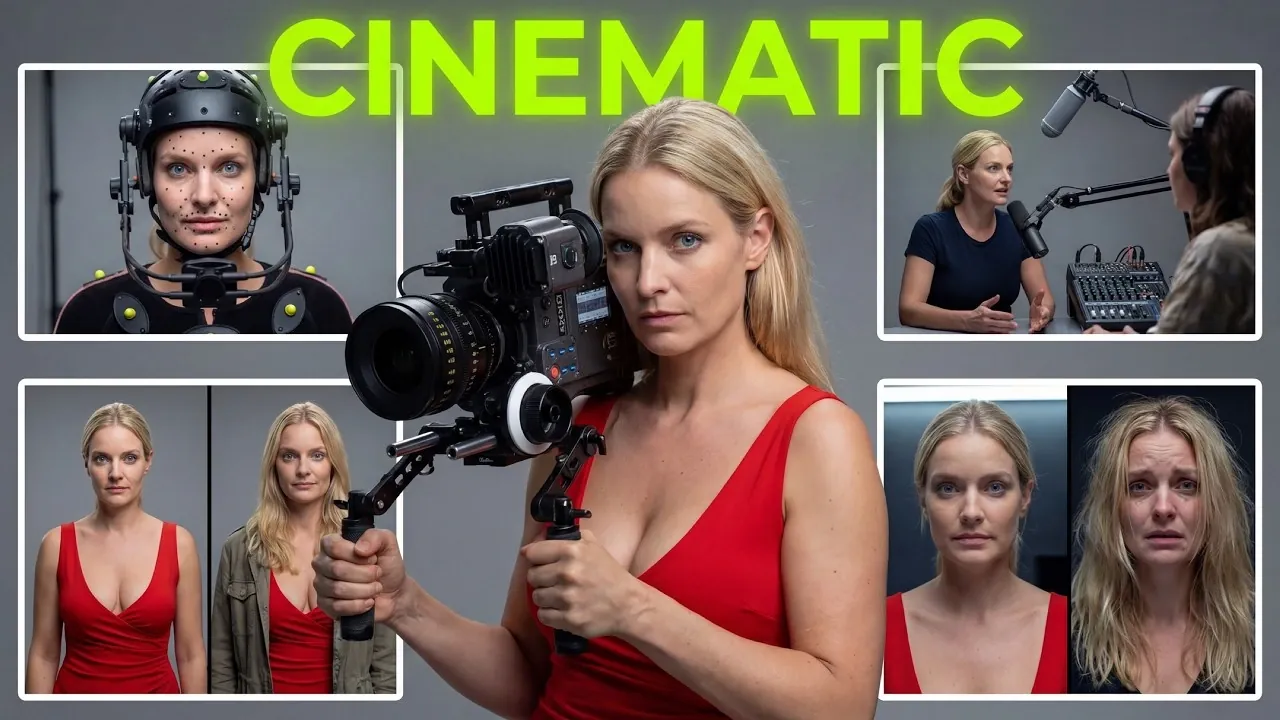
What if you could craft a fully realized film, complete with consistent characters, immersive scenes, and a compelling narrative, all from a single prompt? It might sound like science fiction, but CyberJungle takes a closer look at how advancements in AI are transforming this bold idea into a practical reality. Imagine creating a cinematic experience where every frame aligns seamlessly with your vision, bypassing the logistical challenges of traditional filmmaking. This isn’t just a glimpse of what’s to come; it’s a new shift happening right now, redefining how stories are brought to life on screen. With AI capable of automating complex processes while preserving creative control, filmmakers are finding new ways to push the boundaries of storytelling.
In this feature, you’ll discover the strategies behind creating seamless AI-generated films, from maintaining consistent character designs to orchestrating smooth scene transitions. These workflows provide a blueprint for achieving professional-quality results, while innovations like motion tracking and key frame control add layers of realism to your projects. Whether you’re curious about the potential of AI filmmaking or ready to embark on your own creative journey, this guide offers invaluable insights to spark your imagination. The possibilities are endless, what kind of story will you bring to life?
AI Filmmaking Simplified
TL;DR Key Takeaways :
- AI filmmaking enables the creation of high-quality cinematic content from a single prompt, integrating consistent characters, immersive scenes, and compelling narratives through advanced tools like Nano Banana Pro, Kling 2.6, and VEO 3.1.
- The grid method for storyboarding (e.g., a 3×3 grid) helps map out cinematic sequences, making sure logical progression and narrative coherence while simplifying refinement of frames and transitions.
- Key frames and motion tracking enhance realism and consistency in AI-generated films, allowing smooth transitions, dynamic camera movements, and lifelike character gestures and expressions.
- Advanced AI tools like Art List’s AI Toolkit and Original Model One provide creators with precision control over visuals, audio, and narrative elements, streamlining the filmmaking process.
- Post-production tools, including color correction and sound design, bring all elements together, making sure a polished final product, while ongoing advancements in AI promise even greater creative possibilities in the future.
AI filmmaking operates through a structured workflow that integrates characters, scenes, and storylines into a unified cinematic experience. Starting with a single prompt, you can guide AI tools to generate a cohesive sequence that aligns with your creative vision. Tools such as Nano Banana Pro, Kling 2.6, and VEO 3.1 play a pivotal role in managing visual and audio elements, making sure professional-grade cinematic quality.
To achieve consistency, it is essential to define the scope of your project early in the process. This includes establishing parameters for character appearances, scene transitions, and the overall tone of the film. Advanced AI capabilities allow you to automate repetitive tasks, allowing you to focus on storytelling and creative direction. By using these tools, you can streamline the filmmaking process while maintaining control over the artistic elements of your project.
Storyboarding with the Grid Method
Storyboarding remains a fundamental step in planning any film, and the grid method has proven to be particularly effective for AI-generated projects. By creating a 3×3 grid, you can map out cinematic sequences, with each cell representing a specific scene, camera angle, or key moment. This structured approach provides a clear visual representation of your story’s flow and ensures a logical progression from one scene to the next.
Sequential numbering within the grid simplifies the process of refining individual frames and transitions. This method also helps guide the AI in producing a coherent narrative structure, making sure that the final output aligns with your creative vision. By visualizing the story in this way, you can identify potential gaps or inconsistencies early in the process, saving time during production.
AI Filmmaking Tools: VEO 3.1, Motion Capture, Camera Moves

Explore further guides and articles from our vast library that you may find relevant to your interests in AI filmmaking.
- Transform a Single Photo into a Stunning Film with AI Magic
- AI actors advanced AI video creation and 3D AI models
- Minimax vs Runway AI Video Generators Compared
- Portal’s GlaDOS Appearing In Guillermo Del Toro Monster Film
- Superintelligence action comedy film starring Melissa McCarthy
- Achieve Perfect Character Consistency in AI Videos & Images
- How to create cinematic AI animated short films and movies
- How to create cinematic movies using AI
- Mia AI custom GPT AI companion you can talk to with your voice
- World War Z Behind The Scenes Look At The Zombie AI (video)
Using Advanced AI Tools
A wide range of AI tools is available to enhance every aspect of the filmmaking process. These tools provide creators with the flexibility to fine-tune their projects and achieve a level of precision comparable to traditional filmmaking techniques. Some of the most effective tools include:
- Art List’s AI Toolkit: A comprehensive platform that combines image generation, video editing, and voiceover tools to streamline the production process.
- Original Model One: A professional-grade cinematic image generator offering features such as resolution control, prompt guidance scales, and negative prompts for enhanced customization.
By combining these tools, you can control visual aesthetics, audio quality, and narrative coherence with remarkable accuracy. Whether you are focusing on character design, scene composition, or sound engineering, these technologies provide the resources needed to bring your vision to life.
Controlling Key Frames
Key frames are critical for guiding AI in generating smooth and consistent sequences. The first and last frames of your film serve as anchor points, making sure that the intermediate sequences maintain visual and narrative coherence. These frames act as reference points for the AI, helping it to create seamless transitions and preserve the overall tone of the film.
This technique is particularly effective for implementing advanced camera motions, visual effects (VFX), and scene transformations. By carefully defining these key frames, you can explore creative possibilities while maintaining control over the final output. This approach allows for a balance between innovation and consistency, allowing you to produce a polished and engaging film.
Enhancing Realism with Motion Control
Motion tracking technology has introduced a new level of realism to AI-generated films. By capturing real-life movements, you can infuse characters with natural gestures and expressions, making them more relatable and engaging. To optimize this process, it is important to consider factors such as lighting, clothing, and setup during the motion capture phase.
Motion control also extends to camera movements, allowing dynamic shots such as pans, orbits, and zooms. Predefined libraries of camera motions simplify this aspect of production, allowing you to focus on storytelling rather than technical execution. By combining motion tracking with AI capabilities, you can create visually stunning and emotionally resonant scenes.
Creating Natural Dialogue
Realistic dialogue is a cornerstone of immersive storytelling. Structuring prompts effectively allows AI to generate speech patterns and emotional tones that align with your characters and narrative. Tools like VEO 3.1 excel in producing smooth and natural voiceovers, offering significant improvements over earlier technologies.
When paired with motion tracking, these voiceover tools enable lifelike character interactions that resonate with audiences. By focusing on the nuances of speech and expression, you can enhance the emotional depth of your film, creating a more engaging and memorable viewing experience.
Post-Production: Bringing It All Together
Post-production is where the various elements of your film come together to form a cohesive final product. Advanced editing tools allow you to integrate visuals, audio, and effects seamlessly. Resources such as Art List’s extensive library of sound effects and music provide additional options to enhance the auditory experience of your film.
Color correction is another crucial step in achieving a consistent cinematic aesthetic. Adjusting hues, contrasts, and saturation levels ensures that every frame aligns with your desired visual style. This attention to detail creates a polished and professional look, elevating the overall quality of your film.
The Future of AI Filmmaking
AI filmmaking continues to evolve at a rapid pace, with new tools and features being developed to enhance creative possibilities. For example, Art List Studio is working on comprehensive solutions that provide greater control over character consistency, world-building, and lighting adjustments. These advancements promise to offer creators even more flexibility and precision in their projects.
As AI technology progresses, it is poised to transform the filmmaking industry. By mastering these tools and techniques, you can stay ahead of the curve, producing high-quality cinematic content with unparalleled efficiency and creativity. Whether you are an experienced filmmaker or a newcomer, AI offers exciting opportunities to bring your storytelling visions to life in innovative and impactful ways.
Media Credit: CyberJungle
Disclosure: Some of our articles include affiliate links. If you buy something through one of these links, Geeky Gadgets may earn an affiliate commission. Learn about our Disclosure Policy.
