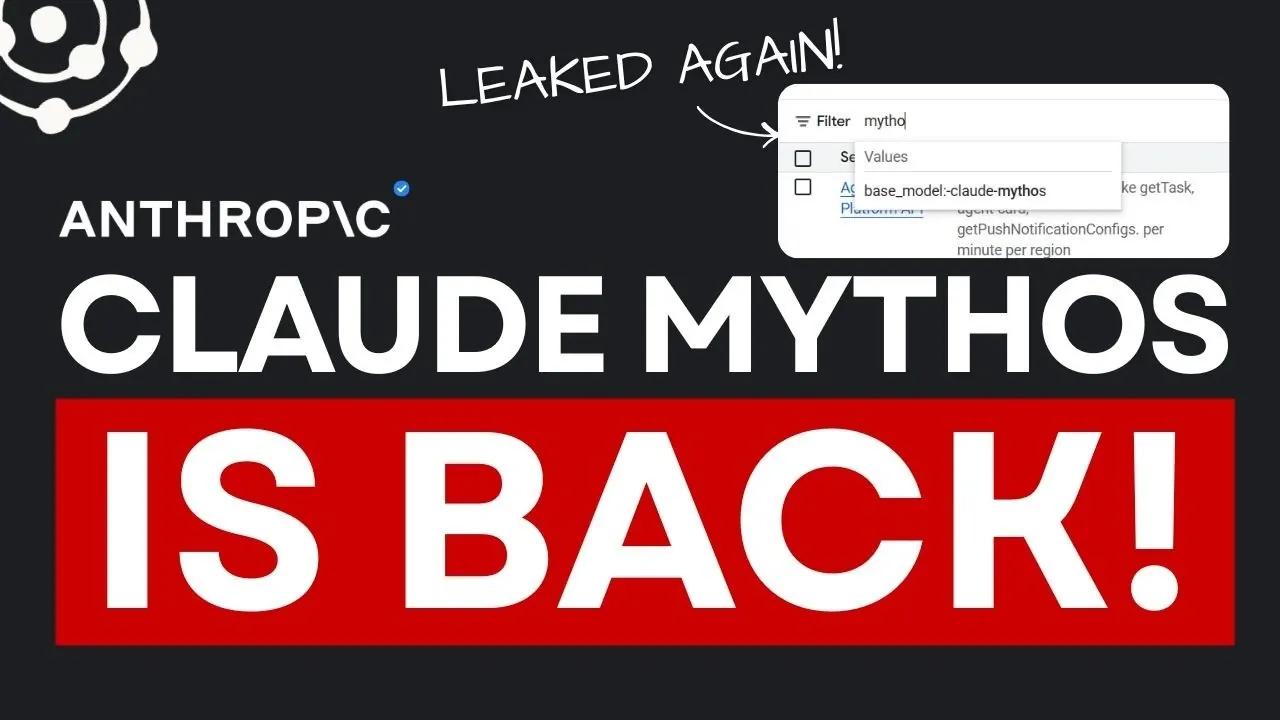
The sudden inclusion of Anthropic’s Claude Mythos model in the Google Cloud console has sparked significant interest and debate within the tech community. Known for its ability to detect code vulnerabilities with remarkable precision, Claude Mythos was previously accessible only to a select group of vetted organizations due to its advanced capabilities and potential risks. Universe of AI explores how this unexpected availability could signal a shift in Anthropic’s strategy, raising questions about the balance between accessibility and the need for strict safeguards in deploying such sophisticated AI systems.
Learn more about the potential implications of Claude Mythos becoming widely available on a major platform, and how its advanced cybersecurity capabilities could benefit organizations while also presenting new challenges in managing ethical and security risks. Explore the broader context of AI accessibility, the considerations for responsible use and what this development might mean for the future of AI deployment across industries.
Claude Mythos: A Model Shrouded in Controversy
TL;DR Key Takeaways :
- The sudden inclusion of Anthropic’s Claude Mythos model in the Google Cloud console has sparked discussions about its accessibility, potential benefits and associated risks.
- Claude Mythos is a highly advanced AI model known for its precision in detecting code vulnerabilities, with significant implications for cybersecurity practices.
- OpenAI’s Codec system has introduced updates allowing remote management of locked or sleeping macOS devices, highlighting advancements in AI-driven enterprise solutions.
- Google is quietly testing its Gemini model, showcasing potential in creative and technical applications, with a focus on refining capabilities before public release.
- The competitive AI landscape, driven by Anthropic, OpenAI and Google, is reshaping industries with rapid advancements, emphasizing the need for ethical and security considerations.
Claude Mythos stands out as a highly capable AI model, renowned for its ability to detect code vulnerabilities with exceptional precision. Its potential to transform cybersecurity practices is undeniable, but its advanced nature also poses significant challenges. The sudden availability of this model on a major platform like Google Cloud could mark a turning point in AI accessibility, but it also underscores the need for vigilance in managing its use.
Anthropic’s Claude Mythos model has long been a subject of debate due to its unique capabilities and associated risks. Designed to identify vulnerabilities in code with remarkable accuracy, the model was initially restricted to a select group of vetted organizations through a gated preview program. Anthropic’s decision to limit access stemmed from concerns about potential misuse, which could exacerbate cybersecurity threats rather than mitigate them.
The recent, unexpected listing of Claude Mythos in the Google Cloud console, without any “preview” designation, has sparked speculation about Anthropic’s intentions. Is this a precursor to a broader rollout, or simply a backend oversight? Anthropic has yet to clarify its position, leaving the tech community to ponder the implications. A wider release could provide organizations with powerful tools to enhance their cybersecurity defenses. However, it also raises concerns about the potential for misuse by malicious actors, who could exploit the model’s capabilities to identify and exploit vulnerabilities.
This development highlights the dual-edged nature of advanced AI technologies. While they offer immense potential for solving complex problems, they also demand careful oversight to ensure they are used responsibly. For organizations, the availability of Claude Mythos on Google Cloud could represent a significant opportunity, but it also underscores the importance of implementing robust safeguards to prevent misuse.
OpenAI’s Codec System: Redefining Remote Management
As Anthropic navigates the complexities surrounding Claude Mythos, OpenAI is advancing its own innovations with the Codec system. Recent updates to this system address a critical limitation in remote device management by allowing control of locked or sleeping macOS devices. This enhancement promises to improve flexibility and efficiency for users managing devices remotely, particularly in enterprise environments where seamless remote access is essential.
However, implementing this feature is not without challenges. Apple’s stringent macOS security policies could pose obstacles, requiring OpenAI to address both regulatory and technical hurdles. Additionally, the potential for misuse, such as unauthorized access to devices, raises important questions about balancing innovation with security. OpenAI’s ability to navigate these challenges will be crucial in determining the success of this feature. By prioritizing robust safeguards and user trust, OpenAI can ensure that the Codec system delivers on its promise without compromising security.
For users, the advancements in the Codec system highlight the growing potential of AI to enhance everyday tasks. Whether managing devices remotely or streamlining workflows, these innovations demonstrate how AI can be leveraged to improve efficiency and productivity.

Here are additional guides from our expansive article library that you may find useful on Claude Mythos.
- Meet Claude Mythos : Anthropic’s Powerful Successor to Opus
- Why Anthropic is Delaying the Public Release of Claude Mythos
- Anthropic Claude Mythos AI World’s Newest Obsession a 10-Trillion Parameter
- Anthropic Leak Reveals Claude Mythos Model and Cybersecurity Risks
- Why Anthropic is Secretly Holding Back the Claude Mythos Release
- Inside the Anthropic Leak : New Claude Builder and an Opus 4.6 Downgrade
Google’s Gemini Model: Quiet Testing in Progress
Google is also making strides in AI development, with reports indicating that it is quietly testing an unannounced Gemini model. This model, potentially Gemini 3.2 or 3.5, is being tested through a silent phase, with select user requests routed to it. This approach suggests that Google is preparing for a significant announcement, possibly at its upcoming I/O event.
Early feedback indicates that the Gemini model excels in generating canvas and SVG outputs, showcasing its potential for creative and design-oriented applications. This aligns with Google’s broader strategy of integrating AI into diverse use cases, from content creation to solving complex technical challenges. By focusing on refining the model’s capabilities before a public release, Google demonstrates its commitment to delivering reliable and high-performing AI solutions.
For users, the Gemini model represents an exciting development in AI’s ability to support creative and technical tasks. Its potential applications span industries, offering new tools for designers, developers and content creators. As Google continues to refine this model, its eventual release could mark a significant milestone in AI’s evolution.
The Competitive AI Landscape
The AI industry is currently characterized by intense competition, with Anthropic, OpenAI and Google vying for leadership in the field. OpenAI’s recent release of GPT-5.5 has set a new benchmark, outperforming Claude Mythos in certain cybersecurity metrics. This development has increased pressure on Anthropic to innovate and maintain its competitive edge.
At the same time, the race to enhance AI capabilities is driving rapid advancements across the industry. From cybersecurity to creative applications, these innovations are reshaping industries and expanding the possibilities of AI. For users, this competitive environment translates into access to more powerful tools, but it also underscores the importance of staying informed about ethical and security considerations.
The unexpected appearance of Claude Mythos in the Google Cloud console serves as a reminder of the dynamic and unpredictable nature of AI development. As Anthropic, OpenAI and Google continue to push the boundaries of innovation, the implications for users and organizations are profound. By staying informed and engaged with these developments, you can navigate this evolving landscape and make informed decisions about how to use AI technologies effectively.
Media Credit: Universe of AI
Disclosure: Some of our articles include affiliate links. If you buy something through one of these links, Geeky Gadgets may earn an affiliate commission. Learn about our Disclosure Policy.
