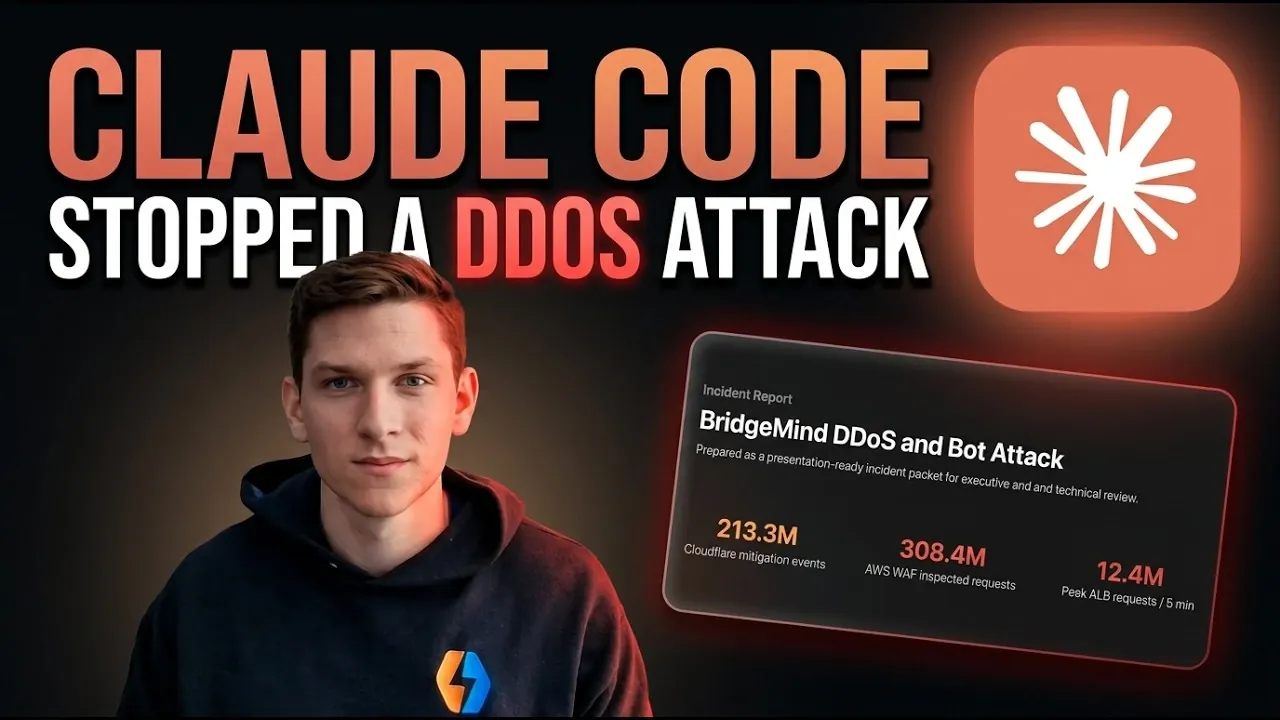
A Distributed Denial of Service (DDoS) attack recently targeted BridgeMind’s API, flooding it with millions of requests and disrupting services. To mitigate the issue, the team relied on Claude Code, an AI-based system, to analyze AWS logs and identify the malicious traffic’s origin. This allowed them to update AWS Web Application Firewall (WAF) rules in real time, blocking the attack and restoring functionality. As noted by Matthew Miller, while this response was effective in the short term, it highlighted the need for a more robust, long-term security framework.
Explore how BridgeMind adopted Cloudflare’s edge-based filtering to enhance DDoS protection and manage traffic more efficiently. Learn about the decision to implement Cloudflare’s Pro Plan as a cost-conscious yet effective solution for their security needs. Additionally, gain insight into the dual role of AI systems like Claude Code in cybersecurity, from advanced threat detection to the risks they may pose if misused.
What Happened: The DDoS Attack
TL;DR Key Takeaways :
- Bridgemind mitigated a DDoS attack on its API by using AI-powered tools like Claude Code for rapid analysis and transitioning to Cloudflare for enhanced long-term protection.
- The attack overwhelmed the system with millions of requests, causing service outages and highlighting the need for robust cybersecurity measures against increasingly AI-driven threats.
- Cloudflare’s DDoS protection was chosen for its superior performance, cost efficiency and advanced features like real-time traffic monitoring and adaptive threat mitigation.
- The financial impact of the attack emphasized the importance of cost-effective solutions, with Cloudflare’s Pro Plan offering significant savings compared to AWS Shield Advanced.
- The incident demonstrated the dual role of AI in cybersecurity, both as a tool for defense and as a method for attackers to launch sophisticated threats, underscoring the need for proactive security strategies.
A DDoS attack is designed to overwhelm a system with excessive traffic, rendering it inaccessible to legitimate users. In Bridgemind’s case, the API was bombarded with millions of requests, causing significant service outages. The attack not only disrupted user access but also posed risks of financial losses, reputational damage and operational instability. Such incidents underscore the critical need for organizations to prepare for and defend against these increasingly prevalent cyber threats. The growing sophistication of these attacks, often powered by AI, makes it imperative for businesses to adopt proactive and scalable security measures.
How Bridgemind Responded
When the attack began, Bridgemind’s immediate focus was on identifying and neutralizing the source of the malicious traffic. The team utilized Claude Code, an AI-powered tool, to analyze AWS logs and pinpoint the origins of the attack. This enabled them to swiftly update their AWS Web Application Firewall (WAF) rules, effectively blocking the influx of junk traffic. While this response provided temporary relief, it became clear that a more robust, long-term solution was necessary to prevent future incidents.
Recognizing the limitations of their existing setup, Bridgemind evaluated alternative strategies to strengthen their defenses. The team prioritized solutions that could offer both enhanced protection and cost efficiency, making sure the organization could sustain its cybersecurity measures without compromising performance or budget.

Deep dive into the latest in Claude Code by exploring our other resources and articles.
- Anthropic Launches Claude Code Review Preview for Team & Enterprise
- What Anthropic’s Massive 500,000-Line Source Code Leak Reveals About Claude
- Anthropic Drops Claude Code Skills 2.0 : Adds Evals, A/B Testing Tools & More
- Claude Code 2 Automation Expands with Loops, Schedules, and 100+ Workflows
- Still Using Claude Code Bypass Permissions? Use This New Feature Instead
- 8 Hidden Agent Features Exposed in the Recent Claude Code Source Code Leak
- Super Nested Claude Code Offers Next Level Vibe Coding
- Claude Code 2.0 Adds Multi-Agent Code Review for Team & Enterprise Plans
- Claude Code Can Now Control Your Desktop : Here’s What It Can Do
- How Paperclip Turns Claude Code Into an Entire Automated AI Company
Building a Stronger Defense
To establish a more resilient defense against future attacks, Bridgemind transitioned its DNS records from AWS Route 53 to Cloudflare. This strategic move allowed the organization to use Cloudflare’s edge protection capabilities, which intercept and block malicious traffic before it reaches the core infrastructure. Cloudflare’s DDoS protection proved to be superior in both performance and cost efficiency compared to AWS Shield Advanced, making it an ideal choice for Bridgemind’s long-term cybersecurity strategy.
Cloudflare’s advanced features, such as real-time traffic monitoring and adaptive threat mitigation, provided Bridgemind with a comprehensive solution to address the evolving landscape of cyber threats. By integrating these capabilities into their infrastructure, the organization not only enhanced its ability to respond to attacks but also reduced the likelihood of future disruptions.
Cost Considerations
The financial impact of the attack played a significant role in shaping Bridgemind’s response strategy. Mitigating the attack using AWS services alone would have incurred costs ranging from $190 to $500. In contrast, Cloudflare’s Pro Plan, priced at just $25 per month, offered superior protection at a fraction of the cost. This affordability, combined with Cloudflare’s advanced security features, made it the clear choice for Bridgemind’s long-term defense strategy.
By opting for a cost-effective solution without compromising on quality, Bridgemind demonstrated the importance of balancing financial considerations with the need for robust cybersecurity. This approach not only minimized the immediate financial impact of the attack but also ensured the organization could sustain its defenses over time.
Lessons Learned: The Role of AI in Cybersecurity
This incident underscores the dual role of AI in cybersecurity. On one hand, tools like Claude Code can significantly enhance threat detection and response, allowing organizations to quickly identify and neutralize potential threats. On the other hand, malicious actors can also use AI to launch more sophisticated and targeted attacks. This dynamic highlights the need for organizations to stay ahead of emerging threats by adopting proactive security measures.
Key takeaways from Bridgemind’s experience include the importance of regular vulnerability assessments, penetration testing and the adoption of secure coding practices. Public-facing applications, in particular, require strong defenses to withstand the evolving tactics of cybercriminals. By integrating AI-powered tools with comprehensive security protocols, organizations can enhance their ability to detect, respond to and prevent cyber threats.
Actionable Recommendations
To protect your systems from DDoS attacks and other cyber threats, consider implementing the following strategies:
- Use Cloudflare’s DDoS protection to block malicious traffic before it reaches your infrastructure.
- Conduct regular vulnerability assessments to identify and address potential security gaps.
- Use AI tools like Claude Code for real-time threat detection and analysis.
- Adopt secure coding practices to minimize exploitable weaknesses in your applications.
- Perform regular penetration testing to evaluate the effectiveness of your security measures.
By adopting these strategies, organizations can enhance their resilience against cyber threats, making sure the security and reliability of their systems.
Strengthening Cybersecurity for the Future
Bridgemind’s response to the DDoS attack serves as a valuable case study in effective cybersecurity management. By combining AI-powered tools with comprehensive security solutions, the organization was able to mitigate the immediate impact of the attack while strengthening its defenses against future threats. The decision to transition to Cloudflare not only resolved the crisis but also provided a scalable and cost-effective solution for long-term protection.
As cyberattacks continue to grow in sophistication, businesses must prioritize proactive security measures to safeguard their digital assets and maintain user trust. By staying informed about emerging threats and investing in advanced cybersecurity technologies, organizations can build a resilient defense against the ever-evolving landscape of cyber risks.
Media Credit: BridgeMind
Disclosure: Some of our articles include affiliate links. If you buy something through one of these links, Geeky Gadgets may earn an affiliate commission. Learn about our Disclosure Policy.
