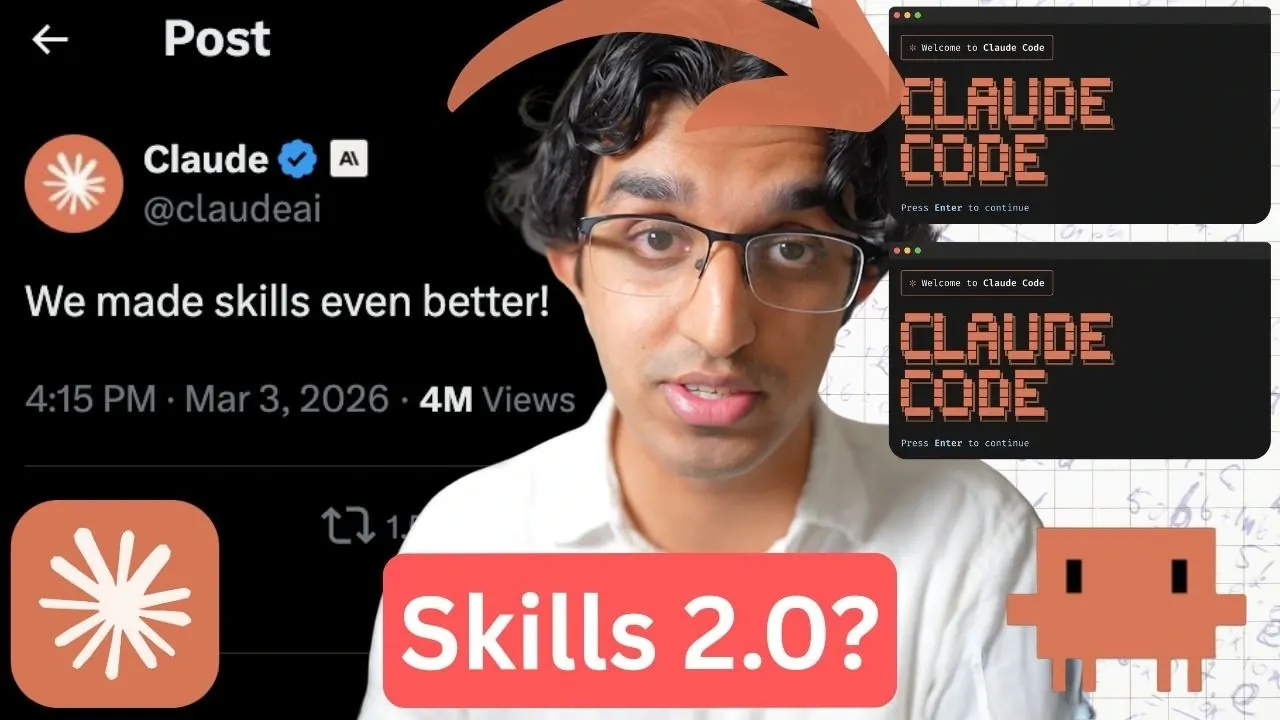
Anthropic’s release of Claude Code Skills 2.0 introduces a structured framework aimed at addressing common challenges in AI skill development, such as skill obsolescence and unreliable evaluation methods. One of the standout features is the “Skill Creator,” which allows developers to design, test and optimize skills using structured evaluations, often referred to as “evals.” Ray Amjad highlights how this update focuses on improving skill reliability and adaptability, making sure that developers can maintain relevance as AI models evolve and integrate new functionalities.
This explainer will guide you through key aspects of the update, including the use of A/B testing to measure performance improvements and the categorization of skills into “Capability Uplift” and “Workflow/Preference” types. You’ll also learn how structured optimization processes, such as refining skill descriptions and benchmarking task performance, can enhance both efficiency and alignment with specific use cases. By the end, you’ll have a clear understanding of how these features can streamline your development process and improve outcomes.
Claude Code Skills 2.0 Overview
TL;DR Key Takeaways :
- Anthropic’s Claude Code Skills 2.0 introduces the “Skill Creator” tool and advanced optimization features to address challenges like skill obsolescence and lack of reliable evaluation methods.
- The framework categorizes skills into “Capability Uplift Skills” for extending model functionalities and “Workflow/Preference Skills” for automating tasks and improving efficiency.
- Key innovations include A/B testing, structured evaluations and optimization tools to refine skill performance and ensure alignment with evolving AI models.
- Practical applications include SEO audits, insurance claim triage and PDF form handling, showcasing significant improvements in task success rates and efficiency.
- Claude Code Skills 2.0 enables developers with tools to create, refine and maintain relevant AI skills, driving innovation and long-term organizational productivity.
Challenges in AI Skill Development
Developing and maintaining AI skills is a complex and ongoing process. As AI models evolve, previously developed skills often become outdated or redundant. For instance, new model updates may integrate functionalities that were once managed by standalone skills, rendering those skills unnecessary. Additionally, evaluating whether changes to a skill genuinely enhance its performance can be a significant hurdle. Without robust evaluation methods, developers face difficulties in measuring real-world effectiveness, leading to inefficiencies and uncertainty in the development process. These challenges underscore the need for a structured and reliable framework to support skill creation and optimization.
Key Innovations in Claude Code Skills 2.0
Claude Code Skills 2.0 introduces a range of innovative features to address these challenges and enhance the skill development process. The centerpiece of this update is the “Skill Creator” tool, which simplifies the creation, testing and optimization of skills. This tool enables developers to evaluate skill performance through structured tests, often referred to as “evals,” making sure that skills meet their intended objectives. Additional updates include:
- A/B Testing: A feature that allows developers to compare skill performance with and without activation, providing clear insights into improvements.
- Optimization Tools: Advanced tools to refine skill descriptions, improving triggering accuracy and making sure alignment with specific use cases.
These enhancements collectively make it easier for developers to create, test and refine skills, making sure they remain effective and aligned with evolving AI models.

Below are more guides on Claude Code Skills from our extensive range of articles.
- How Claude Code Combines SEO & Storytelling for Better Content
- Claude Code Workflow for Faster PRs, Tests and Parallel Tasks
- Claude Skills Guide for Coding, Business and Content Workflows
- Claude Code Agent Teams Workflows for Large Projects in 2026
Skill Categories in Claude Code Skills 2.0
The framework organizes skills into two primary categories, each serving distinct purposes and addressing specific needs:
- Capability Uplift Skills: These skills are designed to fill gaps in model capabilities, allowing the handling of complex tasks such as processing PDF forms or generating PowerPoint presentations. However, as models improve and integrate these functionalities natively, these skills often have a limited lifespan, with a “retirement date” marking their obsolescence.
- Workflow/Preference Skills: These skills focus on automating specific workflows or enforcing compliance processes. Examples include generating NDA checklists, compiling data overviews and managing code review flows. These skills are particularly valuable for repetitive or compliance-heavy tasks, streamlining operations and reducing manual effort.
This categorization helps developers prioritize their efforts, focusing on skills that either extend model capabilities or enhance operational efficiency.
Structured Evaluation and Optimization
Claude Code Skills 2.0 emphasizes a systematic approach to evaluation and optimization, making sure that skills remain effective and relevant. The process includes:
- Developing test cases and benchmarks to measure a skill’s impact on task performance.
- Iteratively refining skill descriptions to improve triggering accuracy and reliability.
- Using training and testing datasets to make precise adjustments, making sure skills align with their intended objectives.
This structured methodology not only improves the reliability of skills but also ensures their adaptability to evolving AI models, providing long-term value for developers and organizations.
Practical Applications and Use Cases
The updated framework has already demonstrated its value across a variety of real-world applications. Examples include:
- SEO Audit Skills: Enhancing website performance by identifying and addressing technical issues efficiently.
- Insurance Claim Triage: Streamlining the processing of claims, significantly reducing turnaround times.
- PDF Form Handling: Simplifying document management tasks, such as extracting and organizing data from forms.
Benchmarking results indicate substantial improvements in success rates and task completion times when skills are optimized using the new tools, highlighting the practical benefits of this framework.
Long-Term Benefits for Developers and Organizations
Claude Code Skills 2.0 offers several long-term advantages, making it a valuable tool for developers and organizations alike. Key benefits include:
- Maintaining Relevance: Regular evaluation ensures that skills remain useful and effective, even as AI models evolve and integrate new functionalities.
- Enhanced Efficiency: Improved reliability and performance lead to faster task completion and reduced manual intervention.
- Resource Optimization: Streamlined workflows free up time and resources for higher-value activities, allowing teams to focus on innovation and strategic goals.
By addressing the challenges of skill obsolescence and inefficiency, this framework enables developers to maximize the impact of their efforts while driving organizational productivity.
Empowering Developers with Advanced Tools
For developers, Claude Code Skills 2.0 provides a comprehensive toolkit for creating and refining AI skills. The “Skill Creator” tool, in particular, offers several capabilities:
- Developing new skills tailored to specific needs and use cases.
- Refining existing skills to enhance performance, reliability and alignment with intended objectives.
- Publishing skills for broader use or downloading them for individual projects, allowing flexibility and scalability.
Whether addressing functionality gaps, automating workflows, or making sure compliance, this framework equips developers with the tools needed to deliver measurable results and adapt to the evolving landscape of AI development.
Driving Innovation in AI Skill Development
Claude Code Skills 2.0 represents a significant advancement in the field of AI skill development. By introducing robust tools and structured processes, it enables developers to create reliable, effective skills that adapt to the continuous evolution of AI models. Addressing long-standing challenges such as skill obsolescence and inefficiency, this framework not only enhances productivity but also fosters innovation, allowing developers and organizations to unlock the full potential of AI technology.
Media Credit: Ray Amjad
Disclosure: Some of our articles include affiliate links. If you buy something through one of these links, Geeky Gadgets may earn an affiliate commission. Learn about our Disclosure Policy.
