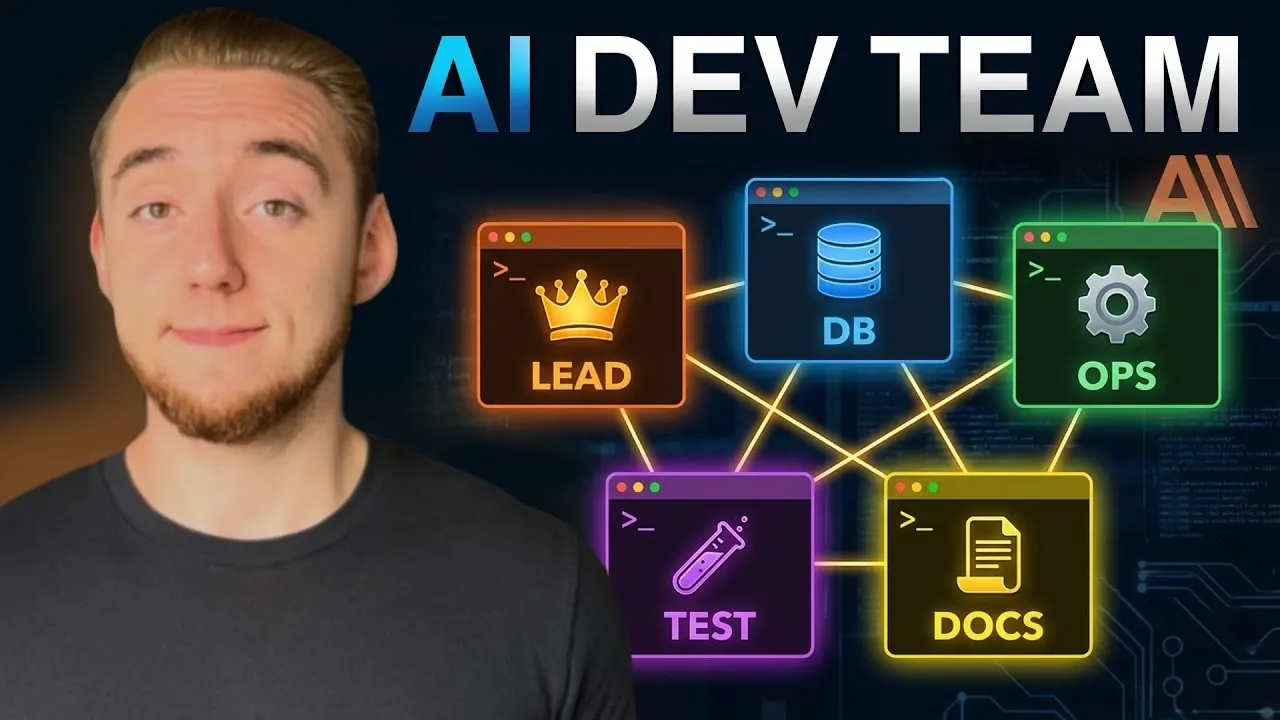
What if artificial intelligence could collaborate like a team of expert developers, each specializing in different aspects of a project? Below, Cole Medin breaks down how Claude Code’s new “Agent Teams” are pushing the boundaries of AI collaboration, allowing multiple agents to work together in real time on complex coding tasks. Imagine a scenario where one AI agent is debugging code while another drafts documentation, and a third ensures security compliance, all seamlessly coordinating their efforts. This innovation, developed by Anthropic, promises to transform how we approach large-scale software development, but it also raises questions about efficiency, resource consumption, and the challenges of managing such advanced systems.
In this analysis, you’ll uncover how Agent Teams differ from traditional sub-agents, why their collaborative workflows are a fantastic option, and what it takes to set them up effectively. From practical use cases like code reviews to the challenges of high token consumption, this breakdown explores both the potential and limitations of this experimental feature. Whether you’re a developer looking to streamline your projects or simply curious about the future of AI-driven teamwork, the insights here will leave you rethinking what’s possible when machines truly work together. Could this be the next frontier in software development?
Introducing Claude Agent Teams
TL;DR Key Takeaways :
- Introduction of Agent Teams: Claude Code’s new “Agent Teams” feature allows multiple AI agents to collaborate in real-time on complex coding tasks, enhancing coordination and efficiency.
- Key Features and Setup: Agent Teams share task lists, provide updates, and dynamically allocate responsibilities. Setting up requires allowing the feature, using split-pane terminal tools, and configuring systems like WSL for compatibility.
- Comparison with Sub-Agents: While sub-agents are resource-efficient and suited for isolated tasks, Agent Teams excel in collaborative, interdependent workflows but require higher token usage.
- Challenges and Optimization: High token consumption and inefficiencies in parallel execution are notable challenges. Tools like “contract-first spawning” and customizable instructions help mitigate these issues.
- Applications and Future Potential: Agent Teams are ideal for tasks like code reviews and large-scale projects. As the feature evolves, it is expected to improve in efficiency and scalability, transforming AI-driven software development workflows.
Understanding Agent Teams
Agent Teams redefine collaborative workflows in AI systems by allowing real-time communication and task coordination. This feature is particularly effective for projects requiring interdependent workflows, where multiple agents must work together seamlessly. For instance, in the development of a large-scale application, agents can divide responsibilities such as debugging, documentation, and security analysis. This division ensures a cohesive and efficient process. Unlike sub-agents, which are designed for isolated, single-task operations, Agent Teams excel in scenarios where collaboration is essential, making them a powerful tool for tackling complex projects.
Setting Up Agent Teams
To use Agent Teams, you must enable the experimental feature within Claude Code’s settings. The setup process is straightforward but may vary depending on your operating system. Key steps include:
- Enable the feature: Access the settings menu in Claude Code and activate the Agent Teams option.
- Use split-pane terminal applications: Tools like T-Mux or iTerm 2 allow you to monitor agent interactions and task progress in real time.
- Configure the Windows Subsystem for Linux (WSL): If you are using a Windows system, setting up WSL ensures compatibility and smooth operation.
These tools and configurations provide the necessary infrastructure to monitor and manage Agent Teams effectively, making sure an optimized workflow.
Claude Code’s Agent Teams : Multiple AIs Coding Together
Expand your understanding of Claude Code with additional resources from our extensive library of articles.
- Claude Code Update: LSP Support, Sub-Agents, and Ultrathink
- 36 Claude Code Tips for Smarter, Faster AI Coding Workflows
- How to Build Custom AI Agents with Claude Code SDK
- Make Claude Code Ship Faster with a Four-Step Workflow
- Master Anthropic’s Claude Code : Tools, Hooks & User Commands
- Why Anthropic Fenced Off Claude Code from Third-Party Tools
- Claude Code Gets a 10x Speed Boost with New Tool Search
- Claude Code 2.0 New Power Features
- New Claude Code 2.0 Agentic AI Coding Agent : The Secret
- Claude Code Keeps Improving New Features Overview
Comparing Agent Teams and Sub-Agents
Agent Teams and sub-agents serve distinct purposes, each tailored to specific types of tasks. Understanding their differences is essential for selecting the right approach for your project:
- Sub-Agents: Best suited for isolated tasks like research or data analysis, where minimal communication is required. They are more resource-efficient, consuming fewer tokens and computational power.
- Agent Teams: Designed for collaborative tasks that demand peer-to-peer coordination. For example, when implementing a new software feature, Agent Teams can divide the workload, share updates, and resolve dependencies dynamically. However, this approach requires higher token usage and introduces additional complexity.
By evaluating the nature of your project, you can determine whether the efficiency of sub-agents or the collaborative capabilities of Agent Teams better align with your goals.
Addressing Challenges and Limitations
While Agent Teams offer significant potential, they are not without challenges. Key limitations include:
- High Token Consumption: Agent Teams can use up to four times the tokens required by sub-agents, making them resource-intensive for large-scale projects.
- Parallel Execution Inefficiencies: Tasks with high interdependencies can lead to bottlenecks, reducing overall efficiency and slowing progress.
To mitigate these issues, precise instructions and careful configuration are essential. Optimizing workflows, managing dependencies, and using tools like “contract-first spawning” can help reduce inefficiencies and enhance the performance of Agent Teams.
Applications and Practical Use Cases
The versatility of Agent Teams makes them suitable for a wide range of applications, particularly in scenarios requiring collaborative problem-solving. Examples include:
- Code Reviews: Specialized agents can focus on specific areas such as security, quality assurance, and documentation, providing comprehensive and detailed feedback.
- Large-Scale Projects: For instance, when developing a C compiler, agents can dynamically allocate tasks based on project requirements, making sure efficient execution and streamlined workflows.
These capabilities make Agent Teams an invaluable tool for developers tackling complex, multi-faceted coding challenges.
Optimizing Agent Teams for Better Performance
To address the challenges associated with Agent Teams, Anthropic has introduced features like “contract-first spawning,” which helps manage dependencies between agents and reduces inefficiencies in parallel execution. Additionally, customizable instructions allow you to tailor agent behaviors and workflows to meet the specific needs of your project. By using these tools, you can optimize the performance of Agent Teams, making sure they operate effectively within your unique development environment.
The Evolving Role of Agent Teams in AI Collaboration
Agent Teams represent a significant step forward in AI collaboration, allowing systems to work together seamlessly to achieve complex goals. As this feature evolves beyond its experimental phase, ongoing improvements are expected to enhance its efficiency, usability, and scalability. With further refinement, Agent Teams could become a cornerstone of AI-driven project implementation, empowering developers to approach collaborative coding challenges with greater precision and innovation. This advancement holds the potential to reshape how AI systems contribute to software development, paving the way for more sophisticated and efficient workflows.
Media Credit: Cole Medin
Disclosure: Some of our articles include affiliate links. If you buy something through one of these links, Geeky Gadgets may earn an affiliate commission. Learn about our Disclosure Policy.
