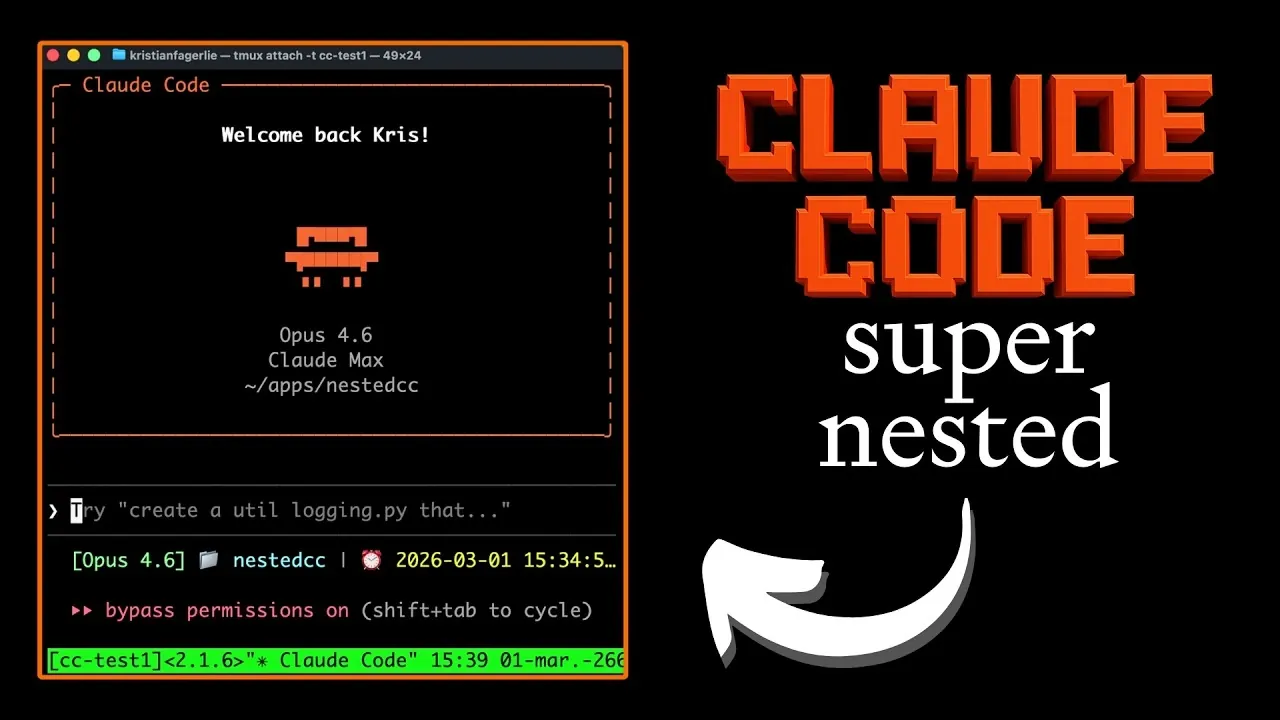
Nested Claude code, when paired with Tmux terminals, introduces a structured approach to managing parallel task execution in development workflows. As highlighted by All About AI, this system relies on a central controller to coordinate multiple Tmux terminals, each assigned to a specific task. For example, tasks are dynamically allocated based on their complexity and priority, making sure efficient resource utilization. This setup is particularly effective for intricate projects like visualizing AI model training or building interactive applications, where automation reduces manual intervention and enhances overall precision.
In this overview, you’ll explore how the system enables dynamic task allocation to streamline complex workflows and why its real-time monitoring features provide valuable transparency. Additionally, practical demonstrations, such as procedural galaxy creation in 3JS or managing micro GPT training processes, illustrate its versatility in handling diverse challenges. Whether you’re aiming to optimize development cycles or manage multi-step processes, this breakdown offers actionable insights into using nested Claude code for more efficient project execution.
Core Mechanisms of the Nested Claude Code System
TL;DR Key Takeaways :
- The nested Claude code system integrates with Tmux terminals to automate task distribution, allowing efficient parallel task execution and reducing manual effort in software development and AI workflows.
- A central controller dynamically allocates tasks to Tmux terminals based on complexity and priority, optimizing resource utilization and streamlining goal-oriented workflows.
- Real-world applications include procedural galaxy creation in 3JS and visualizing micro GPT training, showcasing the system’s ability to handle complex, multi-step processes with precision and efficiency.
- Advanced features include automatic task allocation, AI model compatibility and real-time monitoring through an intuitive interface, empowering developers to focus on innovation and problem-solving.
- Challenges include platform dependency on macOS and a steep learning curve for setup, but its open source nature offers potential for cross-platform adaptation and broader accessibility in the future.
Parallel Task Execution System
At the foundation of this system lies the use of nested Claude code instances, coordinated by a central controller. This controller manages multiple Tmux terminals, each dedicated to a specific task, making sure smooth and efficient parallel execution.
Key features of the system include:
- Dynamic task allocation: Tasks are assigned to terminals based on their complexity and priority, making sure optimal resource utilization.
- Integration with advanced AI models: Models like Opus provide detailed task instructions, allowing precise and efficient execution.
- Real-time monitoring: A user-friendly interface and detailed activity logs keep you informed about progress and system performance.
This setup allows you to focus on high-level objectives rather than micromanaging individual processes, making it particularly effective for handling complex, multi-step workflows.
Streamlined Goal-Oriented Workflow
The system’s goal-oriented design simplifies the execution of intricate workflows. Instead of managing each task manually, you define a high-level objective and the system autonomously plans and executes the required steps.
For instance, if your goal is to create a procedural galaxy in 3JS, the system divides the work into tasks such as rendering, object generation and UI development. Each task is assigned to a dedicated terminal, making sure efficient execution and cohesive results. This approach eliminates the need for constant oversight, allowing you to focus on innovation and creativity.

Gain further expertise in Claude Code by checking out these recommendations.
- Claude Code 2.1 Custom Output Modes for Beginners & Pros
- Claude Code Update: LSP Support, Sub-Agents, and Ultrathink
- Agent Browser Lets Claude Code Control Chromium for Automations
- Guide to Installing Claude Code on Windsurf and Cursor
- Claude Code Workflow : Creator’s 8-step Path to Faster Builds
- The Story Behind Claude Code’s Recent Performance Issues
- Claude Code MCP Upgrade 2026 : Cut Tokens by 95% with Smart Loading
- New Claude Code Remote Control Feature Released By Anthropic
- Claude Code No Longer Works with Third Party IDEs
- Claude Cowork Features, Google Drive and Gmail Integrations
Practical Applications and Demonstrations
The capabilities of this system are best understood through real-world examples that highlight its versatility and efficiency.
1. Procedural Galaxy Creation in 3JS
Using six Tmux terminals, the system successfully generated a procedural galaxy populated with randomly created celestial objects. Each terminal was responsible for a specific task, such as rendering, UI design, or object generation. This parallelized approach not only reduced development time but also ensured a seamless and cohesive final product.
2. Visualizing Micro GPT Training
In another demonstration, the system visualized the training process of a micro GPT model. Four terminals were used to manage backend operations, real-time chart updates, dashboard creation and sample generation. The result was a dynamic, real-time dashboard that provided actionable insights into the training process, showcasing the system’s ability to handle complex AI workflows.
Advanced Features and Developer Benefits
The system offers a range of advanced features that make it a powerful tool for developers tackling diverse challenges:
- Automatic task allocation: The system intelligently determines the number of terminals required and assigns tasks accordingly, optimizing resource usage.
- AI model compatibility: Seamlessly integrates with various AI models to ensure detailed and efficient task execution.
- Real-time monitoring: An intuitive interface and comprehensive activity logs provide transparency, allowing you to track progress and make adjustments as needed.
These features not only enhance productivity but also empower developers to focus on solving complex problems and achieving their goals.
Technical Requirements and Platform Considerations
The system is currently optimized for macOS, using Tmux for terminal management. While this platform dependency limits its accessibility to macOS users, the open source nature of the system allows for customization and potential adaptation to other operating systems. However, setting up the system requires a solid understanding of its configuration and adherence to security protocols to ensure smooth operation.
Applications Across Development and AI
The flexibility of this system opens up numerous possibilities for developers across various domains:
- Automating complex workflows in software development, reducing manual intervention.
- Visualizing and managing AI model training processes with real-time insights.
- Building interactive applications with minimal manual input, streamlining development cycles.
By automating repetitive tasks and allowing parallel execution, the system allows developers to dedicate more time to innovation and strategic problem-solving.
Challenges and Opportunities for Improvement
Despite its many advantages, the system has certain limitations that present opportunities for further development:
- Platform dependency: The reliance on macOS and Tmux restricts its accessibility to a broader audience.
- Learning curve: Setting up and configuring the system requires time and technical expertise, which may deter less experienced users.
Addressing these challenges, such as expanding cross-platform compatibility and simplifying the onboarding process, could significantly enhance the system’s usability and adoption.
Empowering Developers with Parallel Task Execution
The nested Claude code system, combined with Tmux terminals, represents a significant advancement in parallel task execution. By automating complex workflows, providing real-time monitoring and allowing goal-oriented processes, it offers a powerful tool for developers. Whether you’re visualizing AI model training or creating interactive applications, this system enhances productivity and streamlines development. While currently limited to macOS, its open source nature and customizable features make it a promising solution for a wide range of use cases, paving the way for future innovations in software development and AI processes.
Media Credit: All About AI
Disclosure: Some of our articles include affiliate links. If you buy something through one of these links, Geeky Gadgets may earn an affiliate commission. Learn about our Disclosure Policy.
