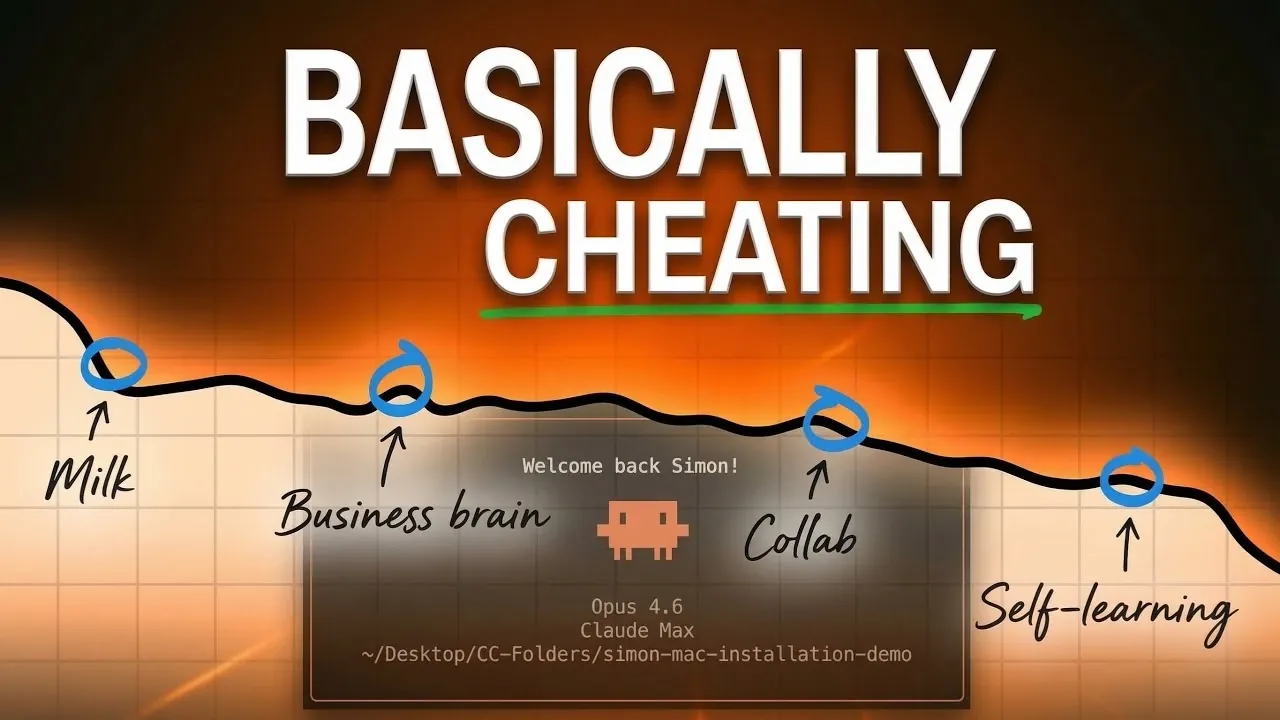
Claude Code is a versatile AI system designed to streamline business operations, but many users encounter a recurring challenge known as the “80% problem.” This issue arises when the system performs well in the early stages of tasks but struggles to maintain accuracy and efficiency as it nears completion. Simon Scrapes explores this phenomenon in depth, highlighting how issues like context drift and repetitive errors often lead to manual corrections, undermining productivity. To address these challenges, Simon introduces four structured patterns, including strategies like breaking context into manageable chunks and using frameworks such as GST (Get Stuff Done) to ensure smoother task execution.
In this analysis, you’ll gain insight into actionable methods for improving Claude Code’s performance. Discover how to implement context management techniques to reduce inefficiencies, create a centralized “business brain” file to ensure consistency across workflows and foster collaboration between skills to handle complex tasks seamlessly. Additionally, learn how to establish a self-learning system that evolves with your organization’s needs, reducing recurring errors over time. These strategies provide a clear path to overcoming the 80% problem and maximizing the system’s potential in your operations.
Understanding the 80% Problem
TL;DR Key Takeaways :
- The “80% problem” in AI systems like Claude Code refers to a decline in performance during the final stages of tasks, often caused by context loss and inefficient workflows, requiring manual intervention.
- Effective context management, such as breaking tasks into manageable chunks and using frameworks like GST, helps maintain accuracy and reduce errors.
- Creating a centralized “business brain” file ensures consistent guidelines, streamlines workflows and aligns outputs with organizational goals.
- Skill collaboration enables seamless task execution by allowing individual skills to work together while isolating context spaces to prevent errors.
- Building a self-learning system with feedback loops and continuous updates ensures Claude Code evolves, improves performance and adapts to business needs over time.
The “80% problem” is a common hurdle in AI systems like Claude Code. While these systems often perform exceptionally well at the beginning of tasks, their performance tends to decline as they near completion. This drop-off is typically caused by context loss, where the system forgets critical details, or by inefficient workflows that fail to adapt to evolving task requirements. As a user, you may find yourself repeatedly re-explaining instructions or correcting recurring mistakes, which can undermine productivity and lead to frustration.
Addressing this challenge requires a structured approach that focuses on managing context effectively, fostering collaboration between skills and allowing the system to learn and improve over time. By implementing specific strategies, you can mitigate these issues and unlock the full potential of Claude Code.
Pattern 1: Context Management – “Context is Milk”
Effective context management is essential to prevent “context rot,” a phenomenon where outdated or irrelevant information accumulates, reducing the system’s accuracy and efficiency. To maintain a clean and relevant context, consider the following strategies:
- Break context into manageable chunks by keeping skill files under 200 lines to ensure clarity and focus.
- Store detailed or static information in reference files rather than overloading active contexts, which can lead to confusion.
- Use commands like
/clearand/compactto reset and streamline conversations, making sure the system operates with up-to-date information. - Adopt frameworks such as GST (Get Stuff Done) to divide tasks into distinct phases, facilitating smooth transitions between contexts.
By keeping context concise and focused, you can minimize errors, reduce inefficiencies and improve the system’s ability to complete tasks accurately.

Become an expert in Claude Code with the help of our in-depth articles and helpful guides.
- Anthropic Claude Code Review Preview: Multi-Agent Pull Request Reviews
- Claude Code Skills 2.0 : Workflow Skills vs Capability Uplift Skills
- Claude Code 2 Feature Update: Automation, Workspace Links and Skill Scoring
- Nested Claude Code System for Parallel Work in Tmux on macOS
- Claude Code 2.1 Custom Output Modes for Beginners & Pros
- Claude Code Update: LSP Support, Sub-Agents and Ultrathink
- Claude Code 2 Adds Multi-Agent Code Review for Team & Enterprise
- Guide to Installing Claude Code on Windsurf and Cursor
- Agent Browser Lets Claude Code Control Chromium for Automations
- Claude Code Workflow : Creator’s 8-step Path to Faster Builds
Pattern 2: Shared Business Context – “One Business Brain”
A centralized “business brain” file acts as a single source of truth for your organization, making sure consistency across all operations. This file should include essential details such as tone, audience, organizational standards and key operational guidelines. By referencing this shared context, you can achieve the following:
- Ensure that all skills follow consistent guidelines, reducing the need for repetitive instructions and manual corrections.
- Execute tasks with greater precision and uniformity, reflecting your organization’s unique voice and objectives.
- Streamline workflows by providing a unified operational framework that all skills can reference.
This approach fosters a cohesive system where tasks are executed efficiently and outputs consistently align with your business goals.
Pattern 3: Skill Collaboration
Skill collaboration is a critical component of optimizing Claude Code’s performance. By allowing individual skills to work together, you can create workflows that mirror real-world business processes. To implement this pattern effectively:
- Design workflows where skills hand off outputs to one another, making sure seamless task execution without interruptions.
- Isolate context spaces for individual skills to prevent cross-contamination of information, which can lead to errors.
- Ensure each skill contributes to the overall objective, reducing the need for manual intervention and enhancing efficiency.
This collaborative approach not only reduces errors but also enables the system to handle complex, multi-step tasks with greater accuracy and speed.
Pattern 4: Self-Learning System
A self-learning system ensures that Claude Code evolves and improves over time, adapting to your organization’s unique needs. To create a self-learning system, follow these steps:
- Establish a feedback loop by documenting mistakes and successes in a dedicated learnings file (e.g.,
learnings.md). - Incorporate these learnings into skill processes, refining their performance and reducing the likelihood of recurring errors.
- Use wrap-up skills to capture insights and synchronize files, allowing continuous improvement and system-wide updates.
By integrating feedback into the system, you can create a dynamic tool that delivers higher-quality results with each iteration, making sure long-term success and adaptability.
Why These Patterns Matter
Implementing these four patterns offers significant benefits that address the core challenges of the 80% problem:
- Maintains clean, relevant context throughout tasks, reducing errors and inefficiencies.
- Encourages collaboration between skills, creating a cohesive and efficient system that mirrors real-world workflows.
- Transforms Claude Code into a self-improving tool, enhancing output quality and adaptability over time.
By adopting these strategies, you can unlock the full potential of Claude Code, positioning it as a cornerstone of your organization’s digital transformation. These patterns not only resolve common challenges but also enable Claude Code to function as a dynamic, efficient and reliable partner in your business operations. With a structured and thoughtful approach, you can ensure that this AI system becomes an indispensable asset, driving productivity and innovation across your organization.
Media Credit: Simon Scrapes
Disclosure: Some of our articles include affiliate links. If you buy something through one of these links, Geeky Gadgets may earn an affiliate commission. Learn about our Disclosure Policy.
