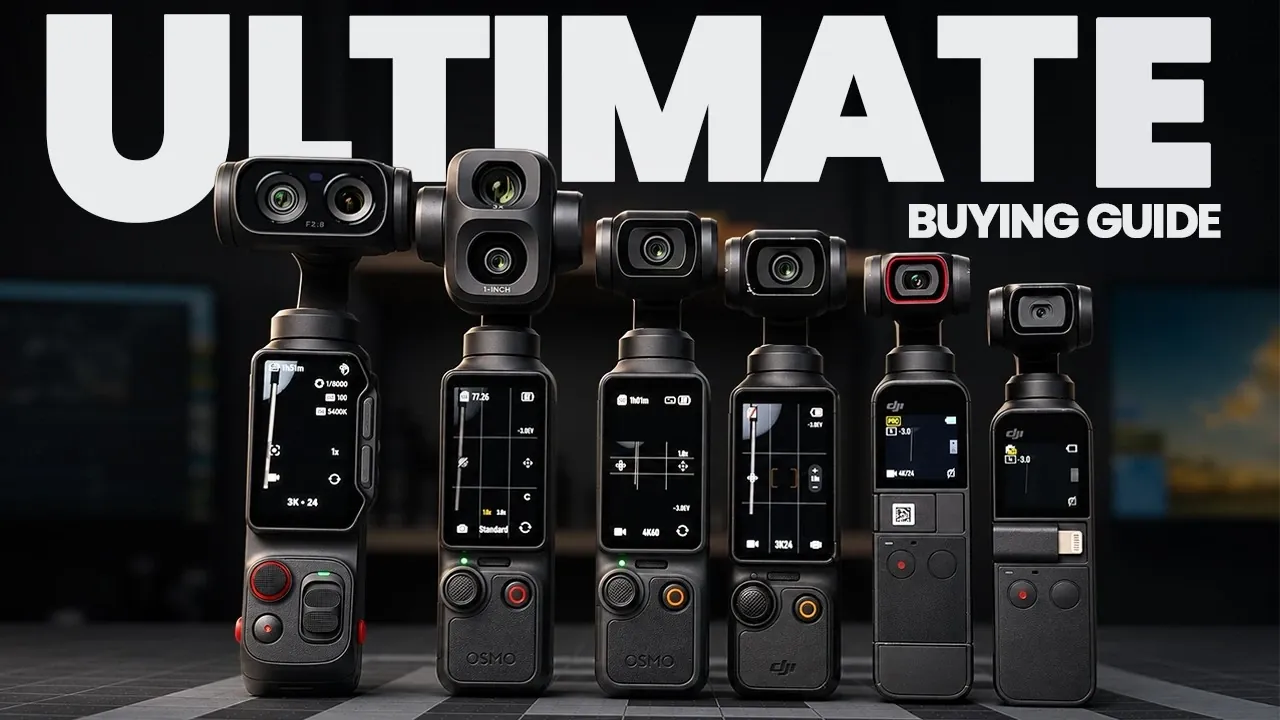
Pocket cameras have become indispensable for creators seeking portability without sacrificing quality. From the Osmo Pocket 4P with its 17 stops of dynamic range and dual-camera system to the budget-friendly Pocket 3, there’s an option for every need. The Insta360 Luna Ultra, with its detachable touchscreen and 8K recording, offers unique flexibility for remote shooting. These cameras balance compact design with advanced features, as explored by The Film Alliance.
Explore how these models differ in performance, usability, and value. Learn which cameras excel in slow-motion recording, which offer built-in storage, and how factors like availability and price impact your choice. Whether you’re a vlogger, traveler, or filmmaker, this guide breaks down key considerations to help you find the best pocket camera for your budget and creative goals.
TL;DR Key Takeaways :
- The Osmo Pocket 4P features dual cameras, including a 20 mm primary camera with 17 stops of dynamic range and a 3x telephoto camera, supports 4K at up to 240 fps, and includes 103 GB of built-in storage, but switching cameras disables DLOG 2.
- The Insta360 Luna Ultra offers 8K recording at 30 fps, 4K at 120 fps, and 12x zoom, with a detachable touchscreen that doubles as a monitor and microphone, but it is the most expensive camera in the guide.
- The Pocket 4 is a compact option with a 1-inch sensor, 4K at 240 fps, and 14 stops of dynamic range, but lacks a second camera and is banned from sale in the U.S.
- The Pocket 3, available used for a few hundred dollars, features a 1-inch sensor, 4K at 120 fps, and quick charging, making it a budget-friendly option for versatile shooting.
- The Pocket 2 and original Osmo Pocket remain affordable choices, with the Pocket 2 offering 64 MP photos and HDR video, while the original excels in time-lapse and motion-lapse videos for under $100.
Osmo Pocket 4P: A Flexible Powerhouse
The Osmo Pocket 4P is among the most versatile pocket cameras available. It features two dedicated cameras: a 20 mm primary camera capable of shooting in DLOG 2 with 17 stops of dynamic range, and a 3x 60 mm equivalent telephoto camera with a smaller sensor.
It supports 4K recording at up to 240 frames per second, making it ideal for high-quality slow-motion footage. With 103 GB of built-in storage, frequent SD card swaps during fieldwork are less necessary.
Switching between the primary and telephoto cameras disables DLOG 2, requiring a shift to DLOG 10-bit recording. The Pocket 4P also zooms up to 12x digitally, and its external customization buttons allow quick toggling between settings.
However, the Pocket 4P has some drawbacks. The touchscreen, while bright and sensitive, is less responsive than a smartphone’s. It does not flip when the camera is turned upside down and lacks tilt functionality, complicating low-angle shots. Additionally, the absence of a built-in quarter mount thread means users must carry an attachment for tripod use.
Despite these limitations, the Pocket 4P excels in vlogging, travel videos, and real estate shoots, offering portability and excellent image quality, even in its standard color profile.
Availability remains a challenge for U.S. buyers, as the Pocket 4P is not sold domestically and must be sourced through platforms like eBay. Periodic firmware updates help maintain its performance over time.
Insta360 Luna Ultra: A Feature-Rich Contender
The Insta360 Luna Ultra is a strong competitor to the Pocket 4P, offering a comprehensive feature set. It includes a 20 mm equivalent 1-inch main camera and a 3x 60 mm equivalent telephoto camera, both capable of impressive results.
The Luna Ultra supports 8K recording at 30 fps, 4K at 120 fps, and 1080p at 240 fps, with 10-bit recording and iLog for post-production flexibility. Manual exposure control and white balance settings add to its versatility. It also features 12x zoom and internal storage.
A standout feature is its detachable touchscreen, which doubles as a monitor, camera controller, and microphone. This functionality is particularly useful for remote control needs. The Luna Ultra is easier to purchase in the U.S., where it includes a warranty when bought through official channels. However, it is the most expensive camera in this guide, which may deter budget-conscious buyers.
The Luna Ultra is well-suited for beginners seeking high-quality footage without the complexity of mirrorless cameras or gimbals. Its ease of use and extensive features make it a compelling choice for those prioritizing convenience and performance. While a detailed comparison with the Osmo Pocket 4P is forthcoming, the Luna Ultra is already described as an outstanding camera.

Gain further expertise in DJI Osmo Pocket cameras by checking out these recommendations.
- DJI Osmo Pocket 4P vs Insta360 Luna Ultra : Key Differences Explained
- Everything We Know About the DJI Pocket 4 Pro Sensor Upgrade
- DJI Osmo Pocket 4P Global Launch is Finally Here
- Why the DJI Pocket 4 Pro’s 1-Inch Sensor is a Game-Changer for Creators
- Why the DJI Osmo Pocket 4 Might Not Be the Upgrade You Expected
Pocket 4: Compact and Reliable
The Pocket 4 builds on its predecessors’ strengths while maintaining a compact form factor. It features a 1-inch sensor with a 20 mm equivalent F2 lens, capable of 4K recording at up to 240 fps and offering 14 stops of dynamic range. The camera supports 37-megapixel photos and includes a bright touchscreen similar to the Pocket 4P.
Designed for everyday use, the Pocket 4 excels in basic vlogging, travel videos, and real estate applications. Its improved active track and refined joystick enhance usability, while customization buttons allow quick toggling between settings. However, it lacks a second camera, limiting its versatility compared to the Pocket 4P and Luna Ultra.
Smaller than the Pocket 4P and the Luna Ultra, the Pocket 4 fits more easily in a camera bag, though it is still more noticeable in a pocket than the Pocket 2 or the original Osmo Pocket. Despite its strengths, it is currently banned from sale in the U.S., requiring buyers to turn to platforms like eBay for purchase.
Pocket 3: A Budget-Friendly Workhorse
The Pocket 3 remains a valuable option for budget-conscious buyers. Initially priced at $500–$600, it is now available lightly used on eBay for a few hundred dollars. Its 1-inch sensor with a 20 mm equivalent F2 lens delivers smooth, stabilized image quality comparable to a mirrorless camera without a gimbal. The Pocket 3 supports 4K recording at up to 120 fps and 1080p at 240 fps, along with DLOG 10-bit and active track 6.0.
Its 1-inch sensor and F2 lens give better low-light performance and more dynamic range than the Pocket 2, and quick charging allows a full charge in about 20 minutes with a powerful USB-C charger. The camera’s 2-inch rotating touchscreen and three-array microphone add to its functionality, though users should avoid blocking the microphones during vlogging. The unit shown, covered in dents from heavy use, has been used for behind-the-scenes footage, street shooting, landscapes, travel, and low-light video.
For buyers seeking a reliable and affordable pocket camera, the Pocket 3 offers an excellent balance of performance and price.
Pocket 2 and Original Osmo Pocket: Compact and Affordable
The Pocket 2 is a significant improvement over the original Osmo Pocket. It features a larger sensor, a 20 mm equivalent F1.8 lens, improved autofocus, better audio, and photo resolution up to 64 megapixels. The camera supports 4K recording at 60 fps and 1080p at 240 fps, as well as HDR video.
Its small size and light weight make it highly portable, though connecting it to a smartphone for enhanced monitoring increases its form factor. Used Pocket 2 cameras are available for $150–$200, making them appealing for budget-conscious buyers seeking high-quality footage.
The original Osmo Pocket remains a viable choice for specific use cases. It features a 26 mm equivalent F2 lens and supports 4K recording at 60 fps and 1080p at 120 fps. Its compact size and low cost (under $100 on eBay) make it ideal for unattended time-lapse and motion-lapse videos. While dated compared to newer models, it still delivers better image quality than most smartphones and serves as a reliable B cam.
Who Should Choose What?
Each pocket camera in this guide offers unique strengths tailored to different needs and budgets. The Osmo Pocket 4P and Insta360 Luna Ultra stand out for their advanced features and flexibility, with the Luna Ultra being easier to purchase in the U.S. The Pocket 4 provides a compact and reliable option for everyday use, while the Pocket 3 offers excellent value on the used market. For those seeking maximum portability and affordability, the Pocket 2 and original Osmo Pocket remain practical choices.
Ultimately, the right camera depends on your specific requirements, whether it’s high frame rates, low-light performance, or portability. Dedicated pocket cameras continue to offer exposure tools, white balance control, and picture profile options that elevate footage quality beyond what smartphones can achieve.
Media Credit: The Film Alliance
Disclosure: Some of our articles include affiliate links. If you buy something through one of these links, Geeky Gadgets may earn an affiliate commission. Learn about our Disclosure Policy.
