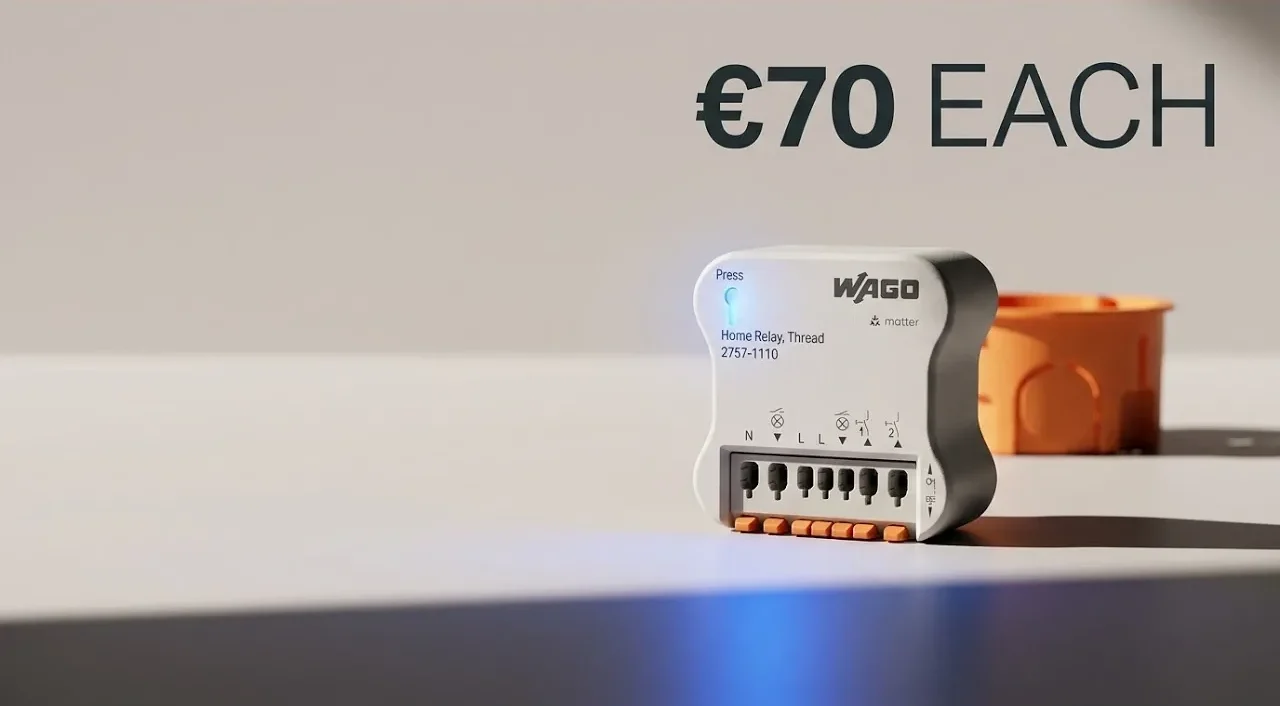
Wago has entered the smart home market with a focus on professional-grade installations, offering Matter-certified modules designed for reliability and advanced connectivity. According to A Smarter House, devices like the Home Relay 16A and Home Blind Control are compact and cater to high-power appliances and motorized systems, supporting both Wi-Fi and Thread protocols. Despite these strengths, their premium pricing and limited compatibility in retrofit scenarios, particularly in regions where certifications like UL are critical, highlight some of the challenges they present.
Explore how Wago’s Thread-first approach aligns with future-ready smart home systems and examine the trade-offs in cost and form factor. Gain insight into their dual-app commissioning system, which streamlines professional installations and uncover the potential limitations of their firmware update process for long-term reliability. This overview provides a detailed look at the practical considerations for integrating Wago modules into your smart home setup.
What Does Wago Offer?
TL;DR Key Takeaways :
- Wago has launched Matter-certified smart home modules designed for professional installations, emphasizing industrial-grade reliability and dual-protocol support for Wi-Fi and Thread.
- The lineup includes four core modules: Home Relay 16A, Home Relay 6A, Home Blind Control and Home Dimmer, each tailored for specific high-power or specialized applications.
- Compact puck-style design with CAGE CLAMP terminals simplifies installation but may pose challenges in tight or older junction boxes.
- Modules are VDE-certified and comply with IEC 62443-4-1 cybersecurity standards, but lack UL certification, limiting their use in markets like the US and UK.
- Premium pricing (~€70 per module) and limited availability make them a niche product for professional installers in regions like Germany, Austria and Switzerland, rather than DIY users or broader markets.
Wago’s smart home lineup consists of four core modules, each tailored to distinct applications and designed to meet the needs of professional installers:
- Home Relay 16A: A single-channel relay capable of handling resistive loads up to 3600W, making it suitable for high-power devices such as heaters or large appliances. It also supports LED lighting loads up to 200W, offering flexibility for various setups.
- Home Relay 6A: A dual-channel relay designed for combined loads up to 1300W. This module is ideal for managing dual lighting circuits or setups that combine lights and fans, providing a versatile solution for multi-purpose installations.
- Home Blind Control: A specialized module for motorized blinds, shutters and awnings, supporting loads up to 3A. It integrates seamlessly into automated shading systems, enhancing energy efficiency and user comfort.
- Home Dimmer: A dimming module that addresses common issues like flickering and limited dimming ranges. It offers configurable dimming curves and scene settings, making it a flexible choice for creating customized lighting environments.
These modules cater to a range of smart home needs, emphasizing reliability and adaptability for professional-grade installations.
Design and Installation: Compact but Not Without Challenges
Wago’s modules feature a compact puck-style design (46x46x22mm), allowing them to fit into standard 55mm back boxes. This compact form factor is advantageous for modern installations but may present challenges in older or shallow junction boxes, particularly in retrofit projects. Installers should carefully evaluate the available space before proceeding with installation.
A standout feature of Wago’s design is the inclusion of CAGE CLAMP terminals, which allow for tool-free wiring. This innovation simplifies the installation process, especially for professional electricians managing multiple projects. However, the modules’ dimensions may require additional planning in tight spaces, potentially complicating installations in certain scenarios.

Find more information on building smart homes by browsing our extensive range of articles, guides and tutorials.
- Smart Homes : SONOFF Finally Fixed the New NSPanel Pro Gen2
- Why IKEA’s Hub-Free Dubbelkisel is Changing the Rules of Smart Lighting
- IKEA’s Smart Home Gear Tested for 3 Months : Here’s What to Buy & Skip
- Apple’s May Lineup Leaked: A New Apple TV 4K, Home Hub, and 5 More Surprises
- Apple TV 4K (2026) Leak: The First Home Hub with Apple Intelligence Built-In
- IKEA Smart Home Without Dirigera : Homey Pro, Home Assistant & HomeKit
- Steve Jobs Said No, but macOS 27 Says Yes: The Touchscreen Mac Finally Arrives in 2027
- iOS 26.5 RC is Here: Apple Finally Adds the One Feature Android Users Have Been Waiting For
- IKEA’s New Smart Home Devices Fully Tested : One Major Flaw Discovered
- Apple’s iOS 26.5 Update is Imminent — Is Your iPhone Ready?
Certifications and Compliance: Built for Professionals
Wago’s modules are engineered to meet rigorous industry standards, making them a reliable choice for professional installations. They are VDE-certified and comply with IEC 62443-4-1 cybersecurity requirements, aligning with the EU Cyber Resilience Act. These certifications ensure that the modules meet stringent safety and security standards, which are often required for compliance with insurance or building codes.
However, the lack of UL certification limits their use in markets such as the US and UK. This restriction narrows their global appeal, confining their primary market to regions like Germany, Austria and Switzerland, where these certifications are more relevant.
Connectivity and Ecosystem Compatibility
As Matter-certified devices, Wago’s modules integrate seamlessly with major smart home ecosystems, including Apple Home, Google Home, Amazon Alexa, Samsung SmartThings and Home Assistant. Their dual-protocol design supports both Wi-Fi and Thread, with a Thread-first approach that enhances reliability in mesh networks.
Thread-based versions require a border router for operation, while Wi-Fi models operate on a 2.4GHz network and need a Matter controller for integration. This dual-protocol flexibility positions Wago as a future-ready option in the evolving smart home landscape, offering compatibility with a wide range of platforms and technologies.
Cost and Market Positioning
Wago’s modules are priced at approximately €70 each, significantly higher than alternatives such as Shelly (€15-20) or Sonoff (€13). This premium pricing reflects their industrial-grade reliability and compliance with professional standards, but it also limits their appeal to DIY users who may not require such advanced features.
The company primarily targets professional installers in Germany, Austria and Switzerland, with limited availability outside Europe. Without UL certification, their adoption in markets like the US and UK remains restricted, further narrowing their potential user base.
What Sets Wago Apart?
Wago distinguishes itself through its dual-protocol support and Thread-first approach, which are relatively rare in the current market. Few competitors offer Matter-over-Thread in-wall relays, giving Wago a unique edge in this emerging segment.
Another notable feature is their dual-app commissioning system, which allows electricians to pre-configure devices before handing them over to clients. This streamlines the installation process and enhances the user experience, making it easier for end customers to integrate the modules into their smart home ecosystems.
Challenges to Consider
Despite their strengths, Wago’s modules come with several limitations that may impact their suitability for certain users:
- Size: The larger form factor can complicate installations in tight spaces, particularly when compared to smaller alternatives like the Shelly 1 Mini. This may require additional planning and adjustments during installation.
- Cost: The high price point makes these modules less accessible to DIY users, who may not need the advanced certifications or Thread-first capabilities that Wago offers.
- Future-Proofing: While the modules are certified under Matter 1.2, there are questions about their ability to support future Matter versions through firmware updates, potentially affecting their long-term viability.
Key Takeaways
Wago’s smart home modules are a robust choice for professional installations that demand industrial-grade reliability, advanced connectivity and compliance with stringent standards. They excel in Thread-first networks and premium retrofit projects, offering features tailored to high-end use cases.
However, their high cost, larger size and limited availability make them less appealing to general DIY users. For those prioritizing certifications, advanced connectivity and professional-grade performance, Wago delivers a strong solution, albeit at a premium price. Their focus on professional markets ensures reliability and compliance but limits their broader adoption in the global smart home ecosystem.
Media Credit: A Smarter House
Disclosure: Some of our articles include affiliate links. If you buy something through one of these links, Geeky Gadgets may earn an affiliate commission. Learn about our Disclosure Policy.
