What if you could transform your home with smart devices that are both affordable and reliable, but with one glaring trade-off? In this guide, Smarter House explains how IKEA’s latest smart home lineup delivers on simplicity and performance while falling short in areas that tech enthusiasts might find essential. With features like motion-triggered lighting and extended battery life, these devices promise a seamless experience for beginners and budget-conscious users alike. But as the video reveals, the system’s lack of advanced automation could leave some users wanting more. If you’ve ever wondered whether IKEA’s smart home offerings can truly compete with pricier alternatives, this breakdown offers a candid look at their strengths and limitations.
By exploring IKEA’s adoption of the Matter over Thread protocol, the feature highlights how these devices integrate with third-party ecosystems, offering flexibility beyond IKEA’s native app. You’ll also discover why their minimalist design is both a blessing and a curse, depending on your needs. Whether you’re curious about their real-world performance or intrigued by their affordability, this overview sheds light on what makes IKEA’s smart home devices unique, and where they fall short. Could this be the perfect entry point for your smart home journey, or will the missing features hold you back? Let’s find out.
IKEA Smart Home Overview
TL;DR Key Takeaways :
- IKEA’s new smart home devices prioritize affordability and reliability, offering consistent performance and ease of use, but lack advanced automation features like geofencing and conditional logic.
- The devices feature excellent battery efficiency, with motion sensors lasting 2-3 years on standard AAA batteries, and maintain stable connections even in environments with multiple devices.
- Adopting the Matter over Thread protocol ensures compatibility with third-party platforms, allowing integration with systems like Home Assistant and allowing advanced automation beyond IKEA’s native app.
- Affordability is a key selling point, with devices like motion sensors priced significantly lower than competitors, while still delivering comparable performance and quality.
- The IKEA smart home app offers a simple and intuitive user experience with offline functionality, but lacks advanced customization options, limiting its appeal to tech-savvy users seeking more sophisticated controls.
Performance and Reliability
During a two-week evaluation, IKEA’s smart home devices demonstrated consistent and reliable performance. Motion sensors and smart bulbs responded promptly, rivaling the responsiveness of more expensive competitors. For instance, motion-triggered lights activated almost instantly, making sure a smooth and seamless experience in daily use. This level of responsiveness is particularly beneficial in high-traffic areas such as hallways or entryways.
Battery efficiency is another standout feature. The motion sensors, powered by standard AAA batteries, are designed to last between two to three years under normal usage conditions. This extended battery life reduces the inconvenience of frequent replacements, making the devices both cost-effective and user-friendly. Additionally, the devices maintained stable connections throughout the testing period, with no significant disruptions or connectivity issues, even in environments with multiple connected devices.
Features: Simplicity Over Sophistication
IKEA’s smart home ecosystem emphasizes simplicity, making it an excellent choice for beginners or those seeking basic automation. Setting up automations, such as motion-triggered lighting, is straightforward and reliable. For example, users can easily configure lights to turn on when motion is detected, creating a functional and hassle-free experience.
However, the system’s simplicity comes at the expense of advanced features. It lacks functionalities such as conditional logic, geofencing, and presence detection. For example, users cannot create routines that activate lights only during specific times, such as after sunset. This limitation may frustrate users who desire more granular control over their smart home setups.
Customization options are similarly limited. While the app’s minimalist interface is intuitive and user-friendly, it does not cater to users seeking detailed scene configurations or complex routines. Advanced users may find this lack of flexibility restrictive, as the system prioritizes ease of use over sophistication.
IKEA’s New 2026 Smart Home Devices Tested
Uncover more insights about smart homes in previous articles we have written.
- Apple Smart Home 2025: The Ultimate Beginner’s Guide
- Revolutionary Apple Smart Home Hub: The Future of Automation
- HomePod Mini 2: Everything You Need to Know
- IKEA Home Tech Review : Dirigera Hub and IP67 Motion Sensor
- Apple’s Game-Changing Home Hub: Everything You Need to Know
- Apple Smart Home Hub: Features, Price, and Release Date
- Why Pet-Focused Air Purification Is Becoming a Smart-Home Essential
- Raspberry Pi IKEA TRÅDFRI Light smart home connection with
- Obsidian and Home Assistant: The Perfect AI Smart Home Combo
- Fluid One smart home automation system
Compatibility and Integration
One of the most significant advancements in IKEA’s new lineup is its adoption of the Matter over Thread protocol, an open standard designed to improve compatibility across smart home ecosystems. This approach ensures seamless integration with third-party platforms such as Home Assistant and Homie Pro, allowing users to unlock advanced automation features that are not available through IKEA’s native app.
For users with older IKEA Zigbee devices, compatibility depends on the hub being used. The IKEA Dirigera hub supports both Zigbee and Matter devices, allowing users to mix and match products within the same ecosystem. This backward compatibility ensures that existing IKEA devices remain functional and relevant, providing a smooth transition for those upgrading their smart home systems.
The open-standard design also means that users are not locked into IKEA’s ecosystem. This flexibility allows for greater scalability, as IKEA devices can be paired with products from other brands, offering a more versatile and customizable smart home setup.
Affordability: A Key Selling Point
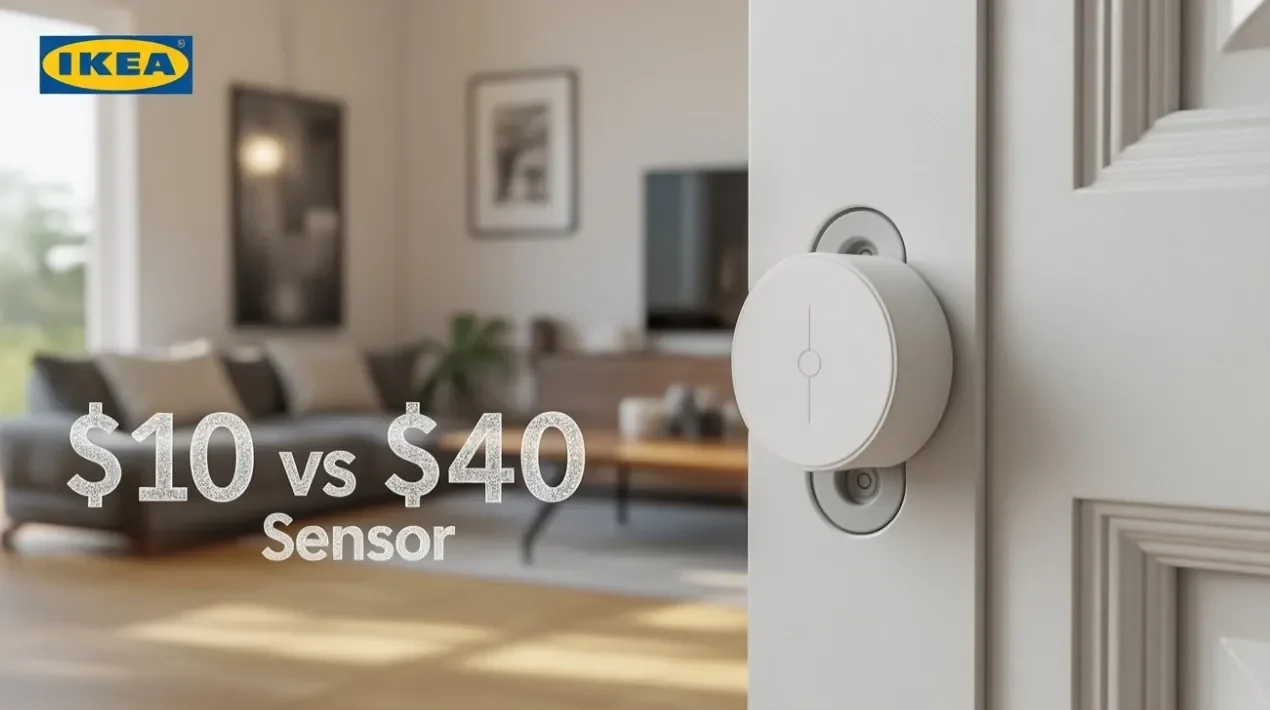
IKEA’s pricing strategy is one of its most compelling features. For example, its motion sensors are priced at approximately $10, significantly undercutting competitors like Philips Hue, whose similar sensors cost around $40. Despite the lower price point, IKEA’s devices deliver comparable performance, making them an attractive option for budget-conscious consumers.
The affordability of IKEA’s smart home devices does not come at the expense of quality. The devices are designed to provide reliable functionality, making sure that users can build a cost-effective smart home without compromising on performance. Additionally, the open-standard design enhances the value proposition by allowing users to integrate IKEA devices with other brands, further expanding their smart home capabilities.
User Experience: Intuitive but Limited
The IKEA smart home app is designed with simplicity in mind, offering an intuitive interface that is easy to navigate. Basic controls, such as turning lights on and off or adjusting brightness, are straightforward and accessible. Monitoring device status, including battery levels, is equally simple, making the app particularly user-friendly for beginners.
One notable feature is the system’s local automation capability. The IKEA Dirigera hub enables offline functionality, making sure that devices continue to operate even during internet outages. This reliability is especially valuable for essential automations, such as motion-triggered lighting in frequently used areas.
However, the app’s minimalist design limits its functionality for advanced users. The lack of detailed customization options, such as creating complex routines or configuring intricate scenes, may leave some users feeling constrained. While the app excels in providing a streamlined experience, it does not cater to those seeking more sophisticated smart home management tools.
Availability and Future Prospects
IKEA’s new smart home devices are expected to be widely available in the EU and US by April 2026, offering users an accessible entry point into the world of smart home technology. While the current lineup focuses on basic functionality, future updates and integrations could expand the system’s capabilities. As the smart home ecosystem continues to evolve, IKEA’s commitment to open standards and affordability positions it as a strong contender in the market.
Looking ahead, the long-term success of IKEA’s smart home devices will depend on their ability to adapt to emerging technologies and user demands. Enhanced compatibility with third-party platforms and the introduction of advanced features could further solidify IKEA’s reputation as a reliable and cost-effective smart home provider.
Media Credit: A Smarter House
Disclosure: Some of our articles include affiliate links. If you buy something through one of these links, Geeky Gadgets may earn an affiliate commission. Learn about our Disclosure Policy.
