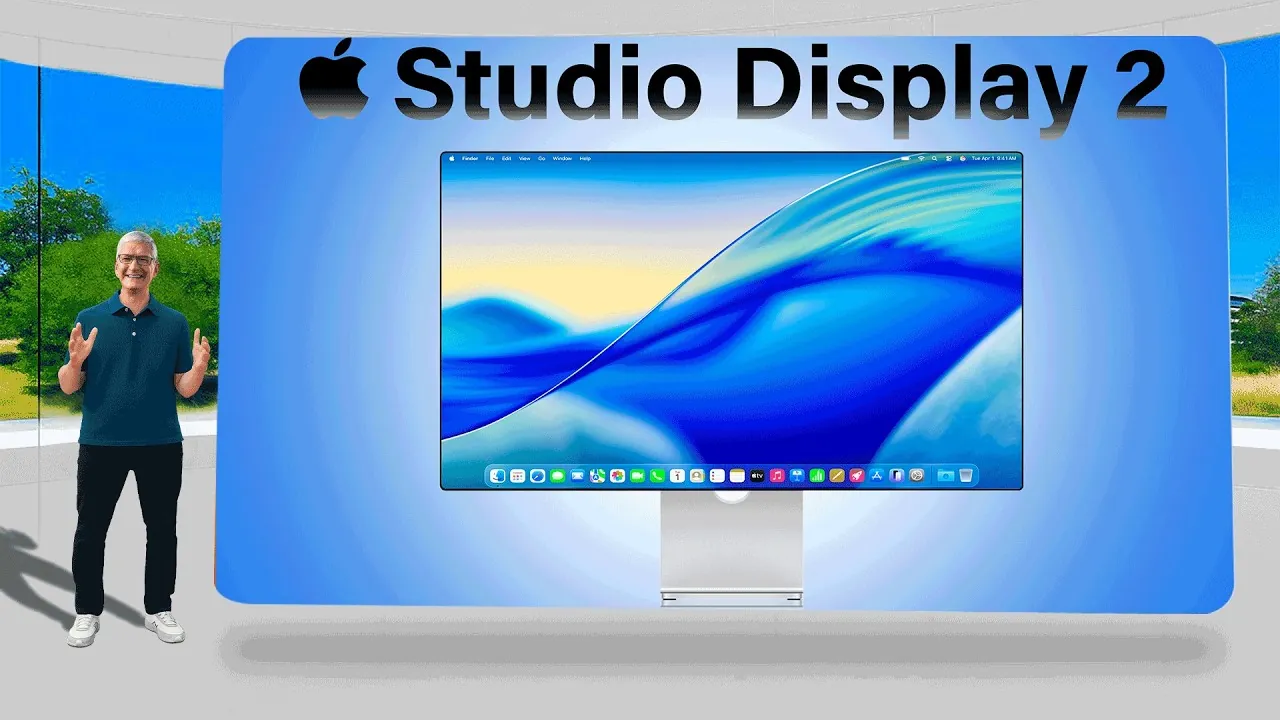
Apple is preparing to introduce the next-generation Studio Display in 2026, bringing a host of noteworthy upgrades to its professional-grade monitor. While the overall design is expected to retain its familiar aesthetic, the new model will incorporate advanced technologies aimed at addressing the limitations of its predecessor. These enhancements in display quality, connectivity, and performance are designed to appeal to creative professionals and power users, offering a more refined and capable tool for demanding workflows. The video below from Matt Talks Tech gives us more details about the Apple Studio Display 2.

Release Timeline and Ecosystem Integration
The Apple Studio Display 2 is rumored to debut between March and May 2026, potentially aligning with the Worldwide Developers Conference (WWDC). This strategic timing suggests that Apple may unveil the display alongside updates to its Mac Studio or Mac Pro, making sure seamless integration with its high-performance desktop systems. For users who rely on Apple’s ecosystem for professional tasks, this display could become a key component of their setup, offering optimized compatibility and performance.
Apple’s focus on ecosystem integration means that the Studio Display 2 will likely work effortlessly with macOS, allowing features like Sidecar, Universal Control, and optimized workflows for creative applications. This level of integration ensures that the display is not just a standalone product but a vital part of Apple’s broader professional ecosystem.
Innovative Display Technology
One of the most significant upgrades in the Studio Display 2 is the adoption of mini-LED technology, a feature already present in Apple’s MacBook Pro and iPad Pro. Mini-LED panels offer several advantages, including:
- Deeper blacks and higher contrast ratios for more lifelike visuals
- Improved color accuracy, essential for tasks like video editing and graphic design
- Enhanced brightness, making it ideal for HDR content creation
The inclusion of ProMotion technology, with refresh rates of 90Hz or 120Hz, is another standout feature. This technology ensures smoother motion and reduced latency, which is particularly beneficial for video playback, gaming, and other motion-intensive tasks. While there is speculation about the inclusion of variable refresh rates, Apple has yet to confirm this capability. If implemented, it could further enhance the display’s versatility, particularly for users working with dynamic content.
Enhanced Brightness and Display Options
The Studio Display 2 is expected to deliver a significant brightness boost, increasing from the current 600 nits to a range of 1,000–1,200 nits. This improvement will not only enhance visibility in bright environments but also elevate HDR workflows, allowing for more precise color grading and detail reproduction in high-contrast scenes.
The screen size is likely to remain at 27 inches, a dimension that strikes a balance between workspace efficiency and desk space requirements. For users working in high-glare environments, Apple is anticipated to retain the nano-texture display option, an anti-reflective coating that reduces glare and enhances usability in challenging lighting conditions. This option is particularly valuable for professionals who require consistent performance across varying work environments.
Upgraded Connectivity and Internal Hardware
Connectivity is another area where the Studio Display 2 is expected to shine. The inclusion of Thunderbolt 5 represents a significant upgrade from the current Thunderbolt 4 standard. Thunderbolt 5 offers:
- Higher bandwidth for faster data transfer, allowing smoother workflows
- Support for multiple high-resolution displays, ideal for multi-monitor setups
Internally, the display is rumored to feature a new Apple-designed chip, potentially the A18 or A19. This processor would enhance image processing, improve macOS integration, and enable advanced features such as adaptive image rendering and real-time adjustments for a smoother and more intuitive user experience. These upgrades ensure that the display is not only visually impressive but also highly functional, catering to the needs of professionals who demand reliability and performance.
Camera and Video Enhancements
For professionals who rely on video conferencing or content creation, the rumored upgrade to an 18MP camera is a significant improvement over the current 12MP sensor. This enhancement is expected to deliver:
- Sharper video quality, making sure a professional appearance during calls
- Better low-light performance, ideal for dimly lit environments
- More accurate color reproduction, enhancing the overall video experience
These improvements make the Studio Display 2 a versatile tool for remote work, content creation, and live streaming, making sure that it meets the high standards of modern professional communication. With these upgrades, the display is poised to become an essential component for users who prioritize video quality in their workflows.
Pricing and Design Continuity
The current Studio Display starts at $1,599, with the nano-texture option adding an additional $300. While the new model may see a slight price increase due to its upgraded technology, it is expected to remain within a similar range, making sure that it remains accessible to its target audience of professionals and enthusiasts.
In terms of design, Apple is likely to maintain the sleek, minimalist aesthetic that its displays are known for. This continuity not only preserves compatibility with existing setups but also reinforces Apple’s commitment to a cohesive design language across its product lineup. The familiar design ensures that users can seamlessly integrate the Studio Display 2 into their existing workspaces without the need for significant adjustments.
A Professional-Grade Display for the Future
The Apple Studio Display 2 represents a significant step forward in professional-grade monitors, combining mini-LED panels, ProMotion refresh rates, and enhanced brightness to deliver an unparalleled visual experience. Coupled with Thunderbolt 5 connectivity, a powerful internal chip, and an upgraded camera, this display is tailored to meet the demands of creative professionals and power users alike.
For those seeking a high-end monitor that integrates seamlessly with Apple’s ecosystem, the Studio Display 2 is shaping up to be a compelling option. Whether you’re a video editor, graphic designer, or remote worker, this display promises to elevate your productivity and creativity, making it a worthy addition to any professional setup.
Uncover more insights about Apple Studio Display 2 in previous articles we have written.
- Apple Studio Display 2: Features, Release Date, and Pricing
- Apple Studio Display 2: Features, Specs, and Release Date
- Apple Studio Display 2: Features, Release Date, and Rumors
- Apple Studio Display 2 Release Date, Features, and Pricing
- Apple Studio Display 2: Everything You Need to Know
Source & Image Credit: Matt Talks Tech
Disclosure: Some of our articles include affiliate links. If you buy something through one of these links, Geeky Gadgets may earn an affiliate commission. Learn about our Disclosure Policy.
