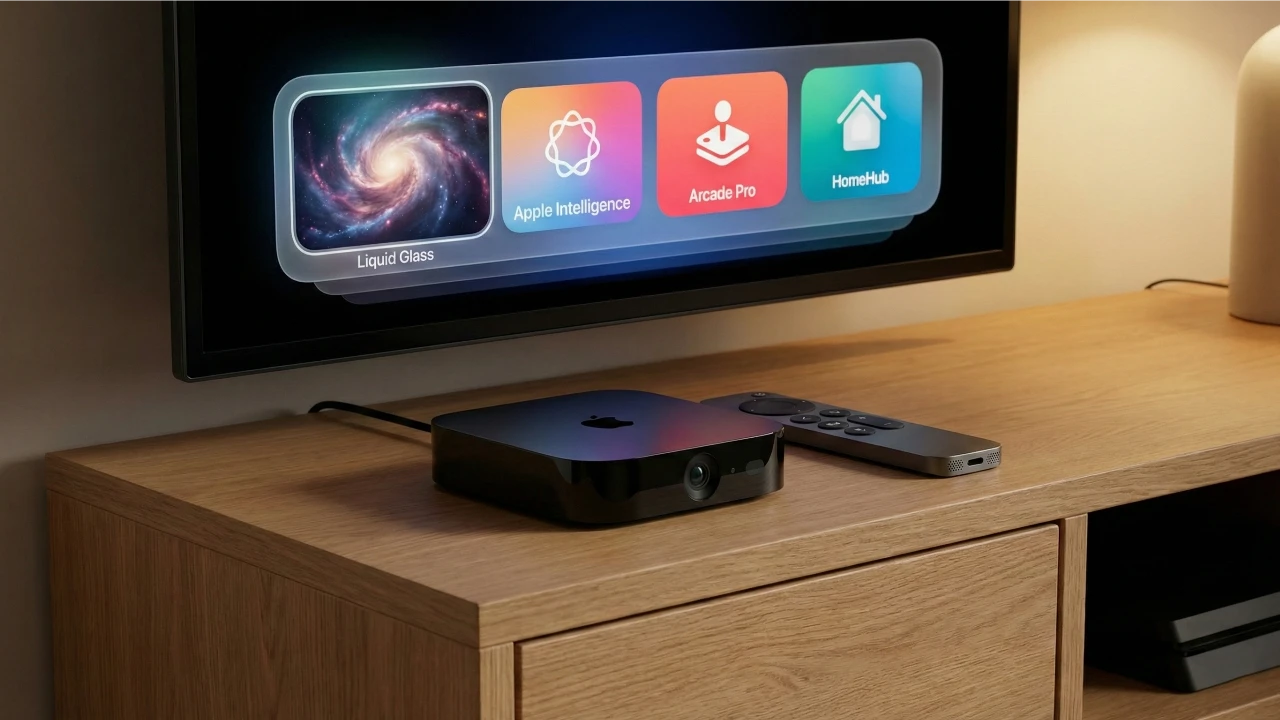
The living room has long been a battleground for tech giants, but for Apple, the television space has often felt like a secondary frontier. While the iPhone and Mac received annual cycles of groundbreaking silicon, the Apple TV remained on a more leisurely update path. However, after a significant hiatus since the last major hardware revision in 2022, the 2026 Apple TV 4K is poised to change that narrative. This isn’t just a minor speed bump; it is a fundamental reimagining of what a set-top box can be, transforming from a simple streaming portal into a high-performance gaming console, a smart home brain, and a hub for generative artificial intelligence.
The Silicon Trinity: A17 Pro, 8GB RAM, and the N1 Chip
The most significant shift in the 2026 model is the leap in processing power, often referred to in supply chain circles as the Silicon Trinity. Rumors suggest Apple will bypass several generations of chips to land on the A17 Pro, the same 3nm architecture found in the iPhone 15 Pro. This inclusion is strategic rather than excessive. It represents the baseline hardware requirement for Apple Intelligence, the company’s suite of on-device generative AI features.
To support these advanced computations, the 2026 Apple TV is expected to ship with 8GB of RAM, doubling the capacity of its predecessor. This memory boost is critical for the longevity of the device. In previous years, the Apple TV’s efficiency meant it could get by on less, but the modern era of local large language models and high-fidelity gaming demands a higher ceiling. By moving to an 8GB architecture, Apple ensures that the device can handle complex background tasks, such as real-time language translation and predictive smart home management, without interrupting the viewing experience.
Complementing the processor is the rumored N1 networking chip. First introduced with the iPhone 17 line, the N1 chip handles Wi-Fi, Bluetooth, and Thread communications with unprecedented efficiency. For the user, this translates to Wi-Fi 7 support, providing the massive bandwidth required for high-bitrate 4K and even speculative 8K streaming. More importantly, the N1 chip will reduce latency for gaming and improve the reliability of AirPlay, potentially enabling a zero-latency wireless display mode for Mac users.
Apple Intelligence and the Rebirth of Siri
For years, Siri on the Apple TV has been a functional but limited tool, largely restricted to simple commands. The 2026 refresh aims to turn Siri into a true digital concierge. Leveraging the Neural Engine in the A17 Pro, the new Siri—reportedly powered by advanced foundation models—will be capable of understanding natural, conversational language.
This evolution, part of the tvOS 26 ecosystem, will allow for cross-app awareness. Users might eventually be able to ask Siri to find a specific scene from a show watched previously and perform actions based on that context. Beyond search, Apple Intelligence will drive a new Liquid Glass interface. This rumored UI overhaul moves away from static tiles toward a more fluid design. The interface is said to use real-time rendering to create depth and motion, with backgrounds that dynamically shift based on the time of day, the weather, or the mood of the content currently highlighted on the screen.
The Stealth Console: A Gaming Revolution
Perhaps the most ambitious rumor surrounding the 2026 Apple TV is its positioning as a legitimate gaming alternative. The A17 Pro brings hardware-accelerated ray tracing to the big screen, allowing the device to run native versions of demanding AAA titles. Because the Apple TV is a wall-powered device, it doesn’t face the same thermal constraints as a handheld.
Developers expect the chip to run at its peak clock speeds indefinitely, supported by a redesigned internal thermal system. Some leaks point toward a Game Mode Pro that shuts down non-essential background processes to divert 100% of the system resources to the GPU. For casual and mid-core gamers, the Apple TV could effectively replace the need for a secondary console, especially when paired with a PlayStation, Xbox, or a rumored new Apple-designed controller.
Design, Cameras, and the Siri Remote
While the external puck design of the Apple TV is expected to remain similar to the current generation to maintain its small footprint, the internal changes are vast. There are conflicting reports regarding a built-in camera. Some prototypes reportedly featured a wide-angle lens for FaceTime and gesture controls, allowing users to pause a movie or adjust the volume with simple hand movements. However, many believe Apple will continue to lean on Continuity Camera, letting users mount their iPhones to the TV for video calls, while reserving a built-in camera for a separate, higher-end home hub device.
What is more certain is an update to the Siri Remote. The 2026 remote is expected to include the U2 ultra-wideband chip, finally bringing Precision Finding to the living room. If the remote falls between the sofa cushions, your iPhone will be able to lead you directly to it with the same directional arrows used for AirTags.
Technical Comparison: 2022 vs. 2026
| Feature | Apple TV 4K (3rd Gen, 2022) | Apple TV 4K (2026 Rumors) |
|---|---|---|
| Processor | A15 Bionic (5nm) | A17 Pro (3nm) |
| Memory (RAM) | 4GB | 8GB (AI Requirement) |
| AI Capabilities | Basic Siri | Apple Intelligence |
| Gaming Performance | Mobile-class / Arcade | Console-class (Ray Tracing) |
| Connectivity | Wi-Fi 6, BT 5.0 | Wi-Fi 7, N1 Chip |
| Video Formats | HDR10+, Dolby Vision | Dolby Vision 2, AV1 Decoding |
| Remote Control | Siri Remote (USB-C) | Siri Remote with U2 Chip |
| Storage Options | 64GB / 128GB | 128GB / 256GB |
| Estimated Price | $129 – $149 | $159 – $189 |
Audio and Video Fidelity
On the audiovisual front, Apple is not resting on its laurels. The 2026 hardware is rumored to support Dolby Vision 2, a new standard designed to offer even more granular control over brightness and color metadata. There is also evidence that Apple will include a dedicated AV1 decoder, which would significantly improve the efficiency and quality of 4K content on platforms like YouTube and Netflix.
For audiophiles, the rumor mill suggests that Apple may finally unlock Pass-through audio support for lossless formats like DTS:X and Dolby TrueHD. A Pro Audio toggle in the settings could allow high-end AV receivers to handle the decoding directly, providing a theater-accurate experience that enthusiasts have requested for years.
Price and Availability
Despite the massive hardware upgrades, Apple is expected to keep the pricing competitive. Current leaks suggest a starting price of approximately $159 for the base model, which may see a storage bump to 128GB to accommodate larger AI models and AAA game installs. A higher-end model with 256GB of storage and a built-in Ethernet port is also anticipated. The consensus among supply chain analysts is a Spring 2026 release window, likely during a March or April event, coinciding with the rollout of the major Siri AI updates via iOS 26.4.
The 2026 Apple TV 4K represents more than just another iteration of a streaming box. It is a pivot point where the living room becomes the center of the AI-integrated home. By combining the raw power of the A17 Pro with the intelligence of a generative Siri and the speed of Wi-Fi 7, Apple is setting the stage for a device that isn’t just for watching—it’s for playing, working, and interacting in ways we are only beginning to see.
Read our latest articles on the 2026 Apple TV 4K by exploring our other resources below.
- Siri’s Brain Transplant: The 2026 Apple TV 4K’s Secret Weapon
- New Apple TV: When Will It Launch?
- 2026 Apple TV: Liquid Glass UI, A17 Pro & More
- Apple TV, AirTags, and HomePod Mini: Why No Updates in 2025
- Apple TV Release Date, Features, and Pricing Details
Disclosure: Some of our articles include affiliate links. If you buy something through one of these links, Geeky Gadgets may earn an affiliate commission. Learn about our Disclosure Policy.
