
Valve’s recent updates to its gaming hardware lineup, highlighted by Deck Ready, showcase a renewed focus on performance and compatibility. At the core of these developments is the Steam Machine, a device aimed at delivering 1080p resolution at 30fps as a baseline for smooth gameplay. Alongside this, the Steam Frame introduces a dual-purpose design, supporting both VR gaming at 90fps and 2D gaming at 720p. These hardware advancements are underpinned by technologies like Proton, which simplifies game compatibility across Linux-based platforms, reflecting Valve’s commitment to a robust and accessible ecosystem.
In this breakdown, learn how Valve’s hardware strategy balances developer needs with player expectations. Key takeaways include the importance of optimizing games for lower-spec devices like the Steam Deck, the role of cloud saving in unifying player experiences across platforms and the challenges of making sure anti-cheat compatibility on Linux. Whether you’re a developer navigating these updates or a gamer curious about what’s next, this overview offers a clear look at the practical implications of Valve’s latest announcements.
Valve’s Gaming Hardware Updates
TL;DR Key Takeaways :
- Valve announced major updates to its gaming hardware ecosystem at GDC, including advancements in SteamOS, the Steam Machine and the new Steam Frame.
- SteamOS serves as the backbone of Valve’s ecosystem, emphasizing performance, compatibility and user customization, with features like Proton and cloud saving enhancing the gaming experience.
- The Steam Machine targets high-performance gaming with a focus on 1080p resolution and advanced graphics, while the Steam Frame supports both VR and 2D gaming with specific performance standards.
- Valve is addressing developer challenges, such as anti-cheat compatibility with Linux and optimizing games for lower-spec hardware like the Steam Deck, using tools and data insights to assist developers.
- Valve plans to launch the Steam Machine and Steam Frame by year-end, combining past learnings with new innovations to deliver accessible, high-performing gaming experiences for a diverse audience.
- Full Valve Presentation
How Valve’s Hardware Has Evolved
Valve’s journey into gaming hardware began with early innovations like Steam Link and the original Steam Machines. These devices were designed to bring PC gaming into living rooms and portable platforms, laying the groundwork for the company’s current advancements. Building on this foundation, Valve introduced SteamOS, a Linux-based operating system specifically optimized for gaming performance and compatibility.
A key element of this ecosystem is Proton, a compatibility layer that enables Windows games to run seamlessly on Linux platforms. Proton has significantly expanded the accessibility of the Steam library, allowing gamers to enjoy their favorite titles across a broader range of systems. Valve’s other hardware ventures, such as Steam VR and the Steam Deck, have provided valuable insights into user preferences and technical challenges, helping to shape the company’s future strategies.
Valve’s iterative approach to hardware development demonstrates its ability to learn from past projects. By integrating user feedback and addressing technical limitations, the company has steadily refined its offerings, making sure that each new product meets the demands of modern gamers.
SteamOS: The Backbone of Valve’s Ecosystem
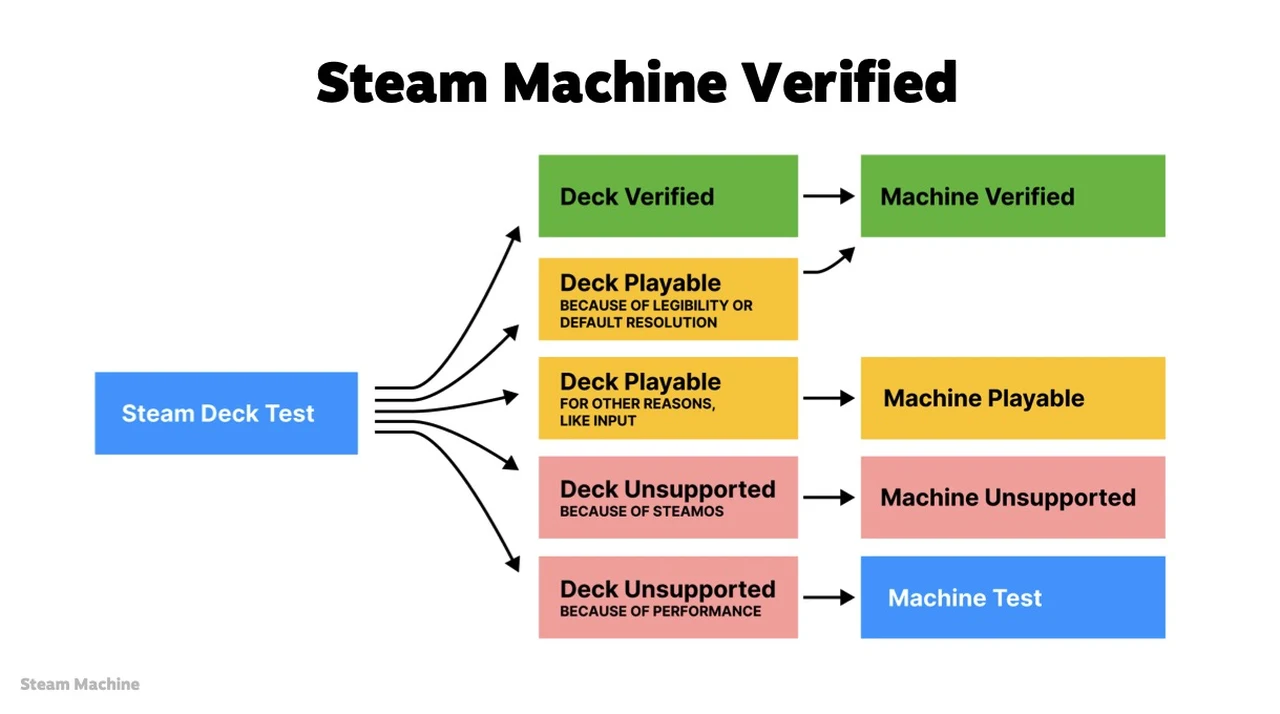
SteamOS remains the cornerstone of Valve’s hardware strategy, focusing on delivering consistent performance and compatibility across devices like the Steam Deck, Steam Machine and other platforms. To maintain a seamless gaming experience, Valve has refined its Steam Deck verification program, which evaluates games for performance, usability and overall compatibility.
Recognizing the diversity of gaming setups, Valve has encouraged developers to support multiple aspect ratios, making sure that games perform well on a variety of screen formats. Additionally, the company advises against locking graphics settings, empowering users to customize their gaming experience to suit their preferences. Features like cloud saving further enhance convenience, allowing players to synchronize game settings and progress across devices effortlessly.
Valve’s emphasis on flexibility and user control underscores its commitment to creating a gaming ecosystem that caters to a wide range of preferences and hardware configurations. By prioritizing compatibility and performance, SteamOS continues to serve as the backbone of Valve’s hardware lineup.

Learn more about SteamOS with other articles and guides we have written below.
- Budget SteamOS Mini PC for Living Room Gaming and Streaming
- SteamOS Update Boosts Performance for Older Games on Steam Deck
- MinisForum V3 Gaming Tablet Running SteamOS 3.8 with 165Hz Display
- Worlds Smallest DIY Steam Machine : Ryzen 7840U for Steady 1080p Play
- Full Guide to Installing SteamOS 3.8 on Legion Go S
- Steam Machine Pricing Tipped at $600 to $650 with Supply Tight
- Build a Budget Steam Machine That Easily Hits 1440p
- Anti-cheat is coming to Steam Hardware & SteamOS
- SteamOS Beta Update Fixes 1,000 Game Library Bug on Steam Deck
- ROG Flow Z13 Tablet Loaded with SteamOS 3.9, 1440p Gaming & More
Steam Machine & Steam Frame
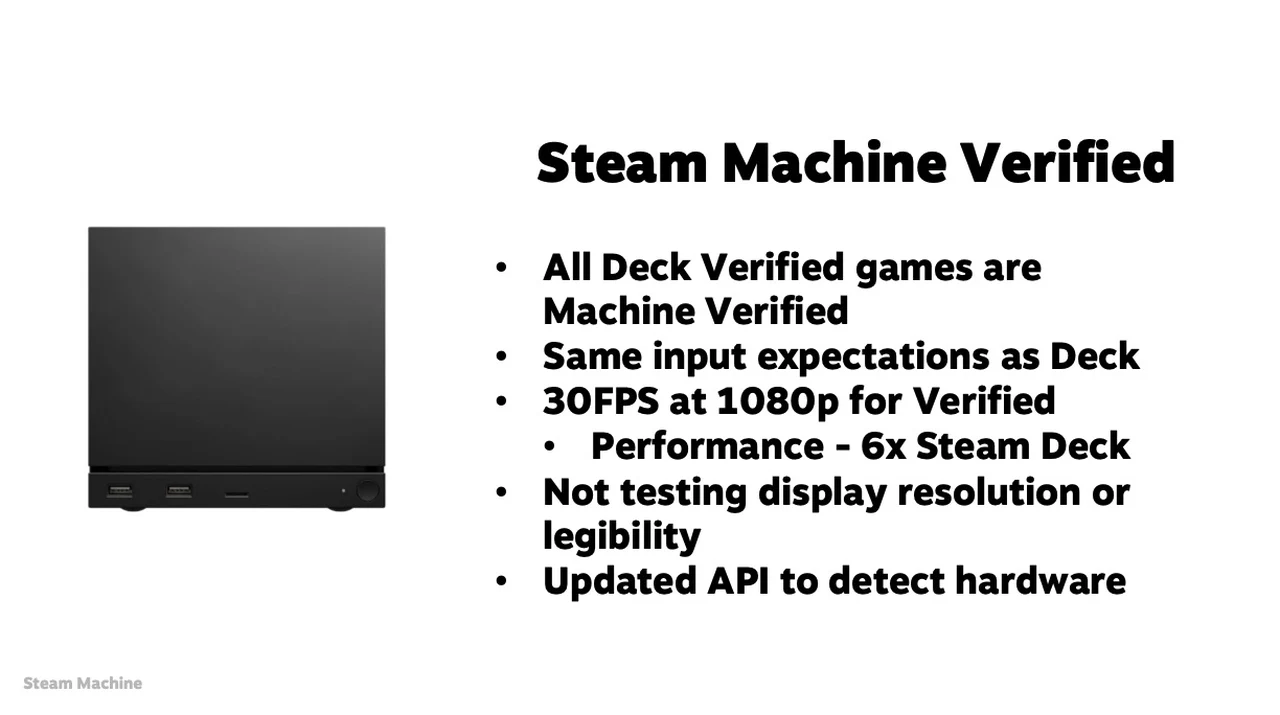
The Steam Machine represents a high-performance alternative to the Steam Deck, targeting gamers who prioritize power, resolution and advanced graphics capabilities. Valve has established a baseline requirement for games to achieve 1080p resolution at 30 frames per second (fps) for Steam Machine verification, making sure smooth and visually appealing gameplay.
The Steam Frame, on the other hand, is designed to cater to both VR and 2D gaming. For VR, the device emphasizes a minimum performance standard of 90fps, making sure a smooth and immersive experience. For 2D gaming, the Steam Frame requires a minimum resolution of 720p at 30fps, maintaining consistent quality across its hardware lineup.
To support these devices, Valve has promoted the use of unified game versions through tools like Proton, FEX, and Leptin. These technologies simplify the optimization process for Linux-based platforms, reducing the workload for developers while maintaining high performance and compatibility. By streamlining development processes, Valve ensures that its hardware ecosystem remains accessible and developer-friendly.
Guidance for Developers: Overcoming Challenges
Valve’s presentation at GDC also addressed several challenges faced by developers within the Steam ecosystem. One of the primary issues is the compatibility of anti-cheat software with Linux platforms. Valve has emphasized the importance of adopting Linux-compatible solutions to ensure fair and secure gameplay across all devices, fostering a more inclusive gaming environment.
Another critical focus area is optimizing games for lower-spec hardware, such as the Steam Deck. By making sure that games run smoothly on devices with varying hardware capabilities, developers can reach a broader audience and provide a better experience for all players. Valve has introduced data tools to assist developers in this effort, allowing them to track player engagement and performance metrics on Steam Deck and other devices. These insights allow developers to make informed decisions about game optimization and design.
Valve’s proactive approach to addressing developer challenges highlights its dedication to fostering a collaborative and innovative gaming ecosystem. By providing the tools and resources needed to overcome technical hurdles, the company enables developers to create high-quality experiences for a diverse audience.
What’s Next for Valve?
Valve plans to launch the Steam Machine and Steam Frame by the end of the year, marking a significant milestone in its hardware evolution. These devices combine the lessons learned from previous projects with new innovations designed to meet the demands of modern gamers. By refining its ecosystem and addressing the challenges faced by developers, Valve is positioning itself as a leader in gaming hardware and software integration.
The company’s commitment to creating accessible, high-performing gaming experiences ensures that both developers and gamers can look forward to a more seamless and engaging future in gaming. As Valve continues to push the boundaries of what gaming hardware can achieve, its ecosystem is poised to set new standards for performance, compatibility and user experience.
Media Credit: Deck Ready
Disclosure: Some of our articles include affiliate links. If you buy something through one of these links, Geeky Gadgets may earn an affiliate commission. Learn about our Disclosure Policy.
