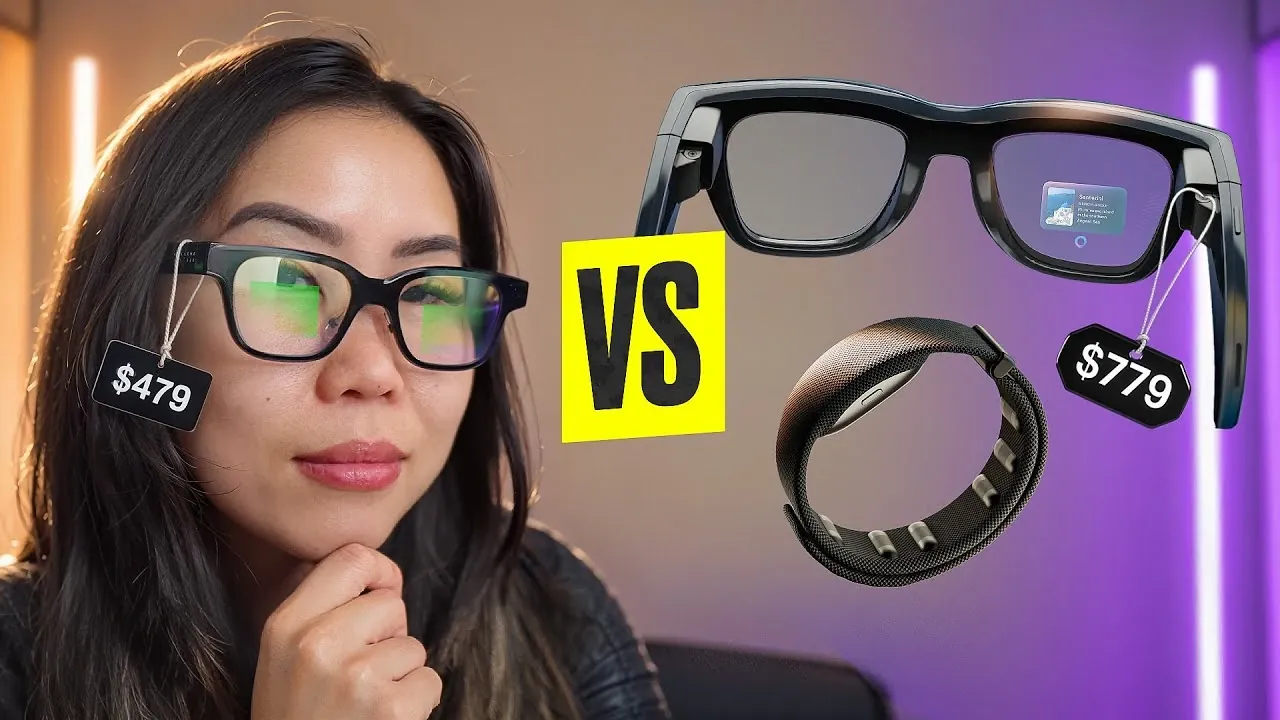
Imagine slipping on a pair of sleek, AI-powered glasses that can translate conversations in real-time, guide you through presentations hands-free, or even let you interact with your favorite apps using just a flick of your fingers. Now, picture another pair that doubles as stylish sunglasses, features a dazzling color display, and integrates seamlessly with your social media. These aren’t just futuristic fantasies, they’re the realities offered by the Rokid Glasses and Meta Ray-Ban Display. But here’s the twist: while both promise innovative functionality, their approaches couldn’t be more different. From design priorities to AI capabilities, these two devices reveal a surprising divergence in what “smart glasses” can mean. So, which one aligns with your vision of the future?
In this head-to-head comparison, Cas and Chary XR explore the distinct philosophies behind these two wearables, uncovering how their features cater to vastly different lifestyles and preferences. Whether you’re drawn to the practicality of Rokid’s lightweight design or intrigued by Meta’s bold leap into ecosystem-driven innovation, this deep dive will help you weigh the trade-offs. From display quality to AI integration, battery life to prescription lens compatibility, the differences may surprise you. By the end, you’ll have a clearer picture of which device deserves a place in your daily life, or whether either truly meets the promise of next-gen eyewear. After all, the future of smart glasses isn’t just about technology; it’s about how it fits into your world.
Rokid vs Meta Glasses
TL;DR Key Takeaways :
- The Rokid Glasses prioritize practicality with a lightweight design, monochrome display, and versatile AI features like real-time translation and teleprompter mode, making them ideal for travelers and professionals.
- The Meta Ray-Ban Display focuses on premium aesthetics with a full-color display, advanced gesture controls, and seamless integration into Meta’s ecosystem, appealing to tech enthusiasts and social media users.
- Rokid offers better prescription lens compatibility (-6 to +16) and affordability at $479, while Meta provides a narrower range (-4 to +4) and a higher price point of $799, reflecting its premium features.
- Battery life differs, with Rokid lasting up to 8 hours for extended use, while Meta offers 6 hours with the convenience of a portable charging case.
- Both devices excel in specific areas: Rokid emphasizes functionality and independence, while Meta highlights innovation, ecosystem integration, and innovative controls.
Design and Display: Practicality Meets Premium Features
The design and display of these devices reflect their differing priorities, catering to distinct user preferences.
– Rokid Glasses: These glasses feature dual monochrome displays with a green hue, offering a resolution of 640×480 and a 30° field of view. Weighing just 49 grams, they are lightweight and comfortable for extended use. The 1,500-nit brightness ensures visibility in various lighting conditions, emphasizing practicality and ease of use. Their minimalist design appeals to users seeking functionality without unnecessary bulk.
– Meta Ray-Ban Display: Meta takes a different approach with a single full-color display boasting a resolution of 600×600 and a narrower 20° field of view. At 70 grams, they are heavier but deliver an impressive 5,000 nits of brightness. Transition lenses that double as sunglasses enhance their usability in outdoor settings. This design reflects Meta’s focus on premium aesthetics and high-end features.
Your choice will depend on whether you prioritize lightweight practicality or a more immersive, high-brightness experience with added style.
AI Features and Usability: Versatility vs. Ecosystem Integration
AI functionality is a cornerstone of both devices, but their implementations differ significantly in scope and focus.
– Rokid Glasses: These glasses are equipped with ChatGPT integration, allowing real-time translation in 89 languages, teleprompter functionality, notifications, and voice commands. This makes them ideal for hands-free tasks such as traveling, biking, or professional presentations. Their versatility allows users to operate independently of specific ecosystems, offering flexibility for a wide range of applications.
– Meta Ray-Ban Display: Meta leans heavily on its proprietary AI, seamlessly integrating with its ecosystem, including popular apps like Messenger, WhatsApp, and Instagram. A standout feature is its neural band gesture controls, which allow users to interact with the device using hand gestures. This futuristic approach highlights Meta’s emphasis on ecosystem-driven usability and innovative controls.
If you value independence and versatility, Rokid may be the better fit. However, if you’re already invested in Meta’s ecosystem, its seamless integration and advanced gesture controls could be more appealing.
Rokid Glasses vs Meta Ray-Ban Display

Gain further expertise in AI smart glasses by checking out these recommendations.
- Xiaomi AI Smart Glasses Review: Features, Price & Performance
- Xiaomi AI Smart Glasses : Honest Review After 3 Weeks of Use
- Meta Ray-Ban Display AI Glasses : The Future of Smart Eyewear?
- Are Meta’s Display $800 AI Smart Glasses the Future or a Flop?
- Top 5 Smart Glasses Transforming Wearable Technology in 2025
- Samsung’s Smart Glasses Will Transform Wearable Technology
- Brilliant Labs Frame open source AI smart glasses from $350
- Are Meta’s Ray-Ban Glasses Worth $800? We Take a Closer Look
- Xiaomi AI Smart Glasses Hands On First Impressions Review 2025
- Even G1 Smart Glasses Review: Features, Design, and Limitations
Camera and Audio: Enhancing Everyday Experiences
Both devices are equipped with 12MP cameras capable of capturing stabilized photos and videos, but their implementations vary in subtle yet important ways.
– Rokid Glasses: These glasses offer flexible aspect ratios and vibrant photo quality, making them suitable for a variety of use cases, from casual photography to professional documentation.
– Meta Ray-Ban Display: The color display enhances its viewfinder functionality, providing a more immersive experience for capturing and reviewing media.
Audio performance also sets the two devices apart:
– Rokid features a 4-microphone setup, delivering clear audio for calls and voice commands.
– Meta ups the ante with a 6-microphone array, offering superior sound capture and playback quality, which is particularly beneficial for users who prioritize audio clarity.
While both devices perform well, Meta’s enhanced audio setup may appeal to users who demand higher sound quality for communication and media playback.
Battery Life and Charging: Longevity vs. Portability
Battery life is a critical factor for wearable devices, and the two glasses take different approaches to address this need.
– Rokid Glasses: With approximately 8 hours of battery life, Rokid is better suited for all-day use. Additional charging accessories are available to further extend its usability, making it a reliable option for users who need extended performance.
– Meta Ray-Ban Display: Offering around 6 hours of battery life, Meta compensates with a convenient charging case, allowing users to recharge the glasses on the go. This portable solution adds a layer of convenience for users with shorter usage periods.
Your decision will depend on whether you need extended battery life or prefer the convenience of a portable charging solution.
Prescription Lens Support: Accessibility for All
For users requiring prescription lenses, both devices offer support, but with notable differences in range and accessibility.
– Rokid Glasses: These glasses accommodate a wide range of prescriptions from -6 to +16, making them accessible to a broader audience.
– Meta Ray-Ban Display: Support is limited to a narrower range of -4 to +4, which may exclude some users with stronger prescriptions.
If prescription compatibility is a priority, Rokid provides greater flexibility and accessibility for a wider range of users.
Practical Applications: Tailored for Unique Lifestyles
The practical applications of these devices highlight their distinct target audiences and use cases.
– Rokid Glasses: With features like real-time translation, teleprompter mode, and notifications, Rokid is ideal for travelers, professionals, and outdoor enthusiasts. Its affordability further enhances its appeal for users seeking functionality without a hefty price tag.
– Meta Ray-Ban Display: Designed for tech enthusiasts and social media users, Meta focuses on ecosystem integration and advanced controls. Gesture-based private text input and seamless compatibility with Meta apps make it a compelling choice for those already immersed in the Meta ecosystem.
Price and Accessibility: Balancing Cost and Features
Price is a significant differentiator between the two devices, reflecting their respective priorities.
– Rokid Glasses: Starting at $479, they offer a cost-effective solution for users prioritizing practicality and essential features.
– Meta Ray-Ban Display: Priced at $799, they reflect their premium design, color display, and advanced controls, appealing to users willing to invest in high-end technology.
Your decision will hinge on whether you value affordability or are prepared to pay a premium for advanced features and design.
Limitations to Consider
Both devices have limitations that may influence your decision:
– Rokid Glasses: The monochrome display may not satisfy users seeking a rich multimedia experience, and some features are still under development.
– Meta Ray-Ban Display: Reliance on Meta’s proprietary ecosystem could limit compatibility with third-party apps, potentially restricting its versatility.
Making the Right Choice
The Rokid Glasses and Meta Ray-Ban Display cater to different audiences, each excelling in specific areas.
– Rokid Glasses: Prioritize practicality, affordability, and robust AI features, making them ideal for users seeking functionality at a reasonable price.
– Meta Ray-Ban Display: Emphasize innovation with a color display, gesture-based controls, and seamless ecosystem integration, appealing to those who value innovative technology.
By understanding their differences, you can make an informed decision about which device best suits your preferences and lifestyle. Both devices showcase the potential of smart glasses, offering unique solutions for diverse user needs.
Media Credit: Cas and Chary XR
Disclosure: Some of our articles include affiliate links. If you buy something through one of these links, Geeky Gadgets may earn an affiliate commission. Learn about our Disclosure Policy.
