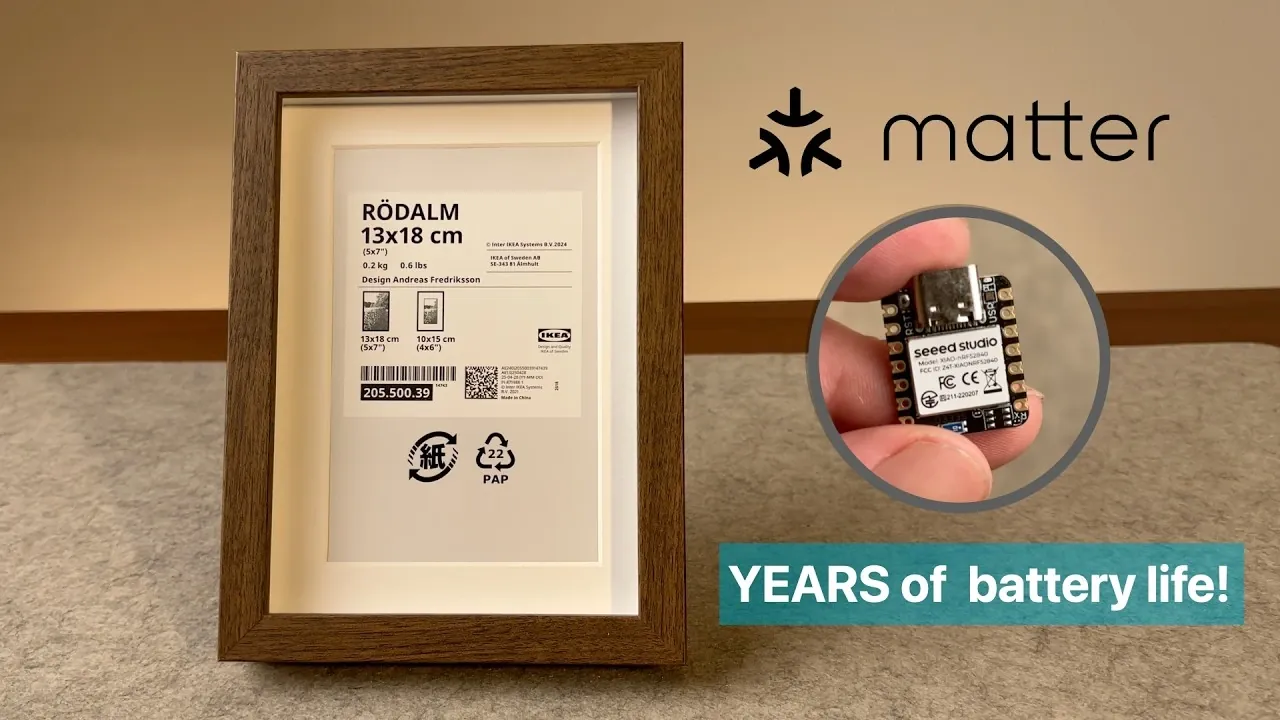
Microamp Home developed a smart home sensor that combines functionality with subtle design by embedding a temperature and humidity sensor into an IKEA photo frame. The project achieved a battery life of up to 7 years while maintaining compatibility with Apple Home and making sure accurate readings through optimized airflow. By using the nRF52840 microcontroller and SHT41 sensor, the design emphasizes energy efficiency and reliable performance without disrupting the aesthetics of a living space.
Explore the power optimization strategies that support extended battery life, the reasoning behind the choice of microcontroller and sensor and the steps taken to implement real-time battery monitoring. This analysis offers practical insights for those interested in balancing technical performance with thoughtful design in custom smart home devices.
DIY Stealth Home Sensor
TL;DR Key Takeaways :
- The project created a discreet temperature and humidity sensor integrated into an IKEA photo frame, combining aesthetics with functionality.
- Power optimization using the nRF52840 microcontroller achieved a projected battery life of up to 7 years, far exceeding the initial 12-month target.
- The sensor is compatible with multiple smart home platforms, including Apple Home, making sure seamless integration into existing ecosystems.
- The SHT41 sensor was chosen for its accuracy and low power consumption, with strategic placement making sure precise readings without compromising design.
- A modular design with a battery fuel gauge allows for easy maintenance, real-time battery monitoring and long-term reliability.
Design Objectives and Key Features
The primary goal of this project was to create a sensor that blends invisibly into home decor while delivering reliable performance. By concealing the device within an IKEA photo frame, the sensor remains hidden yet functional, with airflow maintained for accurate readings. Several critical objectives guided the design process:
- Long battery life: The target was to achieve at least 12 months of operation, with actual results far exceeding this goal.
- Smart home compatibility: Making sure seamless integration with platforms like Apple Home and others.
- Discreet design: Avoiding visible tech components to maintain the aesthetic harmony of the room.
The result is a device that delivers essential functionality without disrupting the visual appeal of your living space.
Microcontroller Selection and Challenges
Choosing the right microcontroller was a pivotal step in achieving the desired balance of performance and power efficiency. Initial testing with the ESP32C6 revealed its affordability and availability, but it fell short in two critical areas: power consumption and compatibility with Apple Home. While power-saving strategies such as reducing sensor reporting frequency and allowing intermittently connected device (ICD) mode were explored, these measures were insufficient to meet the project’s ambitious goals.
The project then transitioned to the ESP32-H2 and ultimately to the nRF52840 microcontroller. The nRF52840 proved to be the optimal choice, offering superior power efficiency and robust compatibility with various smart home ecosystems. This microcontroller became the foundation of the final design, allowing significant improvements in battery life and overall performance.

Explore further guides and articles from our vast library that you may find relevant to your interests in IKEA.
- IKEA Fixes BILRESA Battery Life with Quiet Hardware Revisions
- Why IKEA’s Hub-Free Dubbelkisel is Changing the Rules of Smart Lighting
- Leaked : IKEA’s New Matter Over Thread Smart Lights Launching Late 2026
- IKEA Liljebagge Costs Just €15 to Undercut Eve Thermo By €65
- IKEA Smart Home Without Dirigera : Homey Pro, Home Assistant & HomeKit
- Philips Hue vs IKEA: Dual Protocol Battles Matter-Over-Thread
- IKEA Matter Devices Now Connect to Apple Home Without Dirigera Hub
- IKEA Smart Home 2026: Affordable Automation with Hidden Limits
- Best RGB Smart Bulbs in 2026 : Philips Hue vs IKEA Kajplats vs Govee
- Why IKEA’s $10 Bluetooth Speaker Lets You Pair 100 Units at Once
Power Optimization for Longevity
Optimizing power consumption was a central focus throughout the development process. By fine-tuning both hardware and software, the sensor’s energy efficiency was maximized. Key strategies included:
- Microcontroller efficiency: The nRF52840, paired with optimized firmware, achieved a theoretical battery life of up to 14 years under ideal conditions.
- Real-world performance: Practical testing confirmed a projected battery life of approximately 7 years, far exceeding the initial 12-month target.
These optimizations ensure the sensor operates reliably over extended periods, reducing the need for frequent maintenance and enhancing user convenience.
Sensor Integration and Placement
The SHT41 sensor was selected for its high accuracy in measuring temperature and humidity, as well as its compact size and low power requirements. To maintain the device’s discreet design, the sensor was strategically positioned within the photo frame to ensure adequate airflow while remaining invisible. This careful placement allows the sensor to deliver precise readings without compromising its aesthetic integration.
Battery Monitoring and Maintenance
To enhance usability, a fuel gauge was incorporated to provide accurate, real-time monitoring of battery life. This feature ensures users are informed well in advance of the need for battery replacement, eliminating the risk of unexpected downtime. Additionally, the modular design simplifies assembly and maintenance, allowing for easy battery replacement or component upgrades as needed.
Final Assembly and Functionality
The components were neatly arranged on the back of the IKEA photo frame, resulting in a compact and unobtrusive design. Wireless connectivity was integrated to enable seamless communication with Apple Home and other smart home platforms. This allows for real-time monitoring of temperature, humidity and battery status, making sure the device delivers both functionality and convenience.
Project Achievements
This project demonstrates the potential of custom smart home devices to balance design and functionality. With a projected battery life of up to 7 years, the sensor offers long-term reliability while maintaining a discreet appearance. Its compatibility with Apple Home and other platforms ensures seamless integration into existing smart home ecosystems. By combining power optimization, modular design and aesthetic integration, this IKEA-based smart home sensor sets a benchmark for low-power, discreet smart devices.
Media Credit: Microamp Home
Disclosure: Some of our articles include affiliate links. If you buy something through one of these links, Geeky Gadgets may earn an affiliate commission. Learn about our Disclosure Policy.
