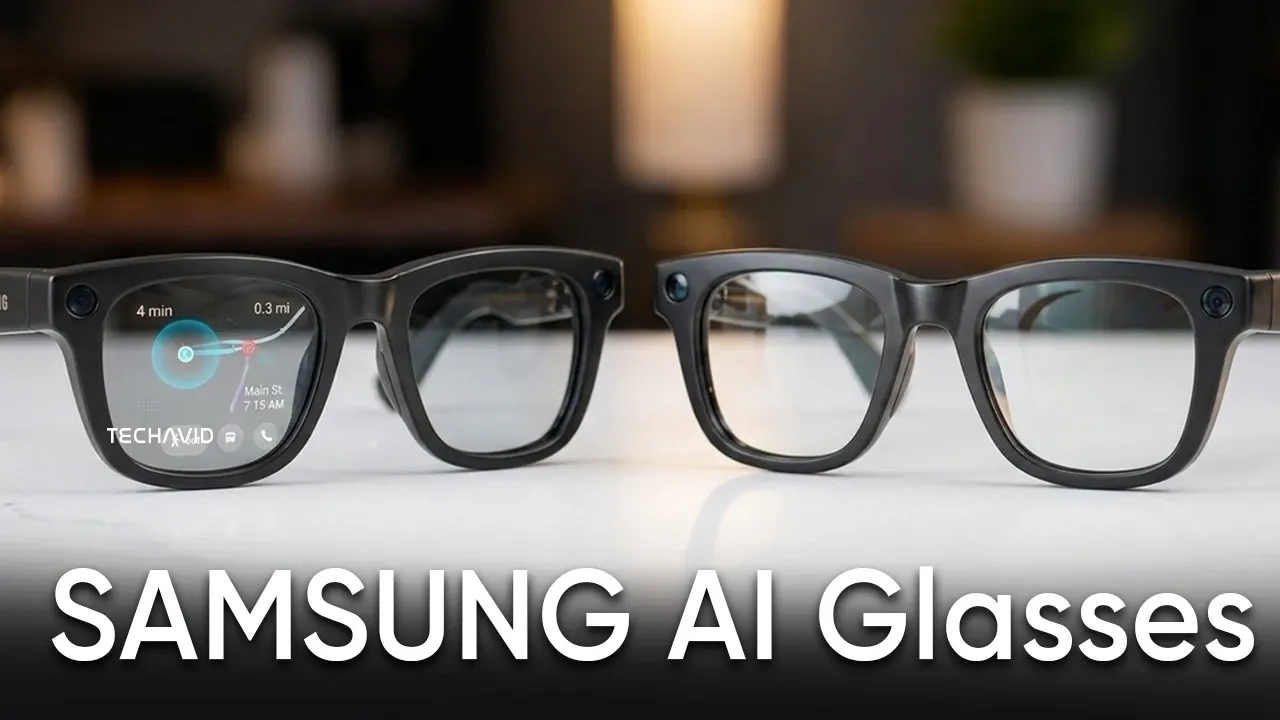
Samsung’s AI glasses, first unveiled during the Q1 2026 earnings call, represent a focused effort to integrate artificial intelligence into everyday wearables. The initial model, codenamed “Jinju,” emphasizes practicality with features like photochromic lenses, dual 12-megapixel Sony sensors and a Qualcomm Snapdragon AR1 chip. Unlike many other smart glasses, this device operates without a display, instead relying on voice-driven AI and real-time visual recognition to assist with tasks such as navigation and object identification. As outlined by TechAvid, the glasses weigh just 50 grams, aligning with Samsung’s goal of creating lightweight, functional wearables.
Dive into how Samsung’s multimodal AI approach connects these glasses with other devices, including smartphones and earbuds, to enhance usability. Discover the expected upgrades in the second-generation “Heian” model, such as the integration of microLED display technology for augmented reality. This explainer also decodes Samsung’s collaboration with Google, shedding light on how it influences the AI capabilities of these glasses and their potential role in shaping wearable tech.
How Samsung’s AI Glasses Fit into the Ecosystem
TL;DR Key Takeaways :
- Samsung has announced its first AI-powered wearable glasses, codenamed “Jinju,” set to launch in 2026, with a second-generation model, “Heian,” featuring integrated displays to follow.
- The AI glasses are part of Samsung’s multimodal AI strategy, designed to seamlessly integrate with its ecosystem of devices, including smartphones, earbuds and XR headsets.
- The first-generation Jinju model focuses on lightweight design (50 grams), voice-driven AI and camera-based contextual features, but lacks a display for visual data.
- The second-generation Heian model is expected to include microLED display technology, allowing augmented reality applications and real-time data overlays.
- Samsung is collaborating with Google to incorporate Gemini-powered AI experiences, enhancing functionality and compatibility within its broader AI ecosystem.
Samsung’s AI glasses are a cornerstone of the company’s multimodal AI strategy, which aims to create a connected and intuitive experience across its ecosystem of devices. These glasses are engineered to work in harmony with smartphones, earbuds and XR headsets, delivering an always-active, responsive AI experience.
The glasses unify various input methods—voice, visual and contextual—into a seamless interface. This integration allows the glasses to adapt to your needs in real time, whether you’re navigating a new city, accessing information, or managing tasks. By using multimodal AI, Samsung seeks to make interactions with technology more natural, efficient and user-friendly.
First-Generation AI Glasses: “Jinju”
The first-generation model, “Jinju,” emphasizes simplicity and functionality. Weighing just 50 grams, these lightweight glasses are equipped with photochromic lenses that automatically adjust to changing light conditions. Key hardware features include:
- Dual 12-megapixel Sony sensors for camera-based contextual features.
- Directional audio technology for private sound delivery.
- A Qualcomm Snapdragon AR1 chip for efficient processing and AI tasks.
Operating on Android XR, the Jinju glasses rely on voice-driven AI and real-time visual understanding to provide a hands-free experience. For example, you can use voice commands to get navigation directions or rely on the glasses’ cameras to recognize objects and deliver contextual information. Notably, the Jinju model does not include a display, focusing instead on audio and AI-driven interactions. Its rumored 155mAh battery capacity suggests a design optimized for lightweight, short-term use rather than extended operation.

Become an expert in Samsung AI glasses with the help of our in-depth articles and helpful guides.
- Samsung Galaxy AI Smart Glasses Release Date Revealed
- Samsung’s AI Galaxy Glasses Set for 2026 Launch
- Samsung Galaxy Glasses Release Date: August 2026 Launch Revealed?
- Samsung Galaxy Glasses (2026): Specs, Price and Android XR
- Ray-Ban Meta Smart Glasses: Rumored Features and Release Hints for 2026
- Samsung Smart Glasses 2026: Features, Specs and Release Date
- Samsung AI Glasses Launching Summer 2026: Specs and Details
- AI Smart Glasses Coming in Weeks: Maverick AI Pro & More
- Everything New in the Meta 124.0 Software Update for Smart Glasses
- Google vs Meta Smart Glasses: Which AI Frames Are Better
Second-Generation AI Glasses: “Heian”
The second-generation “Heian” model is expected to bring significant advancements, including the addition of a display. Industry speculation points to the use of microLED technology to enable a heads-up display (HUD), allowing you to view visual data directly in your field of vision. This feature would significantly expand the glasses’ functionality, making them suitable for more immersive applications such as augmented reality navigation or real-time data overlays.
While specific details about the Heian model remain scarce, it is anticipated to build upon the Jinju’s foundation by incorporating more sophisticated AI capabilities and broadening its potential use cases. The inclusion of a display could position the Heian model as a versatile tool for both personal and professional applications.
Development Timeline
The Jinju glasses are expected to launch in 2026, though Samsung has yet to announce an official release date, detailed design specifications, or pricing. The announcement during the company’s earnings call suggests that development is well underway. Following the Jinju, the Heian model is anticipated to represent the second phase of this initiative, offering a more feature-rich experience that aligns with Samsung’s long-term vision for wearable technology.
Collaboration with Google
Samsung’s partnership with Google plays a pivotal role in the development of its AI glasses. By integrating Google’s Gemini-powered AI experiences, Samsung aims to enhance the glasses’ functionality while making sure compatibility with its broader ecosystem. This collaboration underscores Samsung’s commitment to delivering innovative yet practical AI solutions that align with user needs and expectations.
What This Means for Wearable Technology
Samsung’s AI glasses mark a significant advancement in wearable technology, combining lightweight design with innovative AI capabilities to enhance everyday interactions. The first-generation Jinju model focuses on ambient AI experiences, using voice-driven features and camera-based contextual understanding to deliver a seamless, hands-free interface. Meanwhile, the second-generation Heian model promises to introduce display technology, allowing more immersive and versatile functionality.
As part of Samsung’s broader AI ecosystem, these glasses reflect the company’s vision for the future of wearable devices. With the Jinju model set to launch later this year, Samsung is poised to redefine how you interact with technology in your daily life, offering a glimpse into a future where AI-powered wearables become an integral part of everyday experiences.
Media Credit: TechAvid
Disclosure: Some of our articles include affiliate links. If you buy something through one of these links, Geeky Gadgets may earn an affiliate commission. Learn about our Disclosure Policy.
