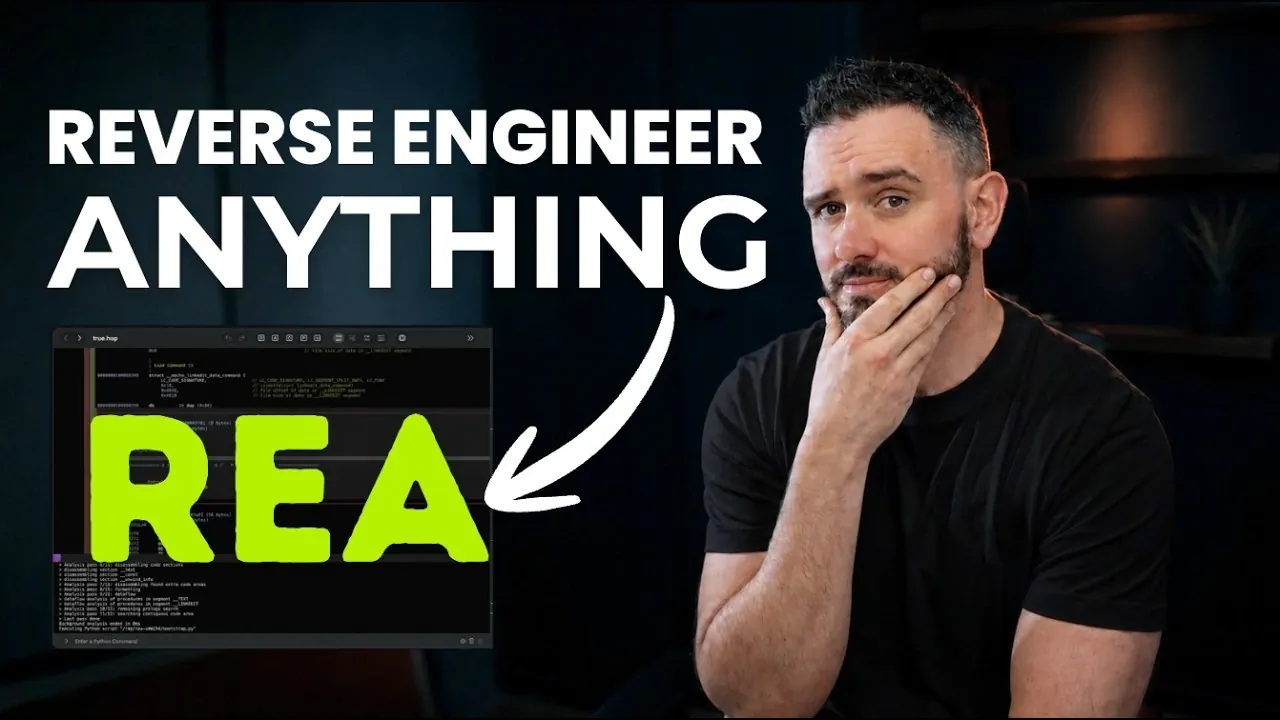
REA (Reverse Engineer Anything) has quickly become one of GitHub’s fastest-growing repositories. Designed to streamline reverse engineering, it combines frameworks like Ghidra and IDA Pro into a single command-line interface. According to Rob Shocks, REA enables users to dissect application logic, map system components and observe network activity, even without access to the original source code. While it offers practical uses such as security assessments and code recovery, its rapid adoption also highlights ethical concerns surrounding reverse engineering practices.
Explore REA’s core functionalities, including generating pseudo code and interpreting assembly instructions and understand how these features can be applied in practical scenarios. Learn about essential safeguards, such as sandboxing techniques and secure setups, to minimize risks during use. Gain insight into the legal and ethical considerations that come with employing reverse engineering methods responsibly.
What is REA and How Does It Work?
TL;DR Key Takeaways :
- REA simplifies reverse engineering by integrating advanced tools like Ghidra, Hopper and IDA Pro into a unified framework, allowing tasks such as pseudo code generation, assembly analysis and network activity monitoring.
- Key use cases include security audits, code recovery and learning how specific software features are implemented, making it valuable for developers and cybersecurity professionals.
- While REA does not recover original source code, it reconstructs application logic and behavior, emphasizing the importance of setting realistic expectations for its capabilities.
- Legal and ethical concerns arise from potential misuse, such as replicating competitors’ products or bypassing DRM protections, highlighting the need for responsible use and adherence to intellectual property laws.
- REA’s rise challenges developers to focus on secure data handling, server-side functionality and delivering unique user experiences to maintain a competitive edge in an era of accessible reverse engineering tools.
REA is designed to streamline the traditionally intricate process of reverse engineering by consolidating multiple tools into a single, accessible interface. This tool enables users to perform a variety of tasks, including:
- Generating pseudo code: Understand the underlying logic of applications without original source code.
- Analyzing assembly instructions: Gain deeper insights into how an application operates at a low level.
- Mapping application modules: Trace call paths and understand the relationships between different components.
- Monitoring network activity: Evaluate communication protocols and identify potential vulnerabilities.
By using established tools such as Ghidra, Hopper and IDA Pro, REA combines their functionalities into a command-line interface that caters to users with varying levels of expertise. For example, if you are conducting a security audit, REA can help identify weaknesses in an application’s logic or network communication. Similarly, if you have lost access to the source code of a personal project, REA can assist in reconstructing its functionality.
It is important to recognize the tool’s limitations. REA does not recover the original source code but instead reconstructs the logic and behavior of an application. This distinction is critical for setting realistic expectations and understanding the scope of its capabilities.
Key Applications and Use Cases
The versatility of REA makes it a valuable resource across a range of fields. Some of its most common applications include:
- Learning and Research: Developers can study how specific features, such as encryption mechanisms or offline synchronization, are implemented in software.
- Security Audits: Organizations can analyze third-party software for vulnerabilities, making sure compliance with internal security standards.
- Code Recovery: Developers who have lost access to their own source code can reconstruct application functionality for continued use or further development.
Despite its benefits, REA’s capabilities also come with inherent risks. Misusing the tool to replicate competitors’ products or bypass digital rights management (DRM) protections can lead to significant legal and ethical violations. Understanding these boundaries is essential for making sure responsible use.

Uncover more insights about AI GitHub in previous articles we have written.
- Apple Trade Secret Lawsuit Hits OpenAI Ahead of ChatGPT 6 Release
- Apple Sues OpenAI Over 400 Allegedly Poached Engineers
- OpenAI Hardware Roadmap Leaks: Speaker, AI Phone, and Smart Glasses in Development
- Meet the Codex Micro: OpenAI’s Physical Keyboard for Coders $230
Legal and Security Challenges
While REA offers substantial advantages, its use is not without controversy. Reverse engineering often conflicts with intellectual property laws and application terms of service. For instance, analyzing a competitor’s software to replicate its features, even for educational purposes, could result in legal repercussions.
From a security standpoint, running REA on untrusted binaries introduces potential risks. Malicious code embedded within the analyzed application could compromise your system. To mitigate these risks, it is essential to adopt the following precautions:
- Use sandboxing techniques: Isolate the reverse engineering process to prevent potential threats from affecting your primary system.
- Secure your environment: Ensure that the system used for reverse engineering is separate from critical infrastructure.
- Keep tools updated: Regularly update REA and its associated tools to protect against known vulnerabilities.
These measures are crucial for safely exploring REA’s capabilities while minimizing exposure to security threats.
Implications for Developers and the Industry
The rise of REA represents a significant shift in the software development landscape. By lowering the technical barriers to reverse engineering, the tool compels developers to rethink how they protect intellectual property. Traditional methods such as code obfuscation or proprietary algorithms are becoming less effective. Instead, developers should focus on delivering unique value through:
- Enhanced data security: Implement robust encryption and secure data handling practices.
- Optimized user experiences: Create intuitive, feature-rich applications that are difficult to replicate.
- Server-side functionality: Minimize reliance on client-side code by shifting critical processes to secure server environments.
For example, if your application relies on a proprietary algorithm, consider whether its true value lies in the algorithm itself or in the data it processes. By prioritizing secure data handling and delivering exceptional user experiences, you can maintain a competitive edge even in an environment where reverse engineering tools are increasingly accessible.
Best Practices for Responsible Use
Using REA responsibly is essential to avoid legal and ethical pitfalls. To ensure compliance and ethical use, consider the following recommendations:
- Restrict usage to authorized activities: Limit REA’s use to security testing, educational purposes, or recovering your own projects.
- Avoid unethical practices: Do not use REA to clone or replicate competitors’ products, as this violates ethical standards and could result in legal consequences.
- Stay informed: Keep up with updates to REA and its evolving capabilities to ensure proper use.
- Seek legal advice: Consult legal experts if you are uncertain about the implications of using REA in specific scenarios.
By adhering to these guidelines, you can use REA’s powerful features while maintaining compliance with legal and ethical standards.
The Broader Impact on Software Development
The emergence of REA underscores both opportunities and challenges for the software industry. On one hand, it enables developers to explore innovative modifications, optimize performance and enhance existing software. On the other hand, it highlights the need for a shift in focus, from protecting code to delivering secure, data-driven solutions and exceptional user experiences.
As reverse engineering tools like REA become more accessible, developers must prioritize creativity, security and user-centric design. These elements will be critical for maintaining a competitive edge in an increasingly transparent and interconnected software ecosystem. By embracing these priorities, the industry can adapt to the evolving landscape while fostering innovation and trust.
Media Credit: Rob Shocks
Disclosure: Some of our articles include affiliate links. If you buy something through one of these links, Geeky Gadgets may earn an affiliate commission. Learn about our Disclosure Policy.
