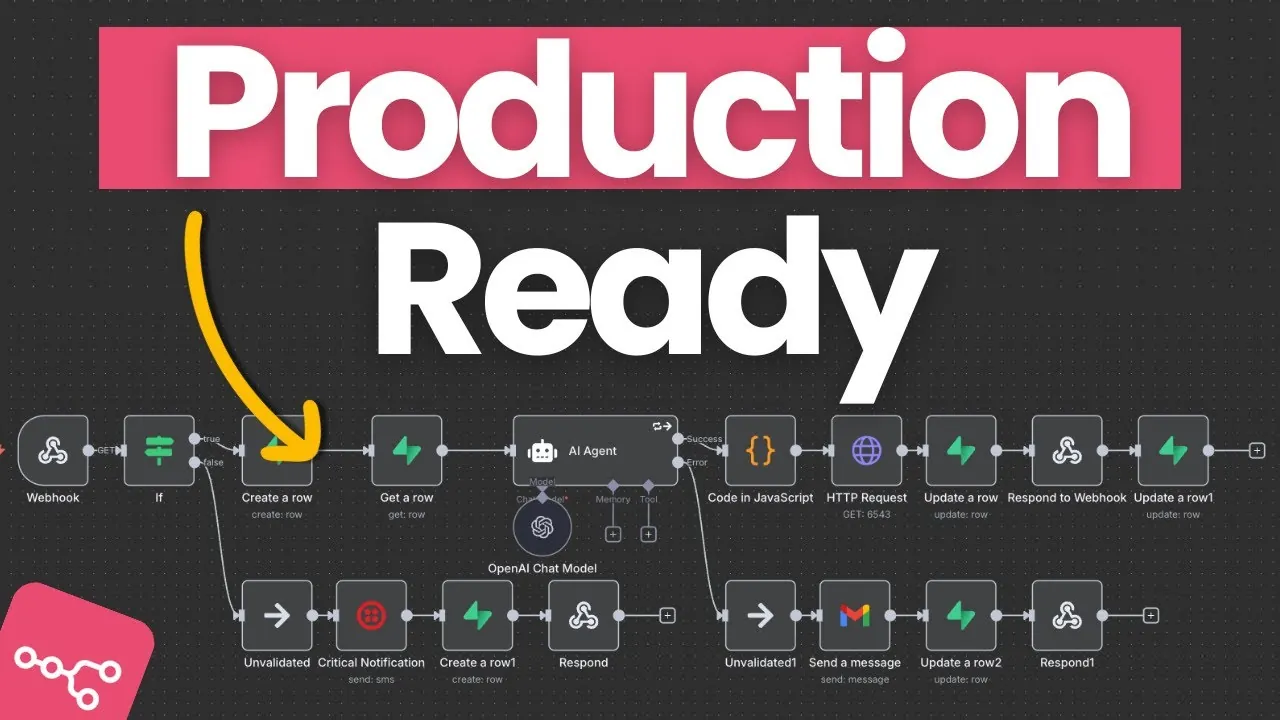
Imagine this: your automated workflow crashes in the middle of a critical operation, leaving your team scrambling to recover lost data and repair the damage. Sound familiar? Building workflows that are truly production-ready is no small feat, it’s a challenge that demands more than just functionality. It requires resilience, scalability, and a meticulous focus on security. With tools like n8n, the possibilities for automation are vast, but the stakes are equally high. A poorly designed workflow can lead to inefficiencies, errors, and even compliance risks. That’s where this instructional feature comes in: to bridge the gap between basic automation and systems that deliver consistent, reliable results under real-world conditions.
In this guide, Bart Slodyczka shares a wealth of actionable insights to help you master the art of building production-ready n8n workflows. You’ll uncover strategies for error handling, learn how to implement robust observability practices, and explore techniques for optimizing performance at scale. Whether you’re looking to secure sensitive data, streamline complex processes, or ensure your workflows can handle unexpected failures, this guide has you covered. By the end, you’ll not only understand the principles behind resilient workflows but also gain the confidence to apply them effectively in your own automation systems. Because in the world of automation, success isn’t just about making things work, it’s about making them last.
Production-Ready AI Workflows
TL;DR Key Takeaways :
- Reliability and Resilience: Implement robust error-handling, retry mechanisms, and avoid duplicate data processing to ensure workflows handle failures gracefully and maintain system integrity.
- Observability: Use comprehensive logging, relational databases, and dashboards to monitor, debug, and optimize workflows effectively.
- Security and Compliance: Secure webhooks with authentication and encryption, validate incoming data, and adhere to compliance standards like GDPR or HIPAA to protect sensitive information.
- Scalability and Performance: Optimize workflows by eliminating redundancies, using parallel processing, and planning for cloud or self-hosted scalability to handle growing data volumes efficiently.
- Maintainability and Testing: Use version control, separate environments for development/testing/production, and automated testing tools to ensure workflows remain reliable, organized, and adaptable over time.
Reliability and Resilience
Reliability forms the backbone of any production-ready workflow. To achieve this, it is crucial to implement robust error-handling mechanisms. For example, when a workflow encounters an issue, it should fail gracefully by logging errors and notifying relevant stakeholders without disrupting other processes. This ensures that problems are addressed promptly while maintaining the integrity of the system.
Another key aspect of resilience is the use of retry mechanisms. Configuring retries allows workflows to recover from transient failures, such as network interruptions or temporary API outages. This approach reduces the risk of data loss and ensures that workflows complete successfully, even under challenging conditions. Additionally, workflows should be designed to avoid duplicate data processing, which can lead to inconsistencies and inefficiencies.
Observability
Observability is critical for monitoring, debugging, and optimizing workflows. A well-designed observability strategy includes comprehensive logging to capture detailed records of workflow events, such as successes, failures, and execution times. These logs provide valuable insights into system performance and help identify bottlenecks or recurring issues.
Relational databases play a pivotal role in organizing and tracking workflow data. By storing execution details, such as input and output parameters, in a structured format, you can retrieve and analyze data efficiently. Additionally, dashboards can be used to visualize performance metrics, offering a clear overview of trends, anomalies, and potential areas for improvement.
Building Production Ready n8n Workflows
Master AI workflows with the help of our in-depth articles and helpful guides.
- How MCP and Gemini CLI Enhance AI Workflow Efficiency
- 3-Step AI Vibe Coding Workflow for Solo Founders to Build Faster
- Meet Your New AI n8n Workflow Assistant That Builds Workflows
- AI Workflow Automation with n8n : A Beginner-Friendly Guide
- Creating Viral Videos with AI Tools Like Nano Banana in 2025
- How to Use Claude AI to Copy & Replicate n8n Workflows Instantly
- MS Excel Copilot : New AI Workflow Automations or Easier Data
- How to Build AI Automation Agents Without Coding Skills
- How to Build Custom AI Agents to Automate Your Workflow
- How to Use AI to Optimize Your iOS Development Workflow
Security and Compliance
Security is a top priority, particularly when workflows handle sensitive or confidential data. To safeguard workflows, it is essential to secure webhooks with authentication and encryption. This prevents unauthorized access and ensures that only trusted sources can trigger workflows. Similarly, implementing server security measures, such as firewalls, regular updates, and access controls, helps protect your infrastructure from external threats.
Data validation is another critical practice for maintaining security and compliance. By verifying incoming data, you can prevent malicious inputs from compromising your workflows. This ensures that only authorized and properly formatted data is processed, reducing vulnerabilities and minimizing errors. Adhering to compliance standards, such as GDPR or HIPAA, further strengthens your workflows’ security posture and builds trust with users.
Scalability and Performance
As workflows grow in complexity and handle larger volumes of data, scalability becomes a key consideration. Optimizing workflows for performance involves several strategies, including:
- Eliminating unnecessary steps to streamline processes.
- Reusing components across workflows to reduce redundancy.
- Using parallel processing to handle multiple tasks simultaneously.
Whether you choose to deploy n8n on a cloud platform or self-host it, scalability should remain a priority. Cloud hosting offers dynamic scaling capabilities, allowing resources to adjust automatically based on demand. On the other hand, self-hosted setups provide greater control and customization, allowing you to fine-tune performance for specific use cases. Both approaches require careful planning to ensure workflows remain responsive under heavy loads.
Maintainability
Maintaining workflows over time requires a proactive and structured approach. Using version control systems, such as Git, allows you to track changes, collaborate with team members, and roll back to previous versions if needed. This ensures that workflows remain organized and manageable as they evolve.
Establishing separate environments for development, testing, and production is another best practice. This separation allows you to test changes in a controlled environment before deploying them to production, reducing the risk of errors. Additionally, regular backups of workflows and related data are essential for minimizing downtime and recovering quickly from failures or data loss.
Testing and Quality Assurance
Thorough testing is a cornerstone of building production-ready workflows. Validating workflows in controlled environments helps identify errors and ensures they function as intended. One effective technique is failure simulation, which involves testing workflows under adverse conditions, such as API outages or invalid data inputs. This approach verifies that workflows can handle unexpected scenarios gracefully.
Automated testing tools can further enhance quality assurance by running predefined tests consistently and efficiently. These tools help ensure that workflows meet performance standards and remain reliable as they scale or undergo updates.
Database Management
Efficient database management is essential for enhancing workflow performance and reliability. Relational databases provide a structured way to store and retrieve data, making them ideal for tracking workflow executions and outcomes. Organizing data effectively improves query performance and simplifies reporting, allowing you to gain actionable insights.
Logging workflow executions in a database supports long-term analysis. For instance, you can generate reports on success rates or identify patterns in failure occurrences. This data can guide future optimizations, helping you refine workflows and improve overall system performance.
Workflow Optimization
Optimizing workflows involves breaking them into smaller, modular components. This approach improves organization, simplifies troubleshooting, and makes updates more manageable. Modular components can also be reused across multiple workflows, enhancing efficiency and reducing development time.
Retries and error paths are additional optimization techniques. For example, if an API call fails, a retry mechanism can attempt the call again after a short delay, increasing the likelihood of success. These features ensure that workflows remain operational even when encountering issues, contributing to overall system resilience.
Building for the Future
Creating production-ready workflows in n8n requires a balanced approach that prioritizes reliability, security, scalability, and maintainability. By implementing best practices such as error handling, logging, and data validation, you can design workflows that are robust, efficient, and adaptable to evolving requirements.
Focusing on observability, testing, and optimization ensures that workflows remain effective as they scale or face new challenges. By addressing these principles incrementally, you can develop systems that not only meet current needs but also grow seamlessly to accommodate future demands. This structured approach enables you to build workflows that deliver consistent value and support long-term success.
Media Credit: Bart Slodyczka
Disclosure: Some of our articles include affiliate links. If you buy something through one of these links, Geeky Gadgets may earn an affiliate commission. Learn about our Disclosure Policy.
