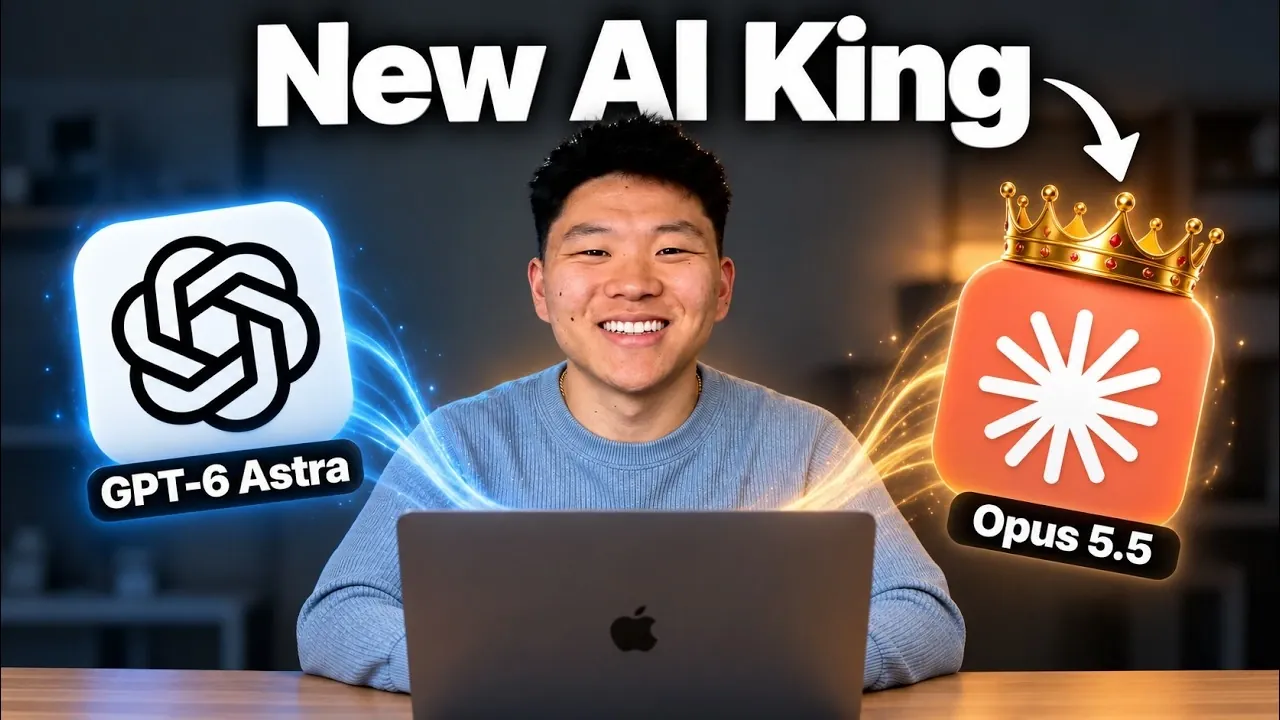
When it comes to selecting the right AI model for your needs, understanding how different systems perform across real-world scenarios is essential. In a recent deep dive by Nate Herk, Opus 5.5 and GPT-6 Astra were put to the test across 12 diverse use cases, ranging from website design to coding challenges. For example, Opus 5.5 excelled in creative tasks like generating polished investor decks and visually appealing web layouts, while GPT-6 Astra demonstrated superior speed and cost efficiency in structured outputs such as analytics dashboards. These comparisons revealed not only the strengths of each model but also the trade-offs that come with prioritizing creativity over efficiency or vice versa.
Explore how these models performed in key areas like multimedia content creation, 3D game design and immersive trip planning. You’ll gain insights into which model is best suited for tasks requiring high-quality storytelling versus those demanding rapid, budget-conscious execution. Additionally, the analysis breaks down critical metrics such as runtime and cost, offering practical takeaways to help you align your AI choice with specific project demands. Whether you prioritize innovation or practicality, this breakdown provides a clear framework for making an informed decision.
Use Cases: A Comprehensive Test of Capabilities
TL;DR Key Takeaways :
- Opus 5.5 excels in creativity, storytelling and high-quality design outputs, making it ideal for design-intensive tasks, but it is slower and more expensive.
- GPT-6 Astra prioritizes speed, cost efficiency and structured task execution, making it suitable for practical applications with tight deadlines or budgets.
- Opus 5.5 outperformed GPT-6 Astra in 8 out of 12 experiments, particularly in creative and design-heavy tasks, while Astra dominated in speed and cost efficiency for technical tasks.
- GPT-6 Astra was 45% faster and 38% cheaper overall, despite its higher cost per API call, while Opus 5.5 focused on delivering polished and innovative outputs.
- User feedback highlighted Opus 5.5 as a “wise old owl” for thoughtful outputs and GPT-6 Astra as an “obedient worker” for efficient, goal-oriented execution, emphasizing the importance of aligning model choice with project priorities.
To evaluate the versatility and performance of Opus 5.5 and GPT-6 Astra, we tested them on a diverse range of applications. These use cases were carefully selected to assess both creative and technical capabilities, making sure a balanced and thorough evaluation. The tasks included:
- Website creation and design: Testing the ability to generate visually appealing and functional web layouts.
- Video editing and Instagram reel generation: Assessing creativity and precision in multimedia content creation.
- Trip itinerary planning with 3D immersive experiences: Evaluating the integration of creativity and technical execution.
- Professional deliverables: Creating investor decks and financial reports to test structured output quality.
- 3D playable games and educational worlds: Measuring innovation and interactivity in game design.
- Browser-based tasks: Performing activities like drawing and carousel creation to test adaptability.
- Coding challenges and technical problem-solving: Analyzing the ability to handle complex programming tasks.
These varied scenarios provided a robust framework for comparing the models, highlighting their strengths and limitations in both creative and technical domains.
Performance Metrics: Creativity, Speed and Cost Efficiency
The evaluation focused on four key performance metrics: creativity, speed, cost efficiency and output quality. Each model demonstrated unique strengths and weaknesses, making them suitable for different types of projects.
Opus 5.5
- Strengths: Delivered exceptional creativity, polished storytelling and high-quality design outputs.
- Weaknesses: Slower execution times and higher costs for certain tasks.
- Total runtime: Approximately 11 hours for all tasks.
- Total cost: $214, reflecting its premium focus on quality.
GPT-6 Astra
- Strengths: Excelled in speed, cost efficiency and pragmatic task execution.
- Weaknesses: Outputs occasionally lacked the polish and creativity seen in Opus 5.5.
- Total runtime: Approximately 6 hours, significantly faster than Opus 5.5.
- Total cost: $132, making it a more budget-friendly option.
Opus 5.5 proved to be the superior choice for creative and design-intensive tasks, while GPT-6 Astra stood out for its efficiency and cost-effectiveness, making it ideal for projects with tight deadlines or budget constraints.

Here are more detailed guides and articles that you may find helpful on Claude Opus.
- New Claude Opus 5 Leaks Detail High Reasoning Mode Features
- Leaked Anthropic Opus 5 AI Model Could Rival Fable 5 in Game Design
- Claude Opus 5 is Poised to Challenge GPT-5.6 in Token Efficiency
- Anthropic Opus 5 Achieves 42/42 on 2026 Math Olympiad Tasks
- Claude Opus 5 Beats Claude Fable 5 in Frontier Bench Tests
- New Claude Opus 5 vs ChatGPT 5.6 Sol: Benchmarks, Pricing and Token Cost Compared
- Anthropic Claude Opus 5 Beats ChatGPT 5.6 Sol in ARC AGI 3
- New Claude Opus 5.5 Outperforms ChatGPT 6 Astra in Reasoning
- Claude Opus 5 Delivers Fable 5 Performance at 50% the Cost
- Anthropic Reportedly Delays Claude Fable 5.1
Key Findings: Strengths, Trade-Offs and Insights
The head-to-head comparison revealed several critical insights into the models’ performance:
- Speed and cost: GPT-6 Astra was 45% faster and 38% cheaper overall, despite its higher cost per API call.
- Creative output: Opus 5.5 consistently delivered superior quality in storytelling, design and other creative tasks.
- Technical tasks: Astra excelled in structured and technical tasks, such as coding challenges and analytics dashboards.
- Versatility: Both models handled technical problem-solving effectively, but Astra’s cost efficiency gave it an edge in practical applications.
These findings emphasize the importance of aligning your choice of AI model with the specific demands of your project, whether it’s creativity, speed, or cost efficiency.
User Impressions: Practical Applications and Preferences
Beyond the objective metrics, user feedback provided valuable context on how each model performed in real-world scenarios:
- Opus 5.5: Users described it as a “wise old owl,” capable of delivering thoughtful, polished outputs with a focus on creativity and design.
- GPT-6 Astra: Users likened it to an “obedient worker,” prioritizing speed and goal-oriented execution over aesthetic refinement.
- Trade-offs: While Astra’s outputs were efficient, they occasionally lacked the polish seen in Opus 5.5, reflecting a trade-off for its improved speed and cost-effectiveness.
These subjective impressions highlight how user preferences and project priorities can influence the perceived value of each model.
Experiment Results: Head-to-Head Outcomes
The results of the 12 experiments conducted provided a clear picture of each model’s strengths:
- Opus 5.5: Won 8 experiments, excelling in creative and design-heavy tasks where quality and innovation were paramount.
- GPT-6 Astra: Won 4 experiments, dominating in speed, cost efficiency and structured outputs where practicality was key.
These outcomes underscore the importance of selecting the AI model that best aligns with the specific requirements and goals of your project.
Making the Right Choice for Your Needs
Both Opus 5.5 and GPT-6 Astra are powerful AI models, but their strengths cater to different priorities. Understanding these differences is crucial for making an informed decision:
- Choose Opus 5.5: If your focus is on creativity, storytelling and delivering high-quality design outputs.
- Choose GPT-6 Astra: If speed, cost efficiency and structured task execution are your primary concerns.
By carefully evaluating the unique strengths and trade-offs of each model, you can select the AI solution that maximizes the value of your investment and meets the specific demands of your project.
Media Credit: Nate Herk | AI Automation
Disclosure: Some of our articles include affiliate links. If you buy something through one of these links, Geeky Gadgets may earn an affiliate commission. Learn about our Disclosure Policy.
