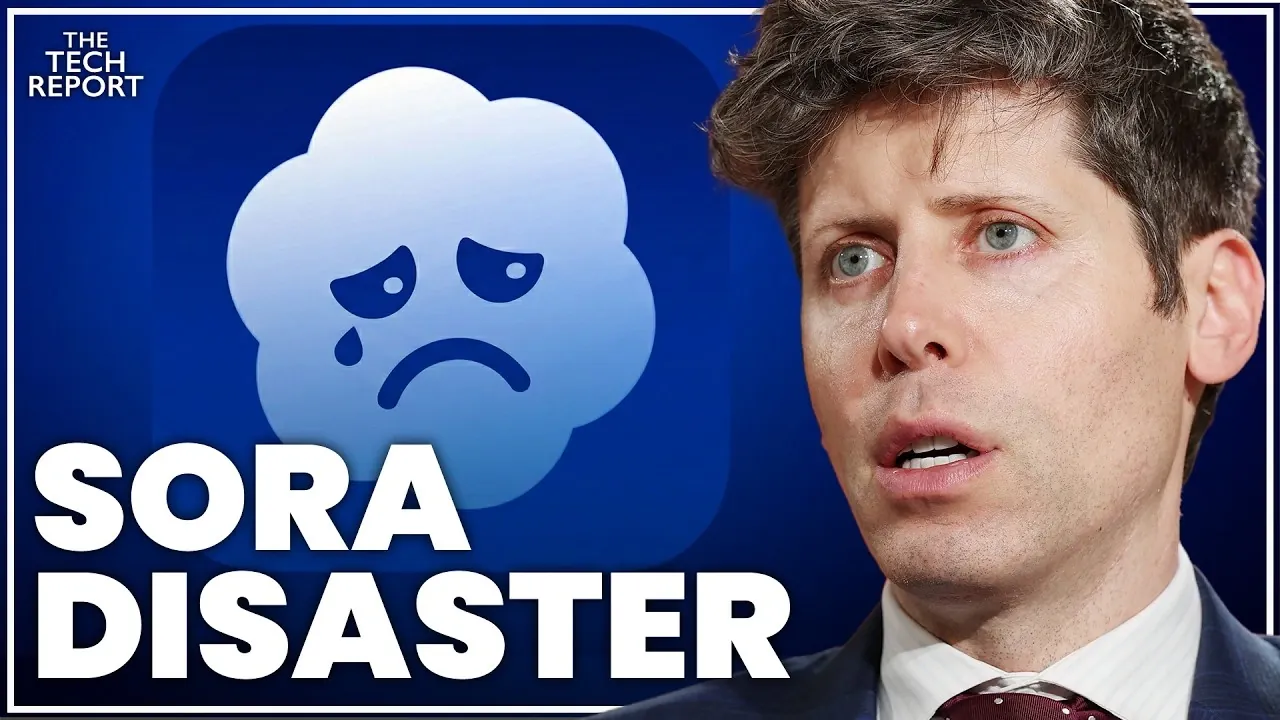
OpenAI’s pivot toward the enterprise market signals a major shift in its strategy as it prepares for an IPO later this year. Once known for its consumer-facing innovations like ChatGPT, the company is now prioritizing industries such as finance, healthcare and logistics to establish a more sustainable business model. In a recent conversation with The Tech Overview, Natasha Bernal highlighted how this transition involves significant operational changes, including the discontinuation of projects like Sora, a video-generating app developed with Disney. The closure of Sora, driven by high costs and low adoption, underscores OpenAI’s focus on scalability and profitability as it repositions itself in the competitive corporate AI landscape.
This discussion provide more insights into the complexities of OpenAI’s enterprise shift, offering insights into its workforce expansion plans, the introduction of ads in ChatGPT and the challenges of balancing consumer expectations with corporate demands. You’ll gain a clearer understanding of how OpenAI is navigating rising competition from established players like Google and Microsoft, while also grappling with the risks of alienating its loyal user base. By exploring these dynamics, the conversation sheds light on the broader implications of OpenAI’s evolving strategy and what it means for the future of AI-driven innovation.
IPO Preparation: Streamlining Operations for Scalability
TL;DR Key Takeaways :
- OpenAI is shifting its focus from consumer-facing tools to enterprise AI solutions, targeting industries like finance, healthcare and logistics to drive efficiency and innovation.
- In preparation for its IPO, OpenAI is restructuring operations, discontinuing underperforming projects like the Sora app and prioritizing profitability and scalability.
- The company plans to double its workforce to 8,000 employees, focusing on engineering, research, product development and sales to support its enterprise ambitions.
- OpenAI has introduced ads in ChatGPT for free-tier users as part of its financial strategy, sparking mixed reactions and raising concerns about balancing monetization with user satisfaction.
- OpenAI faces intense competition from established players like Google and Microsoft in the corporate AI market, requiring continuous innovation, strategic partnerships and a focus on unique value propositions to differentiate itself.
In preparation for its IPO, OpenAI is taking deliberate steps to enhance its appeal to potential investors. Central to this effort is the restructuring of its operations to prioritize profitability and scalability. A notable example of this strategy is the recent discontinuation of Sora, a video-generating app developed in collaboration with Disney. Despite its innovative premise, Sora faced challenges such as low user adoption and high operational costs, leading to its closure. By reallocating resources from underperforming projects like Sora, OpenAI aims to focus on initiatives that align more closely with its enterprise-focused strategy. This approach underscores the company’s commitment to optimizing its operations and making sure long-term growth potential.
Enterprise AI Solutions: A Strategic Pivot
OpenAI’s shift toward the enterprise market marks a significant departure from its consumer-centric roots. The company is now targeting industries such as finance, healthcare, and logistics, where AI has the potential to drive efficiency, innovation and cost savings. To compete with established players like Google, Microsoft and Anthropic, OpenAI is developing tailored AI tools designed to meet the specific needs of corporate clients. This includes creating solutions that address challenges such as data analysis, predictive modeling and process automation.
To support this strategic pivot, OpenAI is expanding its sales and engineering teams, making sure it has the expertise required to deliver customized solutions for enterprise customers. By positioning itself as a key player in the corporate AI sector, OpenAI aims to capitalize on the growing demand for AI-driven technologies that can transform business operations.

Uncover more insights about OpenAI in previous articles we have written.
- OpenAI Gumdrop Pen, Local AI, Voice and Handwriting Capture
- ChatGPT 5.3 Codex vs Claude Opus 4.6 : Best Fit for Coding, Tasks & More
- OpenClaw & OpenAI : Key Security Issues, Token Usage and Next Steps
- OpenAI Dime Leak: What the Ad Showed and Why OpenAI Denied It
- Will OpenClaw Stay Open Source After OpenAI Integrates the Platform?
- ChatGPT 5.4 Pro vs Gemini 3.1 vs Claude Opus 4.6 on Reasoning Tests
- Microsoft vs OpenAI : Azure Hosting Dispute & AWS Deal
- OpenAI Revenue Outlook for 2026 & the $8 ChatGPT Option
- Ad-Supported ChatGPT and the Real Cost to User Privacy Today
- OpenAI vs Anthropic : ChatGPT vs Claude : Dario Amodei vs Sam Altman
Monetizing ChatGPT: Ads for Free-Tier Users
As part of its broader financial strategy, OpenAI has begun testing advertisements in ChatGPT for free-tier users in the United States. This move represents a notable shift in the company’s approach, as CEO Sam Altman had previously expressed ethical concerns about incorporating ads into AI platforms. While advertising offers a critical opportunity to diversify revenue streams, the decision has sparked mixed reactions among users. Some have raised concerns about the potential impact on the overall user experience, emphasizing the challenge of balancing monetization with user satisfaction.
Despite these concerns, ads represent a necessary step in OpenAI’s efforts to achieve financial sustainability. The company is exploring partnerships with advertising technology firms to refine its approach and ensure that ads are both relevant and minimally intrusive. Success in this area will depend on OpenAI’s ability to align its advertising strategy with user expectations while maintaining the integrity of its platform.
Workforce Expansion: Scaling for Growth
To support its ambitious enterprise goals, OpenAI plans to double its workforce from 4,000 to 8,000 employees. This expansion will focus on key areas such as engineering, research, product development, and sales, allowing the company to accelerate innovation and enhance its competitive edge. By investing in top talent, OpenAI aims to strengthen its capabilities and better serve the needs of its growing client base.
However, rapid workforce expansion presents its own set of challenges. Maintaining organizational cohesion, making sure effective onboarding processes and fostering a strong company culture will be critical to the success of this initiative. OpenAI’s ability to manage these complexities will play a significant role in determining its capacity to scale effectively and meet the demands of its enterprise customers.
Rising Competition in the Corporate AI Market
OpenAI’s entry into the enterprise market places it in direct competition with established AI leaders such as Google, Microsoft and Anthropic. These companies have already built strong reputations in the corporate sector, offering advanced AI tools and services that are widely regarded for their reliability and scalability. To differentiate itself, OpenAI must demonstrate the unique value of its solutions, emphasizing features such as advanced natural language processing capabilities, seamless integration and robust data privacy measures.
Strategic partnerships will also play a crucial role in OpenAI’s efforts to carve out a competitive niche. By collaborating with industry leaders and using its expertise in AI research, the company can enhance its offerings and build credibility in the corporate market. Continuous innovation and a commitment to addressing the specific needs of enterprise clients will be essential for OpenAI to establish itself as a leader in this crowded and competitive space.
Consumer Backlash: Risks to Brand Loyalty
While the enterprise market offers significant growth potential, OpenAI’s shift in focus carries the risk of alienating its consumer base. Decisions such as introducing ads in ChatGPT and discontinuing consumer-facing projects like Sora have raised concerns among users who value the company’s accessibility and innovation. These changes have sparked fears that OpenAI may prioritize corporate interests at the expense of its loyal consumer audience.
Maintaining consumer trust will be vital as OpenAI navigates this transition. Transparent communication about the company’s goals and strategies, as well as a clear commitment to preserving the quality of its consumer offerings, will be key to mitigating backlash. Striking a balance between consumer and corporate priorities will require careful planning and a nuanced approach to decision-making.
Financial Sustainability: Challenges and Opportunities
OpenAI’s financial sustainability is under intense scrutiny as it seeks to justify its valuation and attract public investors. The company is exploring various revenue-generating strategies, including partnerships with advertising technology firms and the development of enterprise-focused solutions. However, early results have highlighted challenges such as low click-through rates for ads and user dissatisfaction with monetization efforts.
To succeed, OpenAI must develop a financial strategy that aligns with its core values while addressing the expectations of both consumers and investors. This includes balancing its commitment to research and development with the need to achieve profitability. By demonstrating its ability to generate sustainable revenue without compromising its mission, OpenAI can position itself as a reliable and innovative leader in the AI industry.
Balancing Consumer and Corporate Models
OpenAI’s transition to the enterprise market represents a delicate balancing act. While the corporate sector offers lucrative opportunities, the company must also address the needs and expectations of its consumer base. This dual focus requires a thoughtful and strategic approach to ensure that neither market is neglected.
By aligning its strategies with the evolving demands of both consumer and corporate audiences, OpenAI can position itself as a versatile and forward-thinking leader in the AI industry. Success in this endeavor will depend on the company’s ability to innovate, communicate effectively and maintain a clear vision for the future.
Media Credit: The Tech Overview
Disclosure: Some of our articles include affiliate links. If you buy something through one of these links, Geeky Gadgets may earn an affiliate commission. Learn about our Disclosure Policy.
