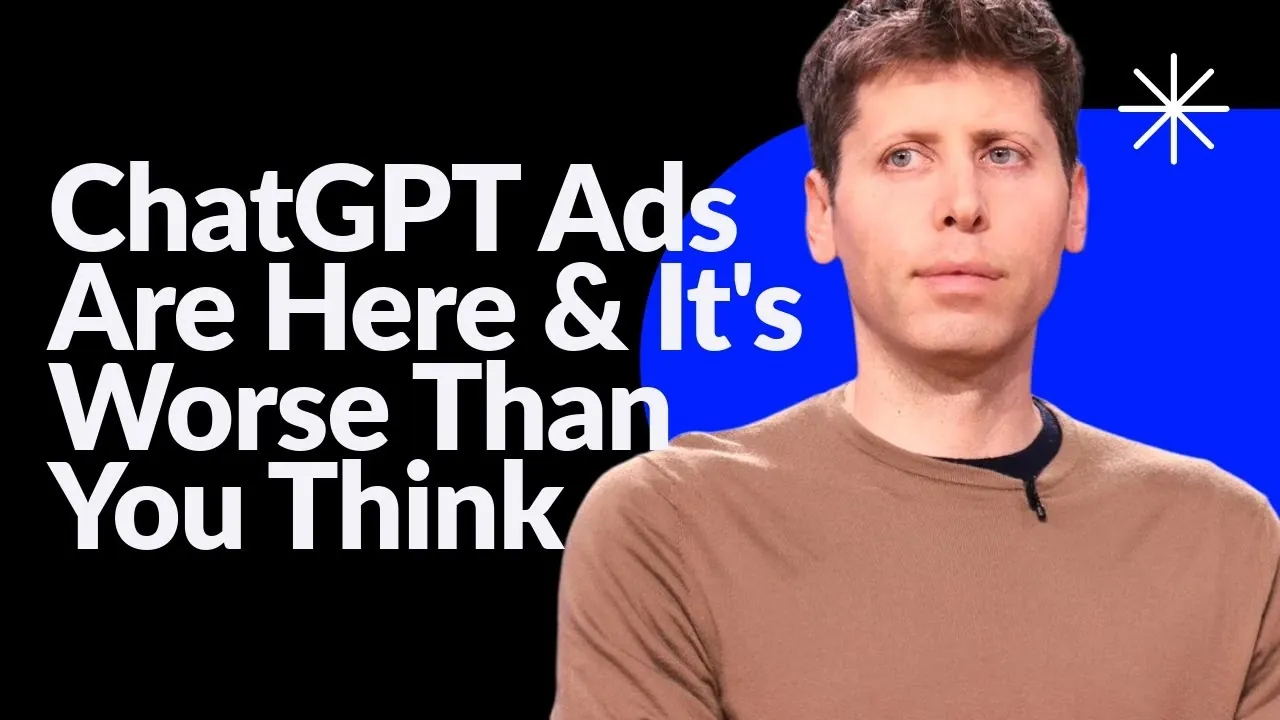
What happens when a platform you trust for private, intelligent conversations suddenly starts showing you ads? In this breakdown, Will Lamerton walks through how OpenAI’s decision to introduce advertisements into ChatGPT has sparked serious concerns about privacy, trust, and the ethical complexities of monetizing artificial intelligence. This shift marks a dramatic departure from earlier assurances by OpenAI’s leadership, who once described pairing ads with AI as a “last resort.” For users who rely on ChatGPT for everything from brainstorming ideas to sharing sensitive information, the implications of this change feel deeply personal, and potentially unsettling.
This overview provide more insights into the ripple effects of OpenAI’s ad-driven strategy, unpacking what this means for user data, transparency, and the future of AI ethics. You’ll discover why privacy advocates are sounding alarms over the potential for data tracking and whether assurances of non-intrusive advertising hold up under scrutiny. Could this move signal the beginning of a slippery slope toward more invasive practices? Or does it reflect the harsh financial realities of maintaining innovative AI systems? These questions aren’t just theoretical, they could redefine how we think about trust in AI.
ChatGPT Ads & Privacy
TL;DR Key Takeaways :
- OpenAI’s decision to introduce advertisements in ChatGPT has sparked concerns about privacy, trust, and ethical implications, marking a significant shift from earlier assurances by CEO Sam Altman.
- While OpenAI claims user conversations will not be shared with advertisers, critics worry about potential data tracking and the risks of processing sensitive or personal information.
- The move raises fears of “mission creep,” where ad-supported models could lead to more intrusive data practices, eroding user trust and loyalty.
- Sam Altman’s reversal on his earlier stance against ads in AI highlights the tension between ethical ideals and the financial demands of scaling advanced AI systems.
- The integration of ads into AI platforms underscores the urgent need for privacy-focused alternatives, stronger regulatory frameworks, and ethical accountability in the tech industry.
Understanding OpenAI’s Advertising Strategy
OpenAI has justified the inclusion of ads as a means to make AI more affordable and accessible to a broader audience. While the company has not provided detailed insights into how these ads will be implemented, it has assured users that their conversations will not be shared with advertisers. However, this reassurance has not fully alleviated concerns. Personalized advertising often relies on some form of data tracking, and for a platform like ChatGPT, where users frequently share sensitive or personal information, this raises significant questions about how data is collected, stored, and safeguarded.
The introduction of ads also reflects the financial pressures of maintaining and scaling advanced AI systems. While OpenAI’s goal of accessibility is commendable, critics argue that the potential trade-offs in user privacy and trust could outweigh the benefits. For many, the move signals a shift in priorities, prompting concerns about whether ethical considerations are being compromised in favor of revenue generation.
Privacy Risks and the Debate Over Data Tracking
The inclusion of advertisements in ChatGPT has intensified debates surrounding data privacy and the risks associated with targeted advertising. OpenAI has stated that users will retain control over data personalization, but privacy advocates remain skeptical. Targeted advertising inherently relies on data collection and analysis, and ChatGPT’s interactive nature often involves processing deeply personal queries. These interactions may inadvertently reveal private thoughts, preferences, or even confidential information, making the platform particularly vulnerable to potential misuse or unauthorized access.
Critics warn that even with safeguards in place, the introduction of ads could pave the way for more invasive data practices in the future. The lack of transparency about how data might be used or shared has further fueled concerns. Privacy experts emphasize that once advertising becomes a core part of a platform’s business model, the pressure to optimize ad performance often leads to increased data tracking and analysis, potentially compromising user trust.
Why ChatGPT Ads are a Massive Privacy Concern

Discover other guides from our vast content that could be of interest on ChatGPT.
- ChatGPT 5 vs Claude Sonnet: Real-World AI Coding Comparison
- How ChatGPT 5 Pro Solved a Decades-Old Math Problem
- AI Video Battle: Google Veo 3 vs. OpenAI Sora
- ChatGPT 5 Overview : Features, Benefits and Ethical Implications
- How ChatGPT 5 is Transforming Creative Writing and Storytelling
- Google Chrome vs ChatGPT Atlas : Which Browser Truly Delivers?
- New ChatGPT 5.1 AI Models : Instant & Thinking, Features & Release
- ChatGPT 5.2 vs Gemini 3 : Coding, Math, and Vision Results
- ChatGPT 5.1: How to Use Its New Features for Better Results
- ChatGPT Plus vs Claude Pro $20 Challenge
The Risk of Mission Creep
The concept of mission creep—where initial policies gradually expand into more intrusive practices, is a central concern in discussions about ChatGPT’s advertising model. Observers point to the history of other tech giants, where the pursuit of ad revenue has led to increasingly aggressive data collection and targeting strategies. This raises fears that OpenAI could follow a similar trajectory, especially as competition in the AI space intensifies.
For users who turned to ChatGPT for its perceived neutrality and privacy-first approach, this shift could erode trust and loyalty. The move also highlights the challenges of balancing ethical principles with the financial realities of developing and maintaining innovative AI systems. As OpenAI navigates this transition, it faces mounting pressure to demonstrate that its commitment to user privacy and ethical practices remains intact.
Sam Altman’s Evolving Stance on Advertising
Sam Altman’s earlier statements about the incompatibility of ads and AI have resurfaced in light of OpenAI’s decision to introduce advertisements. Previously, Altman described ad-supported AI as a “last resort,” emphasizing the unsettling nature of combining advertising with AI-driven technologies. This apparent reversal has sparked questions about OpenAI’s transparency and whether the introduction of ads was inevitable given the financial demands of scaling AI systems.
The shift also underscores the tension between ethical ideals and the practical challenges of sustaining innovation in the tech industry. While Altman’s earlier remarks resonated with users who valued ChatGPT’s ad-free experience, the decision to incorporate ads has prompted concerns about whether OpenAI’s long-term vision aligns with its original principles. This development serves as a reminder of the complex trade-offs involved in balancing accessibility, innovation, and ethical responsibility.
Broader Implications: Advertising, AI, and Surveillance
The integration of advertisements into ChatGPT highlights broader challenges at the intersection of AI, advertising, and user surveillance. Critics warn that combining AI with advertising could create new opportunities for government surveillance or corporate misuse, particularly if data collected for ad targeting is repurposed for other applications. These concerns are amplified by the absence of robust regulatory frameworks governing AI and data privacy, leaving users vulnerable to potential exploitation.
The move has reignited debates about the ethical responsibilities of AI developers and the urgent need for greater accountability in the tech industry. As AI technologies become increasingly integrated into daily life, the potential for misuse underscores the importance of establishing clear guidelines and safeguards to protect user privacy and prevent abuse.
Exploring Privacy-Focused Alternatives
In response to these developments, advocates for privacy-focused AI solutions are calling for the exploration of non-invasive technologies and self-sovereign AI platforms. These alternatives prioritize user control over data and aim to minimize reliance on traditional advertising models. By emphasizing transparency, ethical practices, and user empowerment, privacy-centric platforms offer a potential path forward for AI development that aligns with societal values and user expectations.
Privacy-focused AI solutions also highlight the potential for innovation without compromising trust. By adopting models that prioritize ethical considerations and user autonomy, developers can create technologies that address the growing demand for privacy-conscious alternatives. These efforts underscore the importance of fostering a tech ecosystem that values transparency, accountability, and respect for user rights.
Navigating the Future of AI Monetization
The introduction of advertisements to ChatGPT represents a pivotal moment in the evolution of AI monetization strategies. While OpenAI frames this decision as a step toward making AI more accessible, it has also raised significant concerns about privacy, trust, and the ethical implications of combining AI with advertising. As the debate continues, the need for privacy-conscious alternatives and stronger accountability in the tech industry has become increasingly urgent.
This development highlights the complex challenges at the intersection of technology, ethics, and user trust. As AI continues to evolve, striking a balance between innovation, accessibility, and ethical responsibility will be critical to making sure that these technologies serve the broader interests of society while respecting individual rights.
Media Credit: Will Lamerton
Disclosure: Some of our articles include affiliate links. If you buy something through one of these links, Geeky Gadgets may earn an affiliate commission. Learn about our Disclosure Policy.
