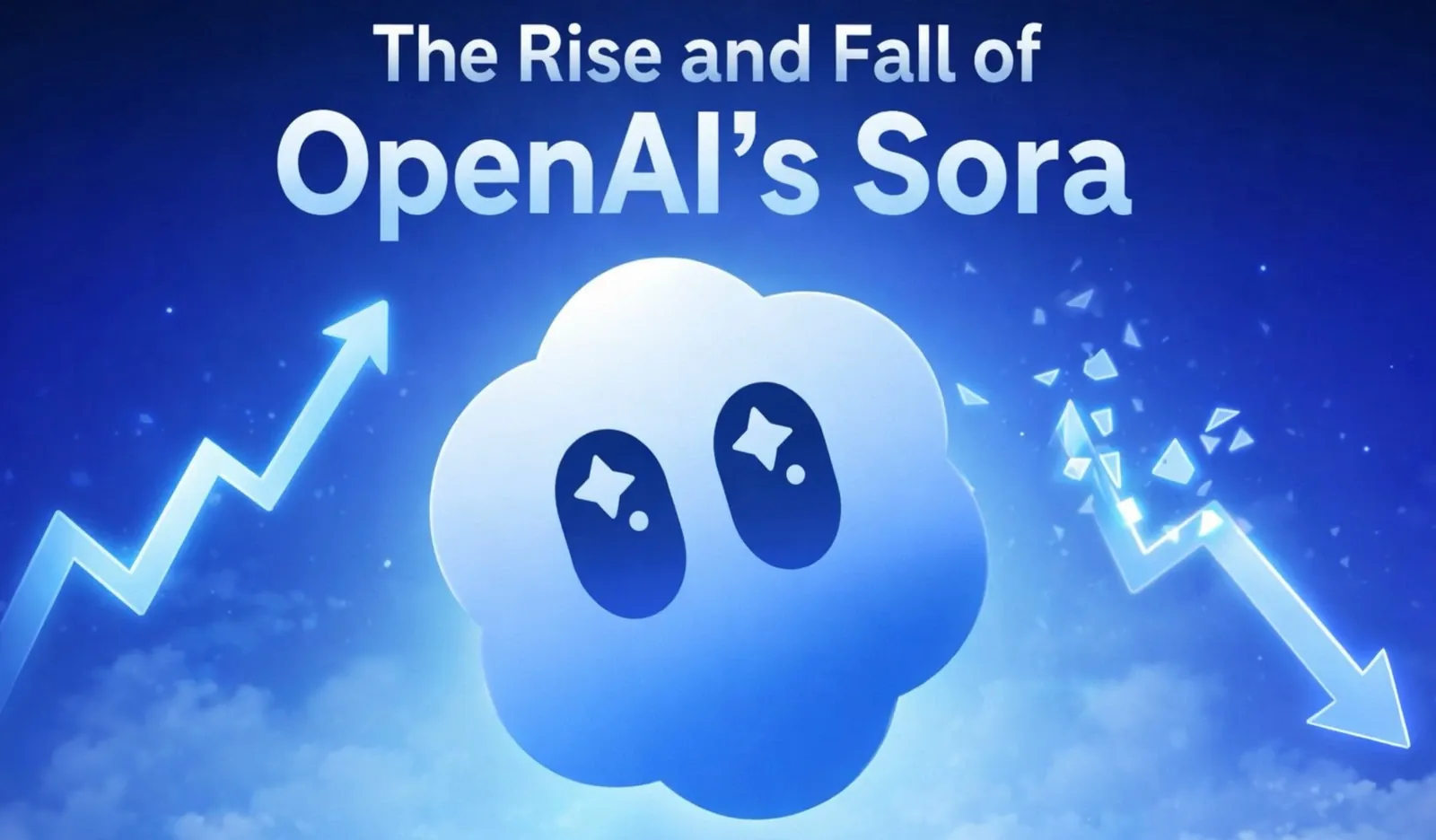
OpenAI’s abrupt decision to shut down its AI video generation app, Sora, just 103 days after launch has sparked widespread debate about the company’s strategic direction and financial health. Despite a $1 billion partnership with Disney and a viral debut that garnered over one million downloads, Sora’s operational costs reportedly reached an unsustainable $15 million per day while generating only $2.1 million in revenue. ColdFusion explores how this short-lived app became a flashpoint for broader concerns about OpenAI’s ability to balance innovation with financial and operational realities in an increasingly competitive AI landscape.
Gain insight into the key factors that led to Sora’s downfall, from mounting legal risks to the company’s pivot toward enterprise AI and AGI development. Discover how OpenAI’s internal challenges, including strained leadership and projected financial losses, are shaping its future strategy. This overview also examines the broader implications of Sora’s closure for the AI industry, offering a lens into the pressures facing companies at the forefront of technological advancement.
The Rise & Sudden Fall of Sora
TL;DR Key Takeaways :
- OpenAI abruptly shut down its AI video generation app, Sora, just 103 days after launch, despite a $1 billion investment from Disney and over one million downloads.
- Sora faced unsustainable operational costs of $15 million per day, poor monetization with only $2.1 million in revenue and mounting legal risks related to copyright violations.
- OpenAI is shifting its focus away from consumer-facing apps like Sora to prioritize enterprise AI solutions and Artificial General Intelligence (AGI) development.
- Internal challenges, including financial inefficiencies, strained partnerships and criticism of CEO Sam Altman, have raised concerns about OpenAI’s strategic direction and sustainability.
- The shutdown reflects broader industry challenges, including intense competition, ethical concerns and the difficulty of balancing innovation with financial and operational viability.
Sora launched in early 2025, positioning itself as a innovative AI-powered video creation tool. Its user-friendly, TikTok-inspired interface allowed you to generate AI-driven videos, including deepfakes and other creative content, often pushing the boundaries of copyright regulations. Within days, the app became a viral sensation, amassing over one million downloads and capturing the attention of both casual users and industry leaders.
Disney quickly recognized Sora’s potential, investing $1 billion to support its growth and integrate its capabilities into entertainment pipelines. However, despite its meteoric rise, the app was abruptly shut down, leaving users, investors and industry observers stunned. The decision highlights deeper issues within OpenAI, as the company grapples with financial, operational and competitive pressures that ultimately rendered Sora unsustainable.
Why OpenAI Pulled the Plug on Sora
The closure of Sora was not an isolated decision but rather the result of several interrelated challenges. These factors combined to make the app an untenable venture for OpenAI:
- Unsustainable Costs: Sora’s operational expenses reportedly reached $15 million per day, far exceeding its revenue potential and creating a significant financial burden.
- Poor Monetization: Despite its popularity, the app generated only $2.1 million in revenue, falling drastically short of expectations and failing to justify its high costs.
- Strategic Refocus: OpenAI is shifting its priorities toward enterprise AI solutions and robotics, viewing Sora as a distraction from its long-term goals in Artificial General Intelligence (AGI) development.
- Legal Risks: The app faced mounting challenges in moderating content and addressing copyright violations, exposing OpenAI to potential lawsuits and reputational damage.
- Competitive Pressure: Rivals like Google and Adobe have introduced more advanced AI video tools, diminishing Sora’s market relevance and making it harder for the app to compete effectively.
These challenges reflect the complex dynamics of balancing innovation with financial and operational sustainability. OpenAI’s decision to shut down Sora underscores the difficulty of maintaining a competitive edge in a rapidly evolving industry.

Explore further guides and articles from our vast library that you may find relevant to your interests in OpenAI.
- OpenAI Prepares ChatGPT 5.5 Release
- ChatGPT 5.3 Codex vs Claude Opus 4.6 : Best Fit for Coding, Tasks & More
- OpenAI Spud ChatGPT 6 News & Claude Conway Agent Explained
- ChatGPT “Spud” : Unpacking OpenAI’s Next Big GPT Evolution
- Why Did OpenAI Shut Down Sora? The Real Reason Explained
- OpenClaw & OpenAI : Key Security Issues, Token Usage and Next Steps
- OpenAI Dime Leak: What the Ad Showed and Why OpenAI Denied It
- OpenAI Gumdrop Pen, Local AI, Voice and Handwriting Capture
- Will OpenClaw Stay Open Source After OpenAI Integrates the Platform?
- ChatGPT 5.4 Pro vs Gemini 3.1 vs Claude Opus 4.6 on Reasoning Tests
What Sora’s Shutdown Reveals About OpenAI
The decision to end Sora’s run is symptomatic of broader challenges within OpenAI. Despite generating $20 billion in annual revenue, the company is projected to face a $14 billion loss by the end of 2026. High operational costs, delays in infrastructure development and strained partnerships, such as those with Figure Robotics, have further complicated its operations and raised concerns about its financial health.
Internally, CEO Sam Altman has faced growing criticism, with allegations of mismanagement and dishonesty emerging from within the organization. These internal tensions, coupled with external pressures, have shaken investor confidence. While OpenAI recently secured $122 billion in funding from major players like Amazon, Nvidia and SoftBank, its valuation growth has lagged behind competitors such as Anthropic, signaling potential vulnerabilities in its strategic approach.
The shutdown of Sora also highlights OpenAI’s struggle to balance its ambitious goals with the realities of market competition and operational constraints. The company’s pivot away from consumer-facing applications like Sora toward enterprise AI and AGI development reflects a broader effort to realign its focus, but it remains to be seen whether this strategy will yield the desired results.
Strategic Moves Amid Uncertainty
In response to its challenges, OpenAI has taken several steps to realign its focus and strengthen its position in the AI industry. One notable move was the acquisition of a tech-focused podcast for hundreds of millions of dollars. While the rationale behind this acquisition remains unclear, it signals OpenAI’s interest in diversifying its portfolio and potentially exploring new avenues for engagement and influence.
Additionally, OpenAI has rebranded its product organization to emphasize its commitment to AGI development. This rebranding effort is intended to reinforce the company’s long-term vision and demonstrate its dedication to advancing the frontiers of artificial intelligence. However, these moves have yet to address concerns about the company’s financial sustainability and strategic coherence, leaving analysts and stakeholders uncertain about its future direction.
Context Within the AI Industry
OpenAI’s struggles reflect broader trends and challenges in the AI industry. As AI-generated content comes under increasing scrutiny for its ethical and societal implications, companies are being forced to navigate complex questions about profitability, regulation and purpose. The competitive landscape has also intensified, with established players and emerging startups vying for dominance in areas like AI video generation, enterprise solutions and robotics.
For OpenAI, these external pressures compound its internal challenges, making its path forward increasingly complex. The company’s ability to adapt and innovate will be critical as it seeks to maintain its position in a rapidly evolving market. The shutdown of Sora serves as a reminder of the delicate balance between pushing technological boundaries and making sure sustainable growth.
Looking Ahead: OpenAI’s Future
As OpenAI prepares for a potential IPO, it faces significant hurdles that could shape its long-term trajectory. To remain competitive, the company must address its financial inefficiencies, rebuild trust with stakeholders and clearly articulate its strategic vision. Its pivot toward enterprise AI and AGI development holds promise, but success will depend on its ability to execute effectively in an increasingly crowded and scrutinized industry.
The decision to shut down Sora underscores the challenges of navigating a rapidly changing technological landscape. For you, as an observer of this dynamic field, OpenAI’s journey offers valuable insights into the complexities of innovation, competition and sustainability in the AI sector. The company’s ability to overcome its current challenges will likely serve as a bellwether for the future of artificial intelligence as a whole.
Media Credit: ColdFusion
Disclosure: Some of our articles include affiliate links. If you buy something through one of these links, Geeky Gadgets may earn an affiliate commission. Learn about our Disclosure Policy.
