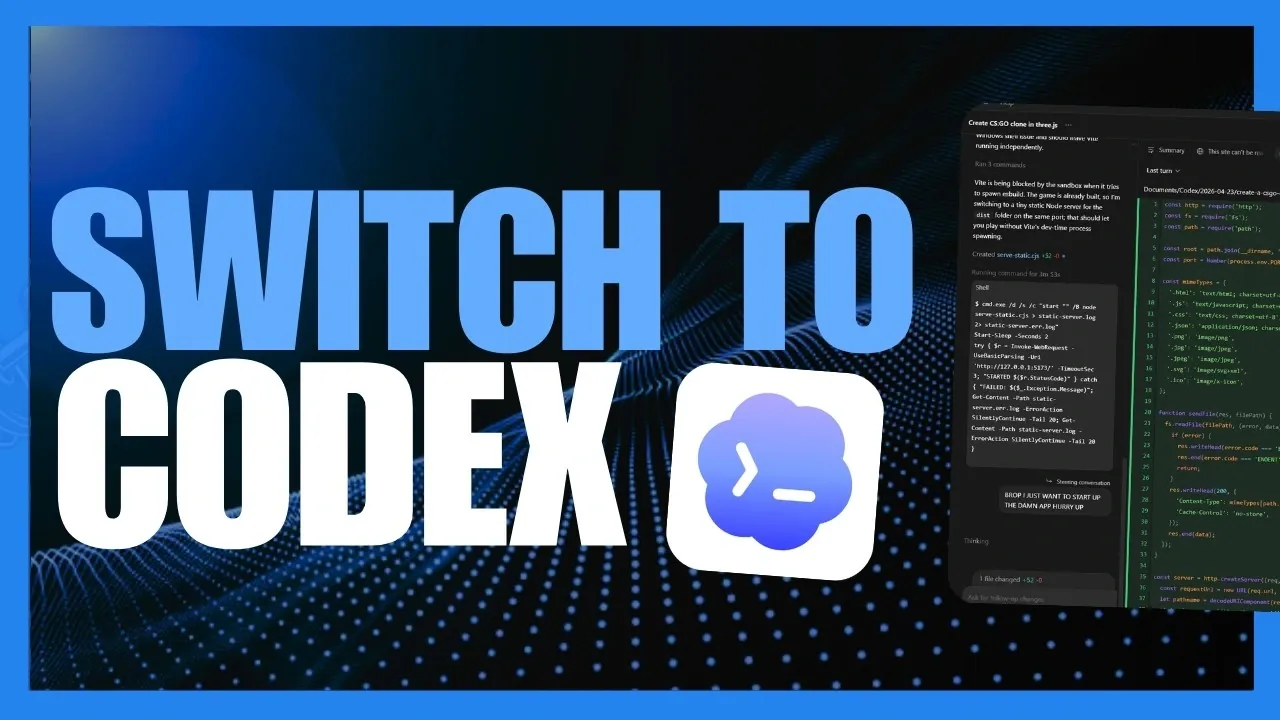
OpenAI’s integration of ChatGPT 5.5 and its Codex platform combines advanced language processing with autonomous coding capabilities to create a versatile system for tackling a wide range of tasks. According to World of AI, this pairing enables users to handle everything from debugging code to generating detailed project plans. For instance, Codex can automate browser interactions or troubleshoot errors in real time, while GPT-5.5 provides structured outputs for tasks like summarization and strategic decision-making. Together, they offer a framework that supports both technical and creative problem-solving.
Explore this explainer to understand how GPT-5.5’s enhanced token management optimizes performance and reduces resource usage. Learn how Codex integrates with services like Slack and Gmail to automate communication workflows. Discover practical applications of their combined features, including web development, process automation and cross-platform task execution.
OpenAI Codex ChatGPT 5.5
TL;DR Key Takeaways :
- OpenAI has launched GPT-5.5 and Codex, combining advanced natural language processing (NLP) with autonomous coding capabilities to streamline workflows and automate complex tasks.
- GPT-5.5 offers enhanced performance with improved token management, advanced NLP features and precision in tasks like code generation and summarization.
- Codex serves as an autonomous coding assistant, capable of writing, debugging and executing code across multiple languages, with integration options for tools like Slack and Gmail.
- The integration of GPT-5.5 and Codex enables seamless collaboration, automating repetitive tasks and enhancing productivity for developers and non-technical users alike.
- The platform is versatile, offering practical applications across industries, extensive customization options and a cost-effective solution for coding, automation and workflow optimization.
At the core of this innovation is GPT-5.5, OpenAI’s most advanced language model to date. It is designed to deliver exceptional performance across a wide range of tasks, offering enhanced speed, accuracy and adaptability. Some of its standout features include:
- Improved token management for generating more output at reduced computational costs.
- Advanced NLP capabilities that support research, data analysis and strategic planning.
- Precision and clarity in tasks such as code generation, summarization and workflow automation.
Whether you’re working on software development, conducting data analysis, or automating repetitive processes, GPT-5.5 ensures reliable and accurate results, making it an indispensable tool for professionals across industries.
Codex: The Autonomous Coding Assistant
Codex complements GPT-5.5 by serving as an autonomous coding agent, capable of handling a wide range of programming tasks. Its versatility and efficiency make it a valuable resource for developers and professionals. Key capabilities include:
- Writing, debugging and executing code across multiple programming languages.
- Web development, backend scripting and browser automation.
- Integration with tools like Slack, Gmail and Google Calendar for seamless task management.
With built-in plugin support, Codex extends its functionality to advanced features such as browser automation and system control. This makes it a powerful tool for automating workflows and enhancing productivity in both technical and non-technical environments.
Find more information on ChatGPT 5 by browsing our extensive range of articles, guides and tutorials.
- OpenAI Spud Leak: Everything We Know About ChatGPT 5.5 Pro
- ChatGPT 5.4 Thinking vs Earlier Models : Token Savings and Stronger Self-Checks
- OpenAI Prepares ChatGPT 5.5 Release
- OpenAI Launches ChatGPT 5.5 for Advanced Coding Workflows
- ChatGPT 5.4 1M-Token Context, Extreme Reasoning Mode: Longer Tasks, Fewer Mistakes
- GPT-5.5 vs GPT-5.4: What Changes in OpenAI’s Newest Model
- ChatGPT 5.5 vs Claude Opus 4.7: A Comprehensive Performance Test
- OpenAI GPT-5.4 Leak During Codex Demo Sparks Release Questions
- ChatGPT 5.3 Instant Cuts Unneeded Disclaimers
- Opus 4.6 vs ChatGPT 5.3 : Code Size, Speed & Build Tradeoffs
Enhanced Developer Workflows
The integration of GPT-5.5 and Codex creates a cohesive and efficient workflow for developers. This synergy allows you to streamline project management and focus on innovation while automating routine tasks. Here’s how the process works:
- Use GPT-5.5 to outline detailed project plans or generate code snippets with precision.
- Use Codex to autonomously execute, debug and test the code in real time.
- Incorporate plugins to automate repetitive tasks and enhance overall productivity.
This seamless collaboration between the two tools not only simplifies the development process but also enables you to achieve more in less time, making it ideal for both individual developers and collaborative teams.
Practical Applications Across Industries
The versatility of GPT-5.5 and Codex opens up a wide range of practical applications, making it a valuable resource for professionals in various fields. Some of the most impactful use cases include:
- Developing web applications, games and backend systems with minimal effort.
- Automating workflows such as spreadsheet generation, slide deck creation and summarization.
- Debugging and testing code with live previews and automated fixes for faster iterations.
- Managing tasks through seamless integrations with productivity tools.
These capabilities make the platform suitable for developers, project managers and even non-technical users seeking to optimize their workflows and improve efficiency.
Customization for Tailored Performance
Codex offers extensive customization options to meet the unique needs of its users. Its flexibility ensures that you can adapt the tool to suit specific requirements, whether for personal projects or enterprise-level tasks. Key customization features include:
- Adjustable permissions to ensure secure execution of sensitive tasks.
- Autonomous operations for managing complex workflows with minimal oversight.
- Customizable reasoning levels and speed settings for tailored performance.
Additionally, you can set up automations for daily activities, such as analyzing code quality or summarizing industry updates, saving both time and effort while maintaining high standards of accuracy.
Efficiency and Cost-Effectiveness
The combination of GPT-5.5 and Codex stands out as a cost-effective solution compared to competitors like Anthropic. Its ability to handle diverse tasks, from coding to automation, makes it a comprehensive and versatile platform for individuals and teams. By offering advanced AI capabilities alongside user-friendly features, this tool ensures efficiency without compromising on quality, making it a valuable investment for professionals across industries.
Accessible and Intuitive Design
The user-friendly interface of Codex simplifies project management, allowing you to oversee plugins, automations and workflows from a centralized dashboard. Its cross-platform compatibility ensures smooth operation on both Windows and macOS systems, making it accessible to a wide range of users. Additionally, a free basic tier is available, allowing you to explore its capabilities without financial commitment, making it an ideal starting point for those new to AI-powered tools.
Unlocking New Possibilities
The integration of GPT-5.5 and Codex represents a significant advancement in AI-powered tools for coding and automation. By combining innovative NLP with autonomous coding features, this platform offers a powerful, customizable and efficient solution for a diverse range of users. Whether you’re a developer aiming to optimize your projects or a professional seeking to automate routine tasks, this tool provides the versatility and reliability needed to achieve your goals with confidence.
Media Credit: WorldofAI
Disclosure: Some of our articles include affiliate links. If you buy something through one of these links, Geeky Gadgets may earn an affiliate commission. Learn about our Disclosure Policy.
