What if you could glimpse the future of technology through the apps you use every day? Imagine a world where your AI assistant not only manages your schedule but also crafts personalized stories for your kids, or where your favorite creative tool generates stunning visuals with just a few words. This isn’t science fiction, it’s the reality unfolding in 2025. With AI now embedded in everything from productivity tools to companionship apps, the landscape of consumer technology is undergoing a seismic shift. The Top 100 Most Used AI Apps in 2025 isn’t just a list; it’s a snapshot of how artificial intelligence is reshaping how we live, work, and connect. From household names to emerging disruptors, these platforms reveal the trends driving innovation and the tools capturing our collective imagination.
In this comprehensive breakdown, the a16z team uncover the apps that dominate global usage, the surprising rise of niche categories like vibe coding, and the growing influence of AI in fields like education, health, and finance. Whether you’re curious about the platforms redefining creativity or the role of big tech and Chinese innovators in shaping the future, this guide offers a window into the technologies that are transforming everyday life. But it’s not just about the apps themselves, it’s about what they tell us. What do these rankings reveal about the maturing AI ecosystem? And what new possibilities lie ahead? As you explore these insights, you may find yourself rethinking not just the tools you use but the potential of AI to enrich human experience in ways we’re only beginning to imagine.
Top Consumer AI Trends
TL;DR Key Takeaways :
- The Consumer AI Top 100 list for 2025 ranks the most widely used AI apps and platforms globally, reflecting trends, dominant categories, and the fantastic impact of AI technologies.
- Key trends include the rise of companionship apps, creative coding platforms, productivity tools, and creative AI tools, showcasing AI’s integration into diverse consumer applications.
- Chinese AI companies are gaining global influence, with domestic platforms and international collaborations driving innovation and expanding their reach.
- Big tech companies like Google, Meta, and others are solidifying their dominance in the AI space, with products like Gemini, AI Studio, and Grock leading the rankings.
- The AI ecosystem is stabilizing, with fewer new entrants and enduring popularity of established platforms like ChatGPT, Midjourney, and Hugging Face, signaling a maturing industry.
Purpose and Methodology
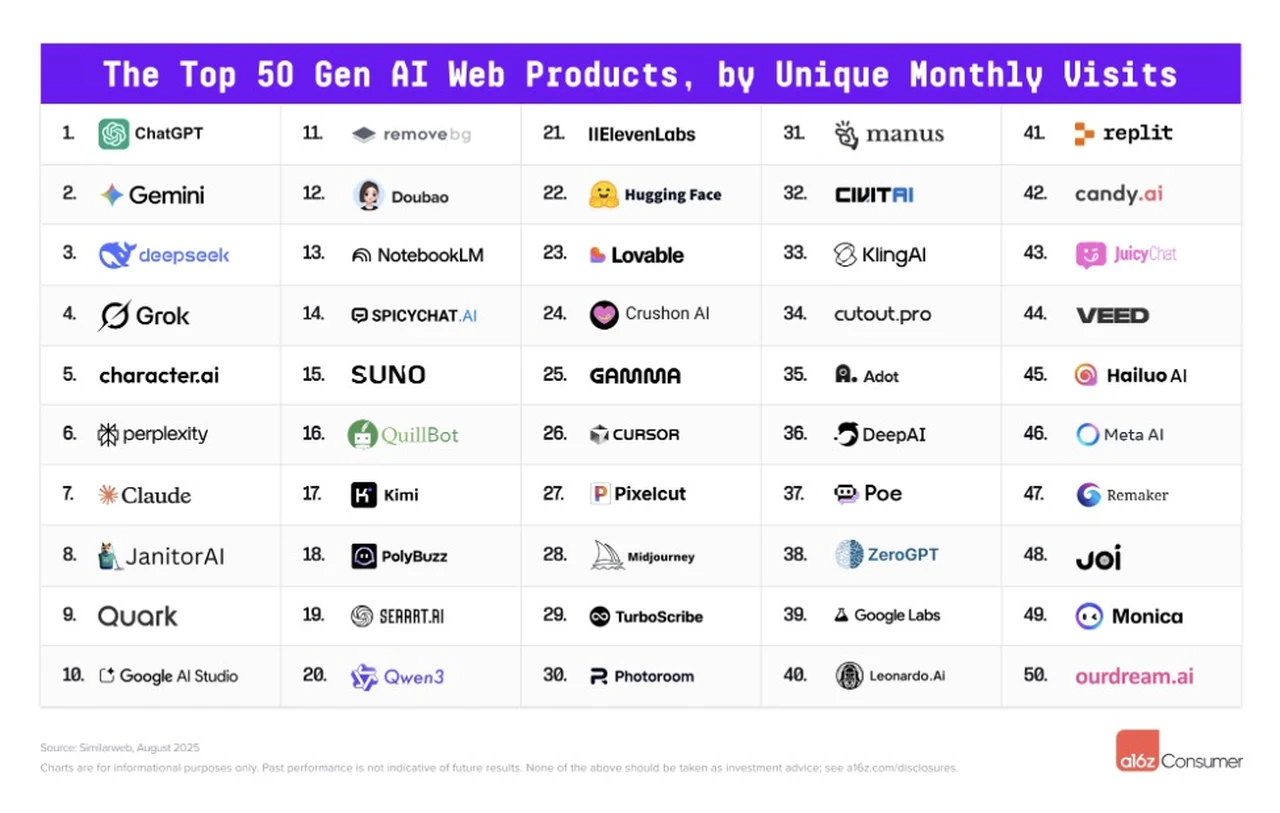
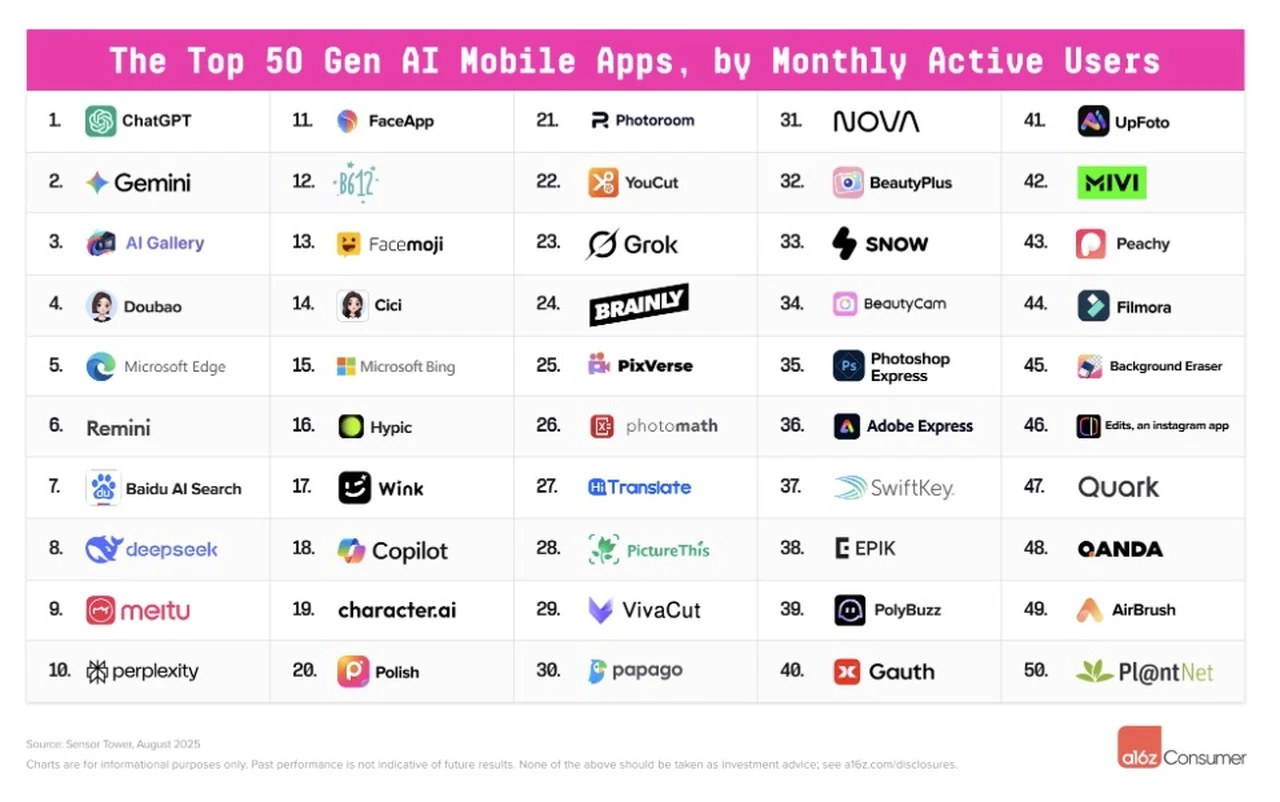
The Consumer AI Top 100 list has become a trusted resource for monitoring global AI adoption since the early days of generative AI. Updated biannually, it ranks websites and mobile applications based on data from trusted analytics platforms like SimilarWeb and Sensor Tower. By focusing on monthly visits and active users, the methodology captures both free and paid user engagement, offering a more inclusive and accurate view of consumer behavior. Unlike revenue-based rankings, this approach emphasizes the tools and platforms that are truly resonating with users. For you, this list acts as a barometer for the growth, maturity, and direction of the AI industry.
Emerging Trends in Consumer AI
The latest rankings reveal several significant trends that illustrate how AI is being seamlessly integrated into consumer applications. These trends highlight the diverse ways AI is enhancing user experiences across various domains:
- Companionship Apps: Emotional connection and personalized interactions are driving the popularity of platforms like Juicy Chat, Joy, and Rream. These apps, along with established names like Character AI and Crush On, are redefining how users seek companionship and emotional support through AI.
- Vibe Coding Platforms: Creative coding tools such as Lovable and Replit are gaining traction, offering engaging and intuitive coding experiences. These platforms are not only fostering creativity but also achieving high user retention and notable revenue growth.
- Productivity Tools: AI-powered solutions for tasks like financial modeling, email management, and presentations are becoming indispensable. These tools are streamlining workflows and enhancing efficiency in both personal and professional contexts.
- Creative AI Tools: Platforms like Midjourney and PhotoRoom continue to thrive, empowering users to create visually stunning images, videos, and music. These tools are making advanced creative capabilities accessible to a broader audience.
Top 100 Most Used AI Apps in 2025

Check out more relevant guides from our extensive collection on AI trends that you might find useful.
- Top AI Trends: Google’s AI Studio and OpenAI’s Agents SDK
- How AI is Transforming Advertising: Efficiency Meets Creativity
- ChatGPT 5 One-Person Billion-Dollar Companies by 2028
- How AI and Robots Are Transforming the Global Retail Industry
- How to Start a One-Person AI Business and Make It Thrive
- How to use AI to automate your affiliate marketing strategies
- Using NotebookLM and Gemini 2.5 AI to Validate Your Startup Idea
- The Role of AI in Creating Personalized Online Shopping
- Google Gemini AI & NotebookLM: The Ultimate Pro Research Tools
- How AI Agents Will Transform Work and Life by 2025
The Role of Chinese AI Companies
Chinese AI companies are playing an increasingly influential role in shaping the global AI landscape. Domestic platforms such as Alibaba’s Cork and ByteDance’s Dow Bow are catering to the vast Chinese market, while Chinese-developed tools for image and video generation are gaining international recognition. Furthermore, U.S.-based platforms like Crea and Hedra are integrating Chinese AI models into their offerings, extending their global reach and fostering cross-border collaboration. This growing influence underscores the importance of China’s contributions to the AI ecosystem.
Big Tech’s Expanding Presence
Major technology companies are solidifying their dominance in the AI space, using their resources and expertise to create impactful consumer applications. Google has made a notable entry into the rankings with products like Gemini, AI Studio, and Notebook LM. Similarly, Meta AI and Grock are gaining significant traction, with Grock securing a spot in the top five for web usage. These developments highlight the increasing influence of big tech in shaping consumer AI trends and driving innovation across the industry.
Stabilization of the AI Ecosystem
The AI ecosystem is showing signs of stabilization, with fewer new entrants compared to previous years. This year, only 11 new names appeared on the web list, a decline from 17 in the last edition. Meanwhile, established “AI All-Stars” such as ChatGPT, Character AI, Midjourney, and Hugging Face have consistently ranked across all five editions of the list. Their enduring popularity reflects their ability to deliver reliable, high-quality experiences that resonate with users. This stabilization suggests a maturing industry where proven platforms continue to thrive while new entrants face increasing challenges to stand out.
Future Predictions
Looking ahead, several areas are poised for significant growth and innovation. These predictions highlight the potential for AI to further transform various aspects of daily life and industry:
- Education, Finance, and Health: AI applications in these sectors are expected to expand, offering personalized learning experiences, advanced financial planning tools, and innovative healthcare solutions.
- AI-Native Social Platforms: Social networks designed specifically for AI-driven interactions could redefine how people connect and communicate online.
- Enterprise Adoption: Businesses are increasingly integrating consumer AI tools into their operations. Features like team collaboration and customizable templates are enhancing the utility of these tools for professional use.
- New Categories: Unexpected innovations, similar to the rise of vibe coding, may emerge, introducing entirely new categories and use cases for AI applications.
Key Takeaways
The success of consumer AI applications hinges on user experience and product design rather than solely on proprietary models. Platforms that prioritize intuitive interfaces and meaningful interactions are more likely to succeed. Network effects are also becoming a critical factor, as seen with platforms like Hugging Face and 11 Labs, which thrive on user-generated content and active community engagement. Additionally, advancements in foundational AI models are directly enhancing the capabilities of consumer applications, allowing more sophisticated and reliable tools.
The Consumer AI Top 100 list provides a valuable snapshot of the industry, capturing its dynamic and rapidly evolving nature. By staying informed about these trends, you can better understand the technologies shaping the future and identify the tools that align with your needs. This list not only highlights the current state of consumer AI but also offers insights into the innovations and developments that will define the industry in the years to come.
Media Credit: a16z
Disclosure: Some of our articles include affiliate links. If you buy something through one of these links, Geeky Gadgets may earn an affiliate commission. Learn about our Disclosure Policy.
