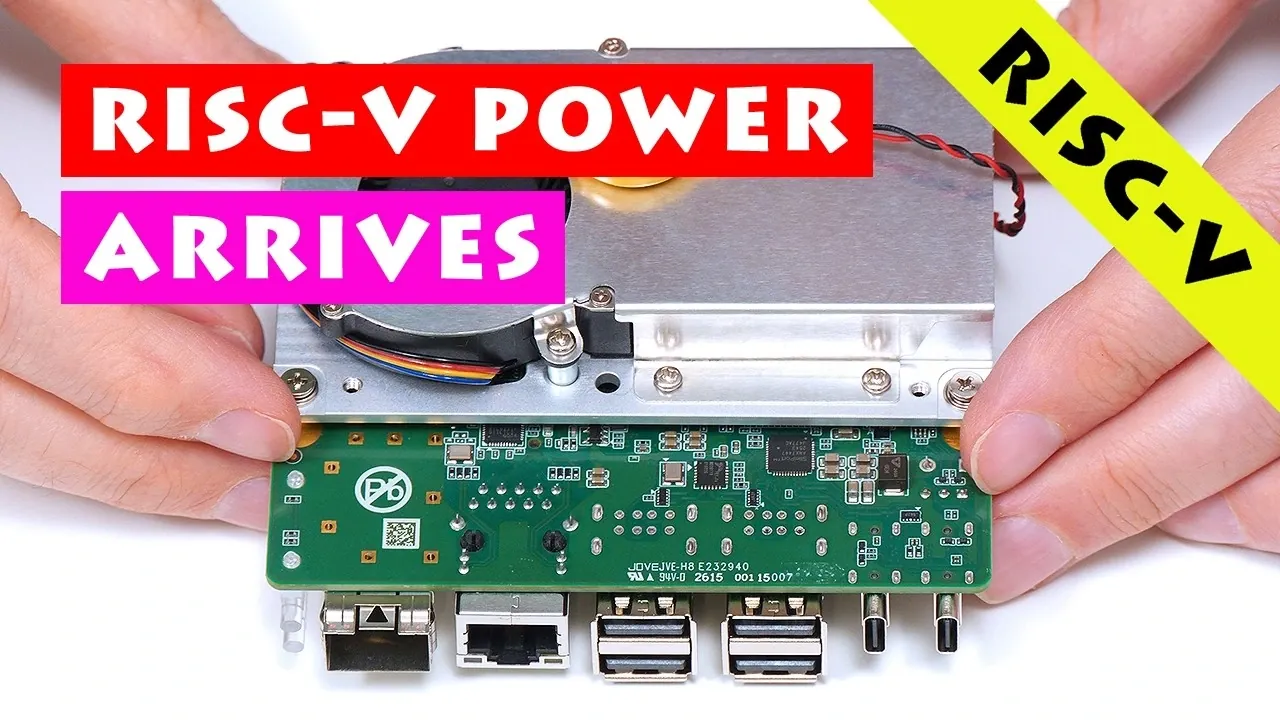
The Milk-V Jupiter 2 is a single-board computer (SBC) designed to showcase the capabilities of RISC-V architecture in practical applications. Built with an RVA23-compliant framework, it features the SiFive K3 system-on-a-chip (SoC), which includes eight X100 CPU cores running at up to 2.4 GHz and eight A100 neural processing unit (NPU) cores delivering 60 TOPS. With 8 GB of LPDDR5 RAM and 128 GB of UFS 2.2 storage, the Jupiter 2 is equipped to handle tasks such as AI workloads, desktop computing and industrial operations. Explaining Computers examines its hardware specifications, performance benchmarks and energy efficiency to provide a clear understanding of its role in the evolving field of open computing.
Explore how the Milk-V Jupiter 2 handles real-world tasks, including AI model training and video editing, using its high-speed NVMe storage and integrated GPU. Gain insight into its software ecosystem, which features the Biambu OS 4.0.1 with a lightweight LXQt desktop environment, pre-installed applications and compatibility with large language models. This analysis also covers its energy-efficient design and potential for experimentation within the RISC-V development space.
RISC-V Milk-V Jupiter 2
TL;DR Key Takeaways :
- The Milk-V Jupiter 2 is a RISC-V-based single-board computer designed for developers and industrial applications, offering a promising alternative to ARM and x86 platforms.
- Powered by the SiFive K3 SoC, it features eight X100 CPU cores, eight A100 NPU cores (60 TOPS), an Imagination IMG BXM-464MC1 GPU, up to 32 GB of LPDDR5 RAM and 256 GB of UFS 2.2 storage.
- Connectivity includes Wi-Fi 6, Bluetooth 5.2, optional 4G/5G, dual M.2 slots for PCIe 3.0 NVMe SSDs, USB-C with 4K video output and optional 10-Gigabit networking via SFP+.
- Running on Biambu OS 4.0.1 (Linux-based), it supports AI workloads, large language models and comes pre-installed with tools like Chromium, LibreOffice, VLC and Kdenlive.
- With low power consumption (14.4W idle, 20.5W max), the board is energy-efficient and ideal for industrial use, showcasing the potential of RISC-V for open and flexible computing solutions.
The Milk-V Jupiter 2 is built around the SiFive K3 system-on-a-chip (SoC), a design that balances performance and efficiency to meet the demands of modern computing. Its hardware specifications include:
- Eight X100 CPU cores clocked at up to 2.4 GHz, delivering reliable performance for general-purpose computing tasks.
- Eight A100 neural processing unit (NPU) cores capable of 60 TOPS, making it well-suited for AI and machine learning workloads.
- An Imagination IMG BXM-464MC1 GPU to handle graphical processing and rendering tasks.
- 8 GB of LPDDR5 RAM and 128 GB of UFS 2.2 storage, with configurations available up to 32 GB of RAM and 256 GB of storage for more demanding applications.
Connectivity options are robust, featuring Wi-Fi 6 and Bluetooth 5.2 for wireless communication. For users requiring mobile connectivity, the board includes optional 4G/5G support via a nano SIM slot. Expansion capabilities are also a highlight, with dual M.2 slots supporting PCIe 3.0 NVMe SSDs for high-speed storage. The USB-C port supports DisplayPort Alt Mode, allowing 4K video output at 60 Hz, while additional USB 2.0 ports, Gigabit Ethernet and an optional 10-Gigabit networking interface via SFP+ provide flexibility for a wide range of use cases.
Performance Overview
The Milk-V Jupiter 2 delivers solid performance within its class, making it suitable for a variety of tasks such as web browsing, word processing and media playback. Benchmark testing reveals a single-core Geekbench score of 342 and a multi-core score of 1703, showcasing notable progress compared to earlier RISC-V boards. However, it still trails behind ARM-based systems like the Raspberry Pi 5 and x86 platforms in terms of raw computational power.
One of the standout features of the Milk-V Jupiter 2 is its storage performance. NVMe SSDs achieve read speeds of up to 2,200 MB/s, while UFS 2.2 storage delivers speeds of 480 MB/s. These capabilities make the board particularly well-suited for applications requiring fast data access, such as AI model training, video editing, or other data-intensive tasks.
Discover other guides from our vast content that could be of interest on RISC-V.
- RISC-V Revolution: How Open Processors Are Changing the CPU Market
- 5 RISC-V Single-Board Computers Tested : Performance, Benchmarks, Features and Insights
- The Samsung Galaxy Z Fold 8 Just Solved the Biggest Problem with Foldable Displays
- SiSpeed Lichee Console 4A portable RISC-V cyberdeck $395
- Milk-V Duo S mini PC with RISC-V and ARM processor cores
- Milk-V Jupiter Review : Unleashing the Power of RISC-V in Desktop PCs
- RISC-V Laptop receives new upgrades and Ubuntu
- Framework RISC-V Mainboard Launches for Modular Laptop 13 – $199
- RISC-V Vector Processing: A New Era in Computing Efficiency
- Synopsys unveils innovative RISC-V ARC-V processor IP for next-gen chip design
Software Ecosystem
The Milk-V Jupiter 2 runs on Biambu OS 4.0.1, a Linux-based operating system derived from Ubuntu 20.04. This OS is optimized for the board’s hardware and features a lightweight LXQt desktop environment paired with the Wayland windowing system, making sure a responsive and efficient user experience. Pre-installed software includes:
- Chromium for web browsing.
- LibreOffice for productivity tasks such as document editing and spreadsheet management.
- VLC for media playback, supporting a wide range of audio and video formats.
- Kdenlive for video editing, catering to content creators and developers alike.
The board also supports running large language models, making it a versatile tool for developers exploring AI applications. This capability positions the Milk-V Jupiter 2 as a valuable resource for those working on innovative technologies in natural language processing and machine learning.
Energy Efficiency
Energy efficiency is a defining characteristic of the Milk-V Jupiter 2, making it an attractive option for industrial and continuous-use scenarios. The board consumes just 14.4 watts at idle and 20.5 watts under maximum load. This low power consumption not only reduces operational costs but also aligns with the growing demand for environmentally conscious computing solutions. Its energy-efficient design makes it particularly suitable for deployments in remote or resource-constrained environments where power availability is limited.
Designed for Developers and Industry
The Milk-V Jupiter 2 is specifically tailored for developers and industrial users who prioritize flexibility and openness in their computing platforms. Its RISC-V architecture provides a foundation for experimentation, allowing users to explore new possibilities in software and hardware development. The board’s robust hardware capabilities demonstrate the increasing viability of RISC-V for entry-level mini PCs, laptops and other computing devices.
While the Milk-V Jupiter 2 is not yet positioned as a consumer-ready product, it offers early adopters a unique opportunity to engage with an emerging technology. Developers can use its open architecture to create custom solutions, while industrial users can benefit from its energy efficiency and expandability for specialized applications.
The Future of Open Computing
The Milk-V Jupiter 2 represents a pivotal step forward for RISC-V technology, showcasing its potential as a versatile and powerful computing platform. Although it does not yet match the performance or software ecosystem of established ARM or x86 systems, it lays the groundwork for broader adoption of RISC-V in both industrial and consumer markets. As the ecosystem continues to mature, the Milk-V Jupiter 2 stands as a compelling example of the possibilities that open computing can offer, paving the way for a future defined by innovation and collaboration.
Media Credit: ExplainingComputers
Disclosure: Some of our articles include affiliate links. If you buy something through one of these links, Geeky Gadgets may earn an affiliate commission. Learn about our Disclosure Policy.
