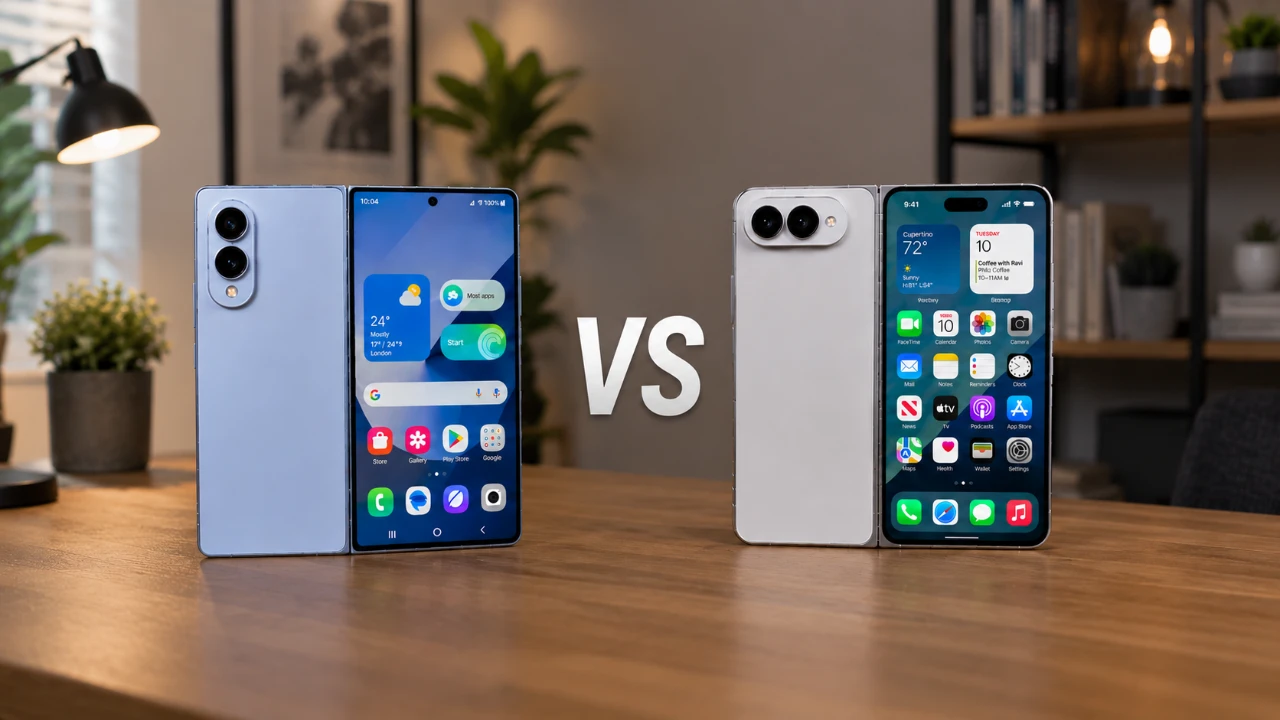
The foldable smartphone market is set to witness a pivotal year in 2026. Samsung is refining its Galaxy Z Fold lineup, while Apple is preparing to make its debut in the foldable segment with a device rumored to be called the iPhone Fold or iPhone Ultra. Both companies are pushing the boundaries of design, performance, and user experience, setting the stage for a highly competitive showdown. Below is an in-depth look at the most significant leaks and features shaping these highly anticipated devices. The video below from Matt Talks Tech gives us more details about the two handsets.

Design and Device Lineup
Samsung is expanding its foldable portfolio with two distinct models:
- Galaxy Z Fold 8: A compact “passport-style” design aimed at affordability, offering fewer premium features to appeal to a broader audience.
- Galaxy Z Fold 8 Ultra: A larger, high-end model designed for power users, featuring advanced specifications and a more premium build.
Apple’s entry into the foldable market is equally ambitious. The iPhone Fold (or iPhone Ultra) is expected to adopt a design philosophy similar to Samsung’s foldables, combining portability with functionality. Both brands are likely to incorporate Samsung’s innovative foldable display technology, making sure durability and a seamless user experience. This shared approach highlights the growing maturity of foldable devices as a category.
Innovative Display Technology
Foldable displays are evolving rapidly, and both Samsung and Apple are addressing one of the most common complaints: visible creases. The next generation of foldables will feature creaseless displays, significantly enhancing aesthetics and usability. Here’s what the leaks suggest:
- Galaxy Z Fold 8: A 5.5-inch outer display paired with a 7.5–7.6-inch inner display.
- Galaxy Z Fold 8 Ultra: A 6.5-inch outer display and an 8-inch inner display for a more expansive viewing experience.
- iPhone Fold: A 5.3–5.5-inch outer display and a 7.7–7.8-inch inner display, offering a slightly larger canvas for multitasking and media consumption.
These advancements promise a more immersive experience, whether you’re streaming content, gaming, or managing multiple tasks simultaneously. The focus on creaseless displays also reflects a broader industry trend toward improving the visual and tactile quality of foldable screens.
Performance and Hardware
Both Samsung and Apple are equipping their foldables with innovative processors to deliver exceptional performance.
- Galaxy Z Fold 8 series: Powered by Qualcomm’s Snapdragon 8 Gen 5 Elite chip, designed to handle demanding applications, gaming, and multitasking with ease.
- iPhone Fold: Expected to feature Apple’s A20 or A20 Pro chip, paired with a C2/C2X chip for enhanced energy efficiency and thermal management.
RAM configurations vary across the models:
- Galaxy Z Fold 8: Offers 8GB to 12GB of RAM, catering to a range of user needs.
- Galaxy Z Fold 8 Ultra: Features 12GB to 16GB of RAM, ideal for power users and professionals.
- iPhone Fold: Standardized at 12GB of RAM, striking a balance between performance and efficiency.
These specifications ensure that both devices will remain future-proof, capable of handling the most demanding applications and workflows for years to come.
Battery Life
Battery performance is a critical factor for foldable devices, given their larger displays and multitasking capabilities. Both Samsung and Apple are addressing this with high-capacity batteries and efficient power management systems:
- Galaxy Z Fold 8: Equipped with a 4,800mAh battery, designed to provide reliable all-day performance.
- Galaxy Z Fold 8 Ultra: Features a larger 5,000mAh battery, making sure extended usage even under heavy workloads.
- iPhone Fold: Estimated to include a 4,800–5,000mAh battery, supported by Apple’s energy-efficient C2/C2X chip for optimized power consumption.
These configurations aim to deliver consistent, all-day battery life, even with intensive use, making them suitable for both casual and professional users.
Camera Systems
Photography remains a key focus for both brands, with each taking a unique approach to camera technology:
- Galaxy Z Fold 8: Features dual 50MP rear cameras (wide and ultra-wide), offering versatility for everyday photography.
- Galaxy Z Fold 8 Ultra: Features a 200MP wide lens, a 50MP ultra-wide lens and a 10MP telephoto lens with 3x optical zoom, catering to photography enthusiasts and professionals.
- iPhone Fold: Includes dual 48MP rear cameras, one of which features dynamic lens technology for superior image quality across various lighting conditions.
While Samsung emphasizes versatility and high-resolution sensors, Apple focuses on innovation in lens technology to deliver a refined photography experience.
Software Innovations
Software optimization is essential for foldable devices, and both companies are tailoring their operating systems to maximize usability:
- Samsung: One UI 9, optimized for foldables, enhances multitasking capabilities and integrates seamlessly with DeX, a feature that transforms your smartphone into a desktop-like experience.
- Apple: iOS 27 introduces split-screen and multitasking features specifically designed for foldable devices, using Apple’s software expertise to deliver a polished and intuitive user experience.
These software innovations aim to make foldable devices more functional and user-friendly, bridging the gap between smartphones and tablets.
Pricing and Release Timeline
Pricing and availability will play a significant role in shaping consumer decisions:
- Galaxy Z Fold 8: Expected to start at $1,899, offering a more accessible entry point into the foldable market.
- Galaxy Z Fold 8 Ultra: Estimated to range between $2,100 and $2,200, reflecting its premium positioning.
- iPhone Fold: Likely to be priced between $2,000 and $2,500, aligning with Apple’s premium pricing strategy.
Both brands are targeting late 2026 for their launches:
- Galaxy Z Fold 8 series: Expected to debut in late July to early August 2026.
- iPhone Fold: Likely to launch in September or October 2026, coinciding with Apple’s traditional product release cycle.
These timelines set the stage for a competitive second half of the year, with both brands vying for dominance in the foldable market.
Gain further expertise in Foldable smartphones by checking out these recommendations.
- Galaxy Z Fold 8 Wide vs. iPhone Fold Ultra: Rumored Specs Compared
- Samsung Galaxy Z Fold 8 Leaks: Dual-UTG Glass and the End of the Screen Crease?
- Samsung Galaxy Z Fold 8 Ultra: The “iPhone Fold Killer” Arriving This Summer
- Samsung’s Foldable Masterpiece: Galaxy Z Fold 8 Ultra Leaks
- How Samsung Accidentally Solved Apple’s Biggest iPhone Ultra Problem
Source: Matt Talks Tech
Disclosure: Some of our articles include affiliate links. If you buy something through one of these links, Geeky Gadgets may earn an affiliate commission. Learn about our Disclosure Policy.
