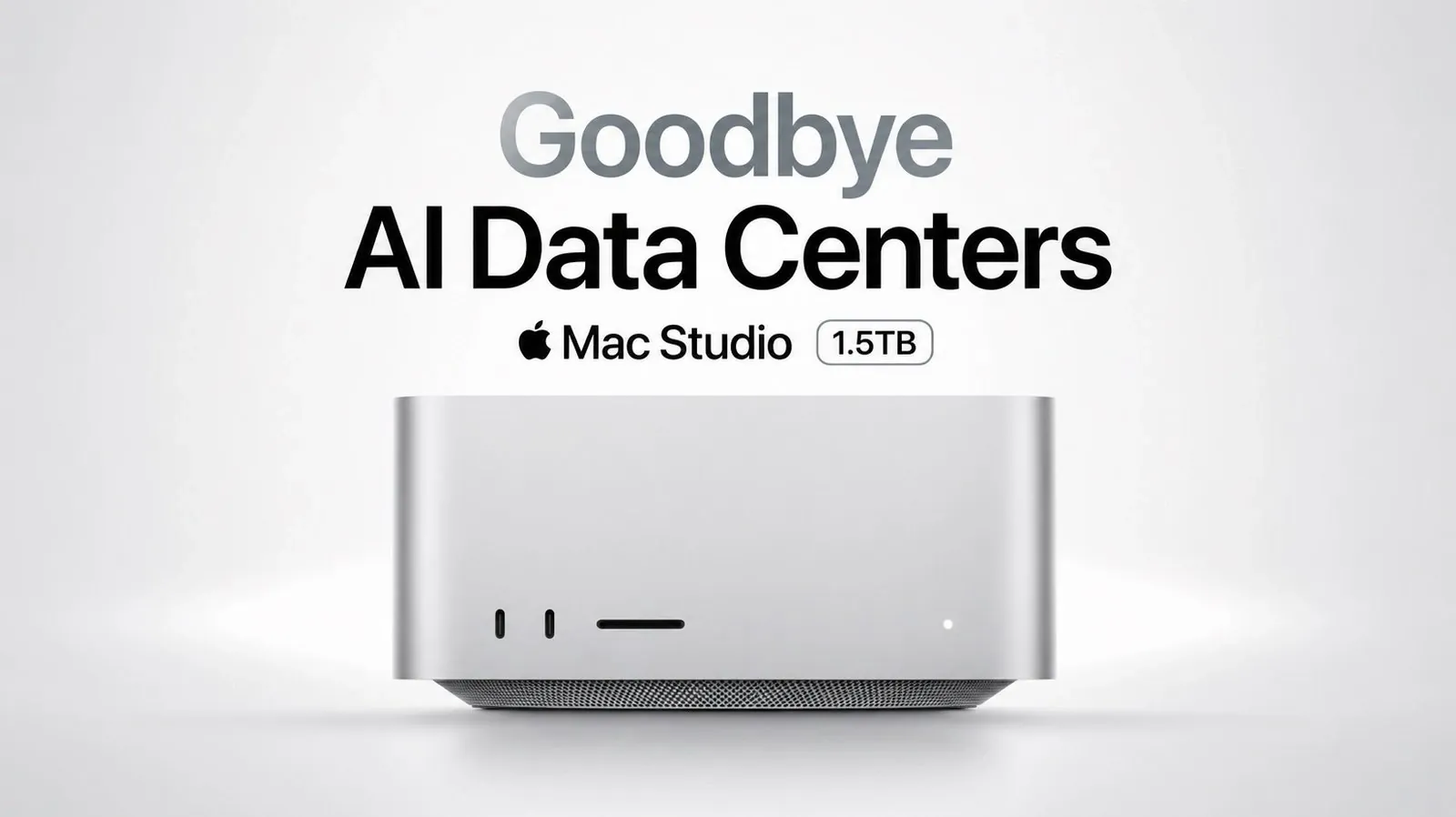
Apple’s new Mac Studio, equipped with 1.5TB of unified memory, introduces a significant leap in localized AI and data processing capabilities. According to Kiraa, its unified memory architecture connects the CPU, GPU and neural engine, allowing advanced AI workloads to run efficiently without relying on cloud infrastructure. While this design supports demanding tasks like natural language processing and predictive analytics, the absence of an enterprise-grade AI orchestration layer may limit its scalability for organizations with complex workflows or stringent governance needs.
Discover how the Mac Studio’s hardware could support small and medium-sized businesses in managing AI-driven workloads while safeguarding sensitive data. Gain insight into the operational challenges created by the lack of orchestration frameworks and how this affects collaboration between IT teams and data professionals. Finally, examine the potential impact of localized AI systems on industries such as healthcare and retail, where compliance and data privacy are critical factors.
Advancing Hardware Performance for AI
TL;DR Key Takeaways :
- The Mac Studio, with up to 1.5TB of unified memory, is designed to transform AI and data analytics by allowing on-premises execution of advanced AI models, reducing reliance on cloud infrastructure.
- Its unified memory architecture integrates the CPU, GPU and neural engine, optimizing performance for demanding AI workloads and tools like Core ML and Core AI.
- Small and medium-sized businesses (SMBs) can use the Mac Studio for real-time analytics, enhanced operational efficiency and improved data privacy by avoiding cloud-based solutions.
- A critical limitation is the lack of an enterprise-ready AI orchestration layer, which hinders large-scale AI workflow management, resource allocation and integration with enterprise systems.
- The Mac Studio’s localized AI capabilities challenge cloud-based data centers, offering cost-effective, secure and democratized access to advanced AI tools, fostering innovation across industries.
The Mac Studio exemplifies Apple’s commitment to pushing the boundaries of hardware design. Its unified memory architecture seamlessly integrates the CPU, GPU and neural engine, optimizing performance for demanding AI workloads. This architecture is particularly advantageous for tools like Core ML and Core AI, which enable local execution of AI models without reliance on cloud infrastructure.
This innovation has significant implications for small and medium-sized businesses (SMBs). For example, a retail company could use the Mac Studio to analyze customer behavior in real-time, generating actionable insights without the latency or recurring costs associated with cloud-based solutions. This approach not only enhances operational efficiency but also provides businesses with greater control over sensitive data, making sure compliance with privacy regulations.
Moreover, the Mac Studio’s hardware is designed to support resource-intensive tasks such as natural language processing, image recognition and predictive analytics. These capabilities empower businesses to deploy AI-driven solutions tailored to their specific needs, fostering innovation across industries.
Addressing Challenges in Enterprise AI
Despite its impressive hardware capabilities, the Mac Studio exposes a critical gap in Apple’s ecosystem: the lack of an enterprise-ready AI orchestration layer. Such a layer is essential for managing complex AI workflows, including job scheduling, resource allocation, monitoring and governance. Without these tools, businesses may find it challenging to fully use the Mac Studio for large-scale AI initiatives.
Developers also face limitations. While tools like Core ML and Core AI are powerful, they lack the advanced features required for enterprise-scale AI systems. For instance, managing intricate workflows, making sure compliance with organizational policies and integrating with existing enterprise systems remain significant hurdles. These challenges could deter larger organizations from adopting Apple hardware for their AI needs, despite its technical advantages.
Furthermore, the absence of robust orchestration tools may hinder collaboration between data scientists and IT teams, complicating the deployment of AI solutions. Addressing these gaps will be crucial for Apple to position the Mac Studio as a viable option for enterprise AI.

Here are additional guides from our expansive article library that you may find useful on Apple Mac Studio systems.
- Don’t Wait for WWDC: New Leaks Reveal the M5 Mac Studio is Delayed Until October
- The Real Reason Apple Just Pushed Back the Next Mac Studio
- Mac Studio M5 Ultra Brings Major Upgrades and Higher Price
- Every New Apple Device Leaked Ahead of WWDC 2026
- Why the M5 Mac Studio and OLED MacBook Pro are Delayed
- Mac Studio M5 Ultra: Why Apple is Clearing Stock Ahead of its Biggest Reveal
- Apple’s New M5 Mac Studio Rumored to Start At $2,499
- Apple M5 Extreme: Everything We Know About the World’s Most Insane Silicon
- What to Expect from Apple’s Next-Generation M5 Mac Mini and Studio
- Apple Studio Display 27-inch 5K Retina monitor with Spatial Audio launches
Shaping the Future of AI Deployment
The Mac Studio’s capabilities represent a shift in the AI market landscape, challenging the dominance of cloud-based data centers. By allowing on-premises AI systems, Apple offers businesses a cost-effective and localized alternative to traditional cloud solutions. This shift could disrupt established data center providers as organizations explore localized solutions to reduce dependency on external infrastructure.
For smaller enterprises, the widespread access of advanced AI capabilities is particularly significant. Businesses that previously lacked the resources to invest in AI can now use tools like Core ML on Apple Silicon, leveling the playing field. This trend has the potential to foster increased competition and innovation across industries, as companies of all sizes gain access to innovative technology.
Additionally, localized AI systems provide enhanced data security and privacy, addressing concerns associated with storing sensitive information in the cloud. This advantage is particularly relevant in industries such as healthcare, finance and retail, where data protection is paramount.
Unlocking the Full Potential of Enterprise AI
The future success of the Mac Studio in enterprise environments will depend on Apple’s ability to address critical gaps in AI workflow management. Integrating tools for governance, monitoring and job scheduling could unlock the full potential of its hardware for enterprise use. Emerging third-party solutions, such as Kira, may also play a role in bridging the gap between Apple’s hardware capabilities and the practical needs of businesses.
Over the next few years, advancements in enterprise AI solutions are expected to accelerate. However, these advancements will require a concerted effort to align hardware innovations with the operational demands of businesses. If Apple refines its ecosystem to meet these needs, the Mac Studio could become a cornerstone of enterprise AI, driving innovation while reshaping traditional data center models.
For organizations ready to embrace this innovation, the Mac Studio offers a glimpse into a future where advanced AI capabilities are accessible, efficient and localized. By addressing the challenges of orchestration and governance, Apple has the potential to redefine how businesses deploy and manage AI, paving the way for a new era of enterprise technology.
Media Credit: Kiraa
Disclosure: Some of our articles include affiliate links. If you buy something through one of these links, Geeky Gadgets may earn an affiliate commission. Learn about our Disclosure Policy.
