
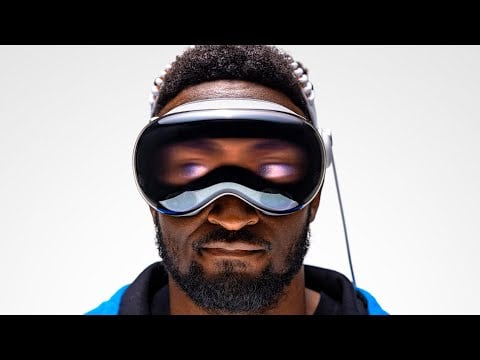
Apple has unveiled the second-generation Vision Pro, a mixed reality headset that builds upon its predecessor with a series of thoughtful updates. While the overall design remains consistent, these refinements reflect Apple’s evolving strategy in a competitive and rapidly advancing market. The Vision Pro continues to position itself as a leader in the premium mixed reality space, offering enhancements that cater to both professional users and immersive media enthusiasts. In the video below, Marques Brownlee gives us a look at the new Vision Pro, its key updates, and its implications for the future of mixed reality.
Key Hardware Updates
The second-generation Vision Pro introduces several hardware improvements aimed at enhancing the user experience. At the heart of these updates is the new M5 chip, which delivers:
- Faster app loading for resource-intensive applications.
- Improved energy efficiency to optimize performance.
- An extended battery life for untethered usage, offering greater flexibility.
These upgrades ensure smoother and more reliable performance, reinforcing Apple’s commitment to delivering high-quality mixed reality experiences.
Another notable enhancement is the redesigned headband. Apple has incorporated a dual-knit material paired with a tungsten counterbalance, which redistributes weight more evenly across the user’s head. This adjustment addresses a common issue with mixed reality headsets: discomfort during prolonged use. By improving ergonomics, Apple aims to make the Vision Pro more suitable for extended sessions, whether for work or entertainment. Despite these refinements, the overall design—including its cameras, displays, and materials—remains largely unchanged. This continuity suggests Apple’s preference for incremental improvements over radical redesigns, making sure familiarity while addressing user feedback.
Performance Enhancements
The Vision Pro now features a higher refresh rate of 120 Hz, an upgrade from the previous 100 Hz. This improvement enhances visual fluidity, particularly for fast-moving content, making the device more suitable for immersive media, gaming, and other dynamic applications. The smoother visuals contribute to a more engaging and lifelike experience, especially in virtual environments.
Battery life has also been extended by approximately 20%, allowing users to enjoy longer untethered sessions without frequent recharging. This improvement is particularly beneficial for professionals who rely on the device for extended periods or for users engaging in immersive entertainment.
In addition, Apple has fine-tuned the Vision Pro’s spatial computing capabilities. Faster rendering speeds and improved spatial scene creation enable smoother transitions between virtual and augmented environments. These updates, while not innovative, contribute to a more polished and responsive user experience, reinforcing the Vision Pro’s reputation as a premium mixed reality device.
Market Dynamics and Competition
The premium mixed reality headset market remains a niche segment, with limited competition. Among the few notable challengers is Samsung’s Project Muhan, which has yet to achieve the same level of market presence as Apple’s Vision Pro. Despite the competition, Apple continues to dominate this space with its high-end offerings, using its ecosystem and brand reputation to maintain a strong foothold.
However, consumer interest is gradually shifting toward smart glasses, which offer simpler functionality and fewer social barriers compared to bulkier headsets. Smart glasses are perceived as more practical for everyday use, blending seamlessly into daily life without drawing attention. Recognizing this trend, Apple appears to be reallocating resources from lightweight headset development, such as the rumored Vision Pro Air, to focus on smart glasses. This strategic pivot aligns with broader industry movements toward creating devices that are less obtrusive and more socially acceptable.
Apple’s Strategic Shift
The updates to the Vision Pro highlight Apple’s acknowledgment that the device is not yet ready for widespread consumer adoption. Its primary use cases remain centered on media consumption and professional applications, rather than everyday consumer use. By refining the Vision Pro instead of overhauling it, Apple is signaling a cautious and calculated approach to the mixed reality market.
At the same time, Apple’s reported focus on smart glasses reflects a long-term vision for more accessible augmented reality devices. Smart glasses, with their lightweight design and straightforward functionality, are better positioned to appeal to a broader audience. This shift demonstrates Apple’s responsiveness to consumer preferences for devices that integrate seamlessly into daily life while maintaining a balance between innovation and practicality.
Broader Industry Trends
The mixed reality industry is currently navigating a pivotal moment, with two distinct approaches emerging:
- Developing advanced headsets and gradually scaling them down for greater portability and comfort.
- Enhancing smart glasses to incorporate more sophisticated augmented reality features.
Consumer preferences increasingly favor the latter approach. Smart glasses are less intrusive and more socially acceptable, making them a more viable option for everyday use. As technology continues to advance, the gap between these two approaches is expected to narrow. In the future, smart glasses may offer functionality comparable to today’s mixed reality headsets, bridging the divide between portability and capability.
Apple’s strategic shift toward smart glasses aligns with this broader industry trend. By focusing on devices that prioritize accessibility and ease of use, Apple is positioning itself to remain at the forefront of the augmented reality market. This approach reflects a recognition of the evolving needs and expectations of consumers, as well as the potential for smart glasses to become the next major platform for augmented reality experiences.
Refining the Vision for Mixed Reality
The second-generation Apple Vision Pro represents a calculated step forward in the evolution of mixed reality technology. With its M5 chip, redesigned headband, and incremental performance enhancements, the device solidifies Apple’s leadership in the premium mixed reality market. However, the company’s strategic shift toward smart glasses underscores its awareness of changing consumer preferences and the growing demand for more accessible augmented reality solutions.
As the mixed reality industry continues to evolve, Apple’s ability to balance innovation with practicality will be critical to maintaining its position in this dynamic space. By refining its existing products while exploring new opportunities, Apple is charting a path that could shape the future of augmented and mixed reality for years to come.
Stay informed about the latest in Apple Vision Pro by exploring our other resources and articles.
- Apple Vision Pro 2: Features, Release Date, and Price
- Apple Vision Pro 2 Release Date, Features, and Upgrades
- Apple Vision Pro 2: The Journey Begins – Initial Details Revealed
- Apple Vision Pro 2 and Vision Air: Features, Release and Pricing
- Vision Pro 2 Release Date, Features, and Upgrades Explained
Source & Image Credit: Marques Brownlee
Disclosure: Some of our articles include affiliate links. If you buy something through one of these links, Geeky Gadgets may earn an affiliate commission. Learn about our Disclosure Policy.
