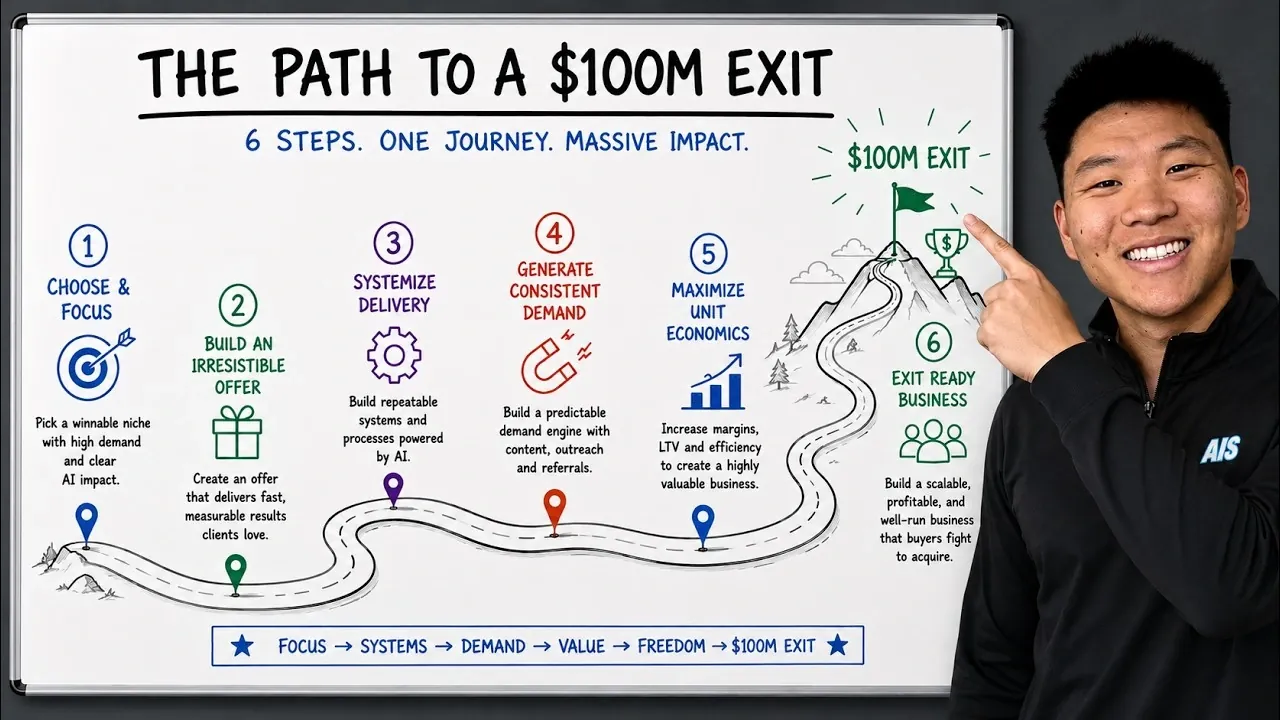
Building a $100M AI agency requires more than just technical expertise, it demands a clear strategy, scalable processes and a deep understanding of client needs. In a recent feature by Nate Herk, the discussion centers on how AI agencies can transition from small-scale operations to thriving enterprises by focusing on measurable outcomes and tailored solutions. One key insight is the importance of standardizing offerings, such as fixed-price workshops, to streamline delivery while building trust with clients. This structured approach not only simplifies operations but also lays the groundwork for handling larger, more complex engagements.
In this guide, you’ll gain insight into how to overcome challenges like managing client expectations and navigating rapid technological advancements. Explore strategies to differentiate your agency by targeting mid-market companies, adopting value-based pricing and developing scalable frameworks that ensure consistency and efficiency. Whether you’re looking to refine your business model or scale sustainably, these actionable takeaways provide a roadmap for achieving long-term success in the competitive AI landscape.
AI’s Expanding Role Across Industries
TL;DR Key Takeaways :
- AI agencies are transforming industries by delivering tailored, outcome-driven solutions, with healthcare, finance and manufacturing leading adoption.
- Scaling to a $100M AI agency requires strategic planning, standardized offerings, differentiation and a focus on measurable outcomes.
- Key challenges include rapid technological advancements, defining success metrics and managing client expectations, which require proactive strategies and clear communication.
- Long-term success strategies include targeting mid-market companies, adopting value-based pricing, developing scalable frameworks and offering fixed-price workshops to build trust.
- AI is reshaping business models, emphasizing tailored applications over commoditized tools and creating opportunities for innovative approaches like revenue-sharing partnerships.
Artificial intelligence has evolved beyond experimental applications to become a driving force across diverse industries, allowing efficiency, innovation and cost savings. For AI agencies, this shift emphasizes the importance of delivering tailored, outcome-driven solutions rather than generic services. Industries such as healthcare, finance and manufacturing are at the forefront of AI adoption, showcasing its fantastic potential:
- Healthcare: AI-powered predictive analytics improve patient care, optimize resource allocation and enhance diagnostic accuracy.
- Finance: Machine learning strengthens fraud detection, streamlines risk management and enhances customer personalization.
- Manufacturing: AI automates production processes, reduces waste and optimizes supply chain operations.
These examples highlight the growing demand for AI solutions that directly impact business performance. For your agency, aligning technology with specific industry needs will determine your relevance, competitiveness and market value.
Key Steps to Building a Scalable AI Agency
Scaling an AI agency from a small operation to a $100M enterprise requires deliberate planning and execution. The foundation of scalability lies in creating repeatable systems, structured processes and a clear business model. Here are the critical steps to guide your transformation:
- Define Your Growth Path: Decide whether to pursue steady, incremental growth or aim for rapid scaling. Rapid scaling demands robust frameworks, a clear value proposition and a focus on differentiation to stand out in a competitive market.
- Standardize Your Offerings: Package your services into fixed-price workshops or modular solutions. This approach streamlines delivery, builds client trust and creates a foundation for larger, more complex engagements.
- Focus on Differentiation: Specialize in addressing unique business challenges rather than competing on generic AI development services. Tailored solutions enhance your agency’s perceived value and foster long-term client relationships.
By implementing these steps, you can position your agency for sustainable growth while maintaining operational efficiency and delivering consistent value to your clients.

Below are more guides on AI business from our extensive range of articles.
- How to use Gemini AI for business using Google Workspace
- How OpenAI Just Solved an 80-Year-Old Math Mystery Nobody Else Could
- DIY $8,500 Zeus Supercomputer Replaces Cloud Tools for AI Business
- Why OpenAI is Suddenly Losing the AI Race to Anthropic
- Claude Cowork vs ChatGPT Codex : Which is Actually Better for Everyday Users?
- Why Better AI Models Aren’t the Bottleneck Anymore : AI Business Opportunities
- How Perplexity Lost the Al Race
- How Paperclip Turns Claude Code Into an Entire Automated AI Company
- The best AI tools for small businesses
Overcoming Challenges in the AI Industry
The fast-paced nature of the AI industry presents unique challenges for agencies. Staying competitive requires agility, foresight and a commitment to continuous improvement. Below are some of the key obstacles you may face and strategies to address them:
- Rapid Technological Advancements: AI tools and platforms evolve quickly, making it essential to stay ahead of trends through ongoing education and investment in research and development.
- Defining Success Metrics: Clients often struggle to articulate clear goals, which can complicate project alignment. Establishing measurable outcomes early in the engagement process is critical to success.
- Managing Client Expectations: Scope creep can disrupt timelines and budgets. Clear communication, well-defined project boundaries and transparent agreements are essential to mitigate this risk.
Addressing these challenges requires a proactive approach, including fostering a culture of innovation, maintaining open communication with clients and focusing on delivering tangible, measurable results.
Strategies for Long-Term Success
To thrive in the competitive AI landscape, your agency must adopt a strategic, client-focused approach. Consider these actionable strategies to build a strong foundation for long-term success:
- Start Small: Offer fixed-price workshops to establish credibility, build relationships and demonstrate value to potential clients. This approach helps you gain trust and refine your service delivery.
- Target Mid-Market Companies: Mid-sized businesses are often more agile and better positioned to adopt AI solutions compared to smaller firms or large enterprises with rigid structures.
- Adopt Value-Based Pricing: Align your pricing model with the outcomes you deliver. This ensures clients perceive the direct impact of your services and fosters long-term partnerships.
- Develop Scalable Frameworks: Create repeatable processes to streamline service delivery, enhance efficiency and build trust with clients by consistently meeting their expectations.
These strategies not only help you establish a competitive edge but also position your agency as a trusted partner in delivering AI-driven solutions that align with business objectives.
AI’s Influence on Business Models
AI is fundamentally reshaping how businesses operate by automating workflows, reducing the need for large teams and allowing data-driven decision-making. This shift has given rise to AI-native companies, businesses designed from the ground up to use AI technologies for competitive advantage.
For AI agencies, this trend presents an opportunity to explore innovative business models, such as revenue-sharing partnerships. By tying your success to the client’s performance, you can foster mutually beneficial relationships that drive long-term growth and loyalty. Additionally, agencies that focus on delivering tailored applications and services, rather than commoditized tools, will remain competitive and command higher valuations.
Lessons from Successful AI Agencies
Building a $100M AI agency requires focus, discipline and a commitment to continuous improvement. Here are some key lessons from successful agencies to guide your journey:
- Stick to Your Business Model: Avoid frequent pivots that dilute your focus and confuse your market positioning. Consistency builds trust and credibility.
- Prioritize Value Over Time: Charge based on the value you deliver, not the hours you work. This approach better aligns with client expectations and highlights the impact of your solutions.
- Build a Strong Sales Funnel: Invest in relationship-building and lead generation early to ensure a steady pipeline of opportunities before scaling operations.
- Hire Strategically: Assemble a team with complementary skills to accelerate growth, enhance service delivery and maintain operational excellence.
These lessons underscore the importance of strategic planning, clear communication and a client-centric approach in achieving sustainable growth and establishing your agency as a leader in the AI industry.
The Road Ahead for AI Agencies
As AI technologies continue to evolve, the focus will increasingly shift from tools to tailored applications and services that deliver measurable value. Agencies that align their offerings with business goals and consistently deliver results will remain competitive and achieve higher valuations.
The journey to building a $100M AI agency is challenging but achievable. By adopting the right strategies, creating scalable processes and maintaining a focus on business outcomes, you can navigate the complexities of the AI industry and establish a high-value enterprise that stands the test of time.
Media Credit: Nate Herk | AI Automation
Disclosure: Some of our articles include affiliate links. If you buy something through one of these links, Geeky Gadgets may earn an affiliate commission. Learn about our Disclosure Policy.
