Artificial intelligence is reshaping industries, yet many organizations fail to capitalize on its full potential due to a lack of strategic integration. In a recent discussion by Marketing Against the Grain, the focus shifts from the capabilities of advanced AI models like GPT 5.4 to the importance of embedding AI into the core of business operations. For instance, the “Rapid Five” framework offers a structured approach to AI transformation, emphasizing steps like redesigning workflows, fostering an AI-first culture and continuously adapting strategies to align with evolving technology. These insights highlight that the real opportunity lies in becoming AI-native rather than merely adopting the latest AI advancements.
In this overview, you’ll explore how businesses can address common bottlenecks such as organizational inertia and workforce readiness. Learn actionable strategies like launching targeted pilot projects to test AI’s impact, retraining employees to work effectively alongside AI and redesigning processes to unlock efficiency gains. By focusing on these steps, you’ll gain a clear roadmap for integrating AI into your operations, making sure your organization is well-positioned to thrive in an AI-driven future.
Why AI Integration Matters More Than Model Capabilities
TL;DR Key Takeaways :
- AI’s fantastic potential is unlocked through strategic integration into workflows and organizational structures, not just by adopting advanced models.
- A significant gap exists between AI’s theoretical potential and real-world adoption, with many businesses failing to implement AI at scale due to expertise gaps and resistance to change.
- Becoming AI-native requires redesigning operations, retraining employees and fostering a culture of innovation, similar to how industries adapted to electricity in the past.
- The “Rapid Five” framework, Reveal, Architect, Proof, Ingrain, Dynamize, provides a structured approach for businesses to successfully integrate AI.
- Early adopters who address human and structural challenges can gain a competitive edge, achieving efficiency, innovation and growth in an AI-driven future.
AI models are advancing at an unprecedented pace, offering powerful tools that can transform data-driven decision-making, streamline operations and enhance customer experiences. However, the effectiveness of these tools depends on how well they are integrated into existing business processes. Simply adopting the latest AI model is insufficient. To maximize the impact of AI, businesses must redesign workflows and operating models to align with the capabilities of these tools.
For example, a customer service team using AI-powered chatbots must ensure seamless integration between the AI system and human agents. This collaboration enables the AI to handle routine inquiries while human agents focus on complex issues, creating a more efficient and responsive customer service experience. Without such integration, even the most advanced AI tools risk underperforming, leading to inefficiencies and missed opportunities.
The Gap Between AI Potential and Real-World Adoption
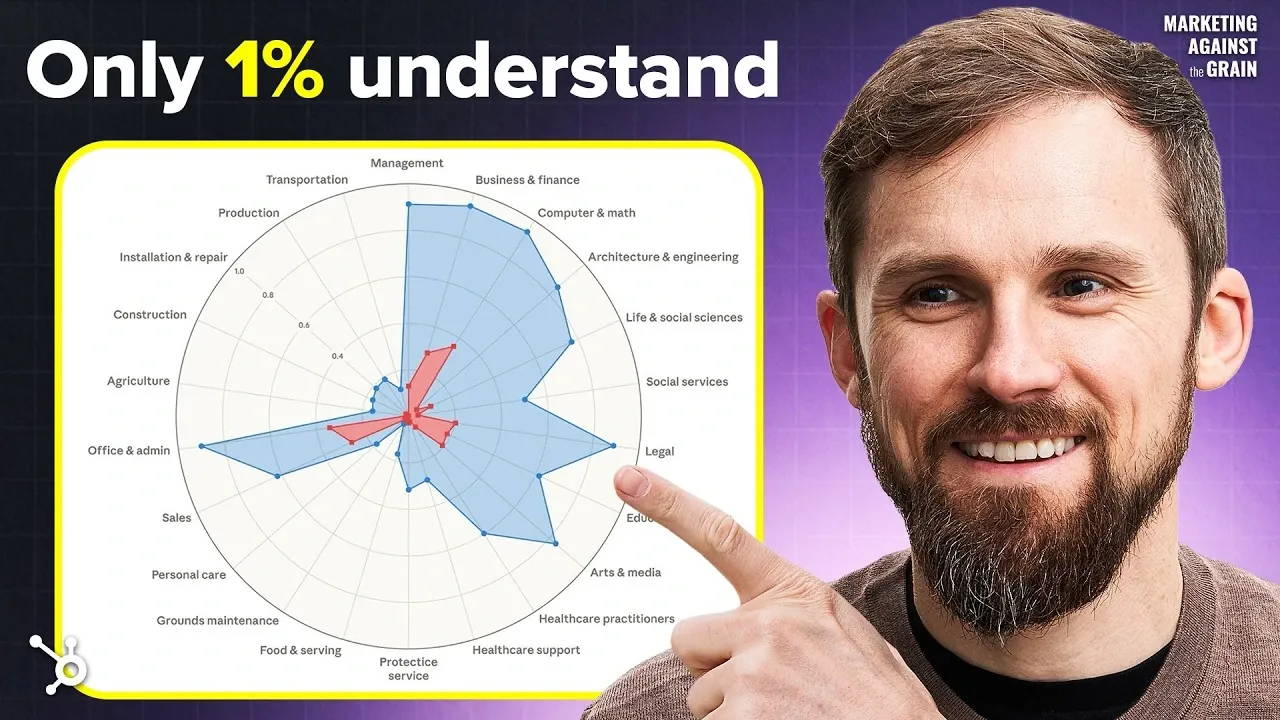
Despite the promise of AI, a significant gap exists between its theoretical potential and practical deployment. Research from Anthropic reveals that industries could automate up to 60% of their processes, yet only a small fraction of businesses have successfully implemented AI at scale. This disparity underscores a critical missed opportunity for organizations willing to invest in AI integration and innovation.
Several factors contribute to this gap. Many businesses lack the expertise to identify areas where AI can add value, while others struggle with organizational inertia or resistance to change. Additionally, the complexity of integrating AI into legacy systems often deters companies from pursuing large-scale adoption. Addressing these challenges requires a strategic approach that prioritizes both technological and organizational readiness.

Explore further guides and articles from our vast library that you may find relevant to your interests in AI business and marketing.
- How to use Gemini AI for business using Google Workspace
- OpenAI’s Growing Pains: Legal Scrutiny, Rivals, and Public Trust
- OpenAI’s $1.4 Trillion Bet: Can It Survive the AI Race?
- Perplexity vs Google AI Search: Why It Stayed a Niche Tool
- Best AI Tools for Work, from Gemini to OpenAI & More
- AI Runs a Business (Fully Automated) : From Chaos to Calm
- ChatGPT 5 One-Person Billion-Dollar Companies by 2028 : Sam Altman
- Claude Code Marketing Guide 2026 : Landing Pages, Emails & Paid Ads
- AI in 2026, Faster Automations, Media Creation & Avatars
- Claude Code AI Marketing Workflow : Landing Page to Lead Magnet
Lessons from History: AI and the Electricity Parallel
The current state of AI adoption mirrors the early days of electricity in industrial settings. When electricity was first introduced, factories simply replaced steam engines with electric motors, resulting in minimal productivity gains. It wasn’t until businesses restructured their operations to fully use the unique advantages of electricity, such as decentralized power distribution and flexible factory layouts, that fantastic improvements occurred.
Similarly, businesses today must go beyond merely adding AI to existing processes. To unlock the full potential of AI, organizations need to rethink and redesign their operations to become AI-native. This involves not only adopting AI tools but also reshaping workflows, retraining employees and fostering a culture of innovation. By doing so, businesses can achieve the kind of fantastic impact that electricity brought to industry over a century ago.
The Human Factor: A Key Bottleneck in AI Adoption
One of the most significant challenges in AI adoption is the human element. Organizational readiness, workforce skills and resistance to change often act as bottlenecks, slowing progress and limiting the effectiveness of AI initiatives. Many employees lack the training required to work effectively alongside AI, while leadership teams may underestimate the effort needed to integrate AI into their operations.
For instance, a manufacturing company implementing AI-driven predictive maintenance tools may face resistance from technicians who are unfamiliar with the technology. Without proper training and support, these employees may struggle to trust or effectively use the AI system, undermining its potential benefits. Addressing these human challenges is essential for making sure the success of AI adoption efforts.
The “Rapid Five” Framework for AI Transformation
To overcome the challenges of AI integration, businesses can adopt the “Rapid Five” framework, a structured approach designed to assist AI transformation:
- Reveal: Conduct a thorough analysis of workflows to identify areas where AI can add value or address inefficiencies.
- Architect: Design AI-native operating models and workflows, incorporating strategies for change management and employee engagement.
- Proof: Launch small, targeted pilot projects to test AI’s impact in real-world scenarios and gather actionable insights.
- Ingrain: Build an AI-first culture by fostering peer learning, offering skill development programs and integrating AI into performance metrics.
- Dynamize: Continuously adapt workflows and strategies every 90 days to align with evolving AI capabilities and market demands.
This framework provides a roadmap for businesses to integrate AI effectively while minimizing disruption and fostering long-term success.
Getting Started: Practical Steps for Businesses
For businesses looking to begin their AI transformation journey, the following steps can serve as a practical starting point:
- Use AI tools to analyze existing workflows and identify opportunities for automation, optimization and redesign.
- Collect data on team processes, skill gaps and organizational needs to tailor AI solutions that address specific challenges.
- Invest in building internal AI capabilities through training programs, hiring AI specialists and fostering cross-functional collaboration.
- Develop a clear roadmap for AI adoption, including timelines, milestones and metrics to measure progress and success.
By taking these steps, businesses can lay a strong foundation for integrating AI into their operations while addressing organizational and workforce challenges.
The Market Opportunity for Early Adopters
The gap between AI’s potential and its current adoption presents a significant opportunity for forward-thinking businesses. Companies that proactively redesign their operations around AI stand to gain a competitive edge, unlocking new levels of efficiency, innovation and growth. By addressing human and structural bottlenecks, early adopters can position themselves as leaders in an AI-driven future.
For example, a retail company that uses AI to optimize inventory management and personalize customer experiences can reduce costs while increasing customer satisfaction. Similarly, a healthcare provider that integrates AI into diagnostic workflows can improve patient outcomes and operational efficiency. These examples highlight the tangible benefits of becoming an AI-native organization.
Embracing the Future: The Path to Becoming AI-Native
The true value of AI lies not in the technology itself but in how businesses transform to become AI-native. Success depends on integrating AI into workflows, redesigning organizational structures and addressing human challenges. By focusing on these areas, businesses can bridge the gap between AI’s potential and its practical application, making sure they thrive in an increasingly AI-driven world. Early adopters who embrace this transformation will not only gain a competitive advantage but also set the standard for innovation and growth in their industries.
Media Credit: Marketing Against the Grain
Disclosure: Some of our articles include affiliate links. If you buy something through one of these links, Geeky Gadgets may earn an affiliate commission. Learn about our Disclosure Policy.
